

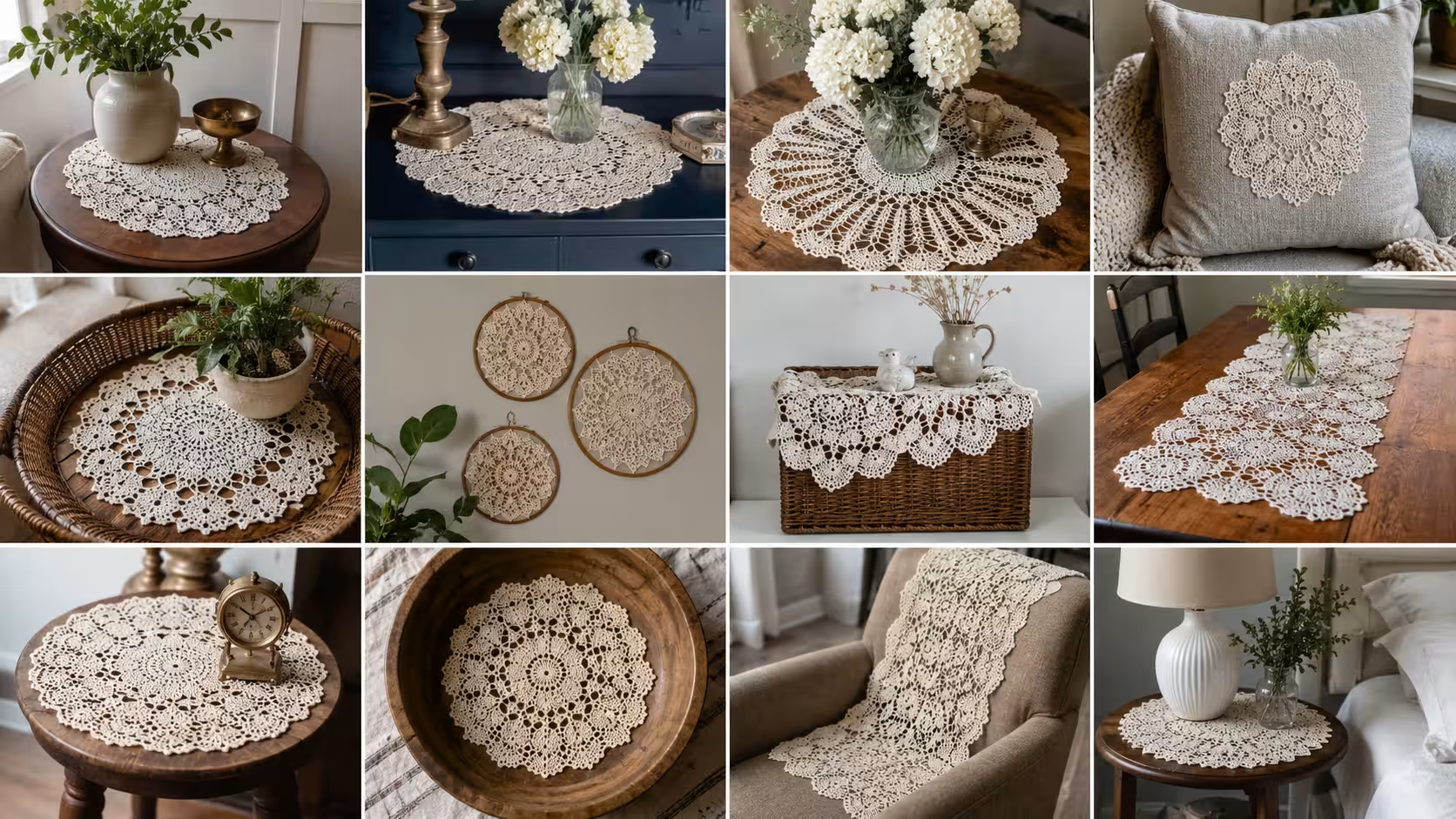
TL;DR
Vintage crochet doilies can transition from dated table protectors to striking modern design elements. Framing them as gallery wall art, stretching them into embroidery hoops, or incorporating them into functional home accessories preserves their historic craftsmanship. These methods allow homeowners to honor family heirlooms while maintaining a clean, contemporary aesthetic.
Introduction
What can you do with a box of inherited lace that no longer fits a minimalist lifestyle? Many homeowners find themselves holding beautifully crafted, handmade doilies that end up forgotten in dark closets or cedar chests. Transforming these intricate pieces into fresh focal points bridges the gap between historical sentiment and modern design. You will discover practical ways to display, protect, and integrate these textiles into your living space without compromising your style.
Mounting Antique Lace as Framed Fine Art
Framing acts as an immediate visual upgrade for textiles that once felt old-fashioned. When you place a delicate cream or ivory doily against a high-contrast backing paper, the intricate stitch patterns become the main attraction. This approach works exceptionally well in dining rooms or entryways where guests can appreciate the fine details up close.
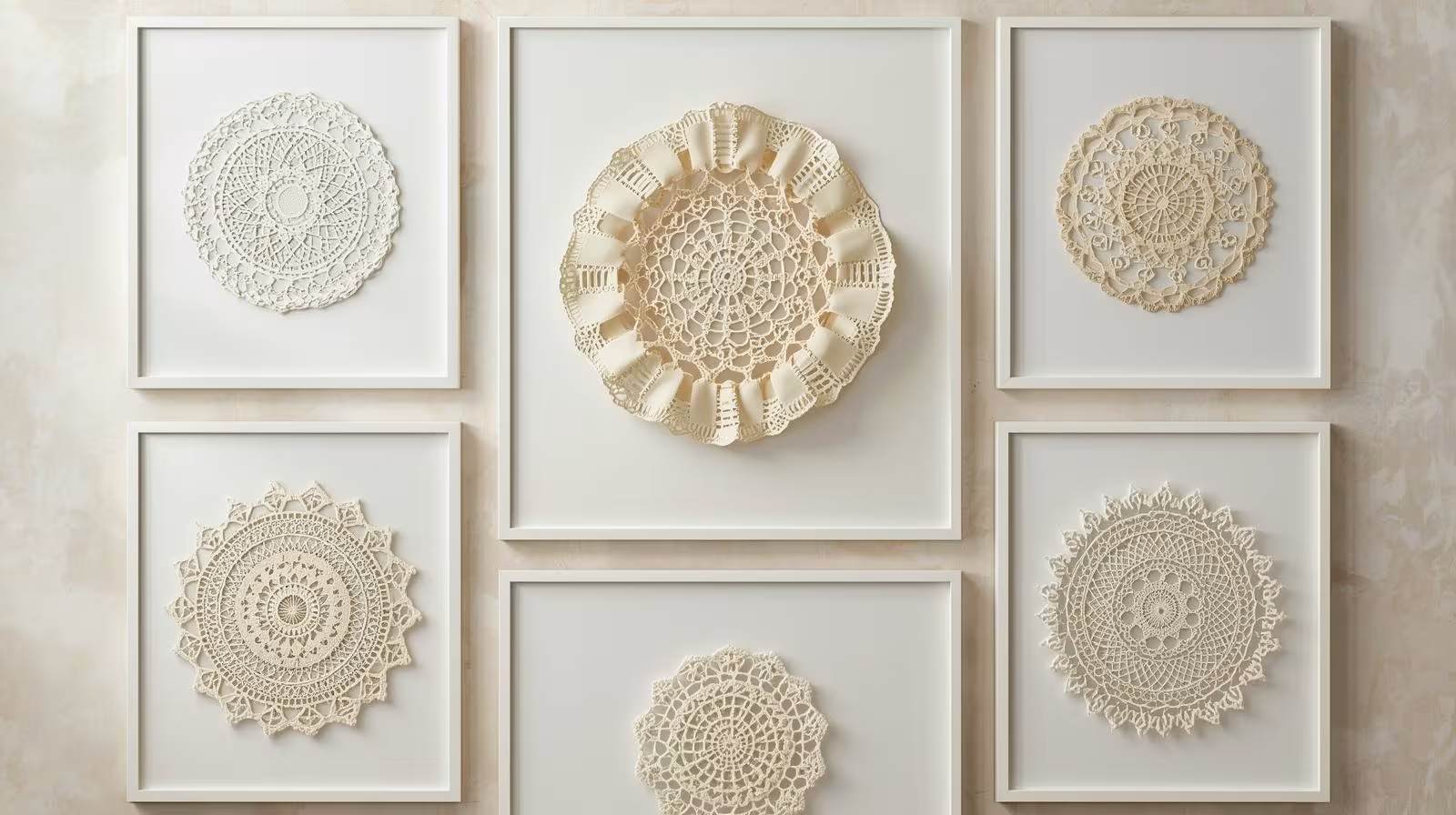
A common mistake is gluing the textile directly to a standard cardboard backing. Over time, cheap adhesives yellow and destroy the cotton fibers, while acidic cardboard leaves permanent brown stains. Professional archivers use acid-free matte boards and tiny, hidden stitches with fine cotton thread to secure the lace to the fabric or paper backing safely.
Implementation Checklist for Framing Lace
- Select a deep shadow box frame from brands like Michaels or West Elm to prevent the glass from crushing the delicate raised stitches.
- Use acid-free linen mat board in charcoal gray, navy blue, or deep forest green to make the white thread details pop.
- Secure the textile using a curved sewing needle and fine silk thread, passing through the natural loops of the crochet work.
- Opt for UV-protective museum glass if the frame will hang in a bright living room to prevent the cotton from degrading in sunlight.
Consider a real-world project from 2024 involving an estate in Savannah, Georgia. An archivist needed to preserve twelve matching starburst-pattern doilies crocheted by the client’s great-grandmother in 1942. Instead of spreading them across tabletops, the designer mounted them inside identical matte black frames with a rich navy velvet background. Hung in a geometric three-by-four grid above a sleek Danish modern sideboard from Ikea, the collection looked like an expensive, custom art installation rather than a pile of thrift store linens.
Transforming Textiles With Embroidery Hoops and Dreamcatchers
Stretching vintage lace inside wooden hoops offers a lighter, more whimsical alternative to heavy glass frames. This technique suits bohemian, farmhouse, or eclectic interiors particularly well. The round shape of the hoop naturally complements the circular geometry of traditional crochet work, turning wrinkled fabric into taut, clean art pieces.
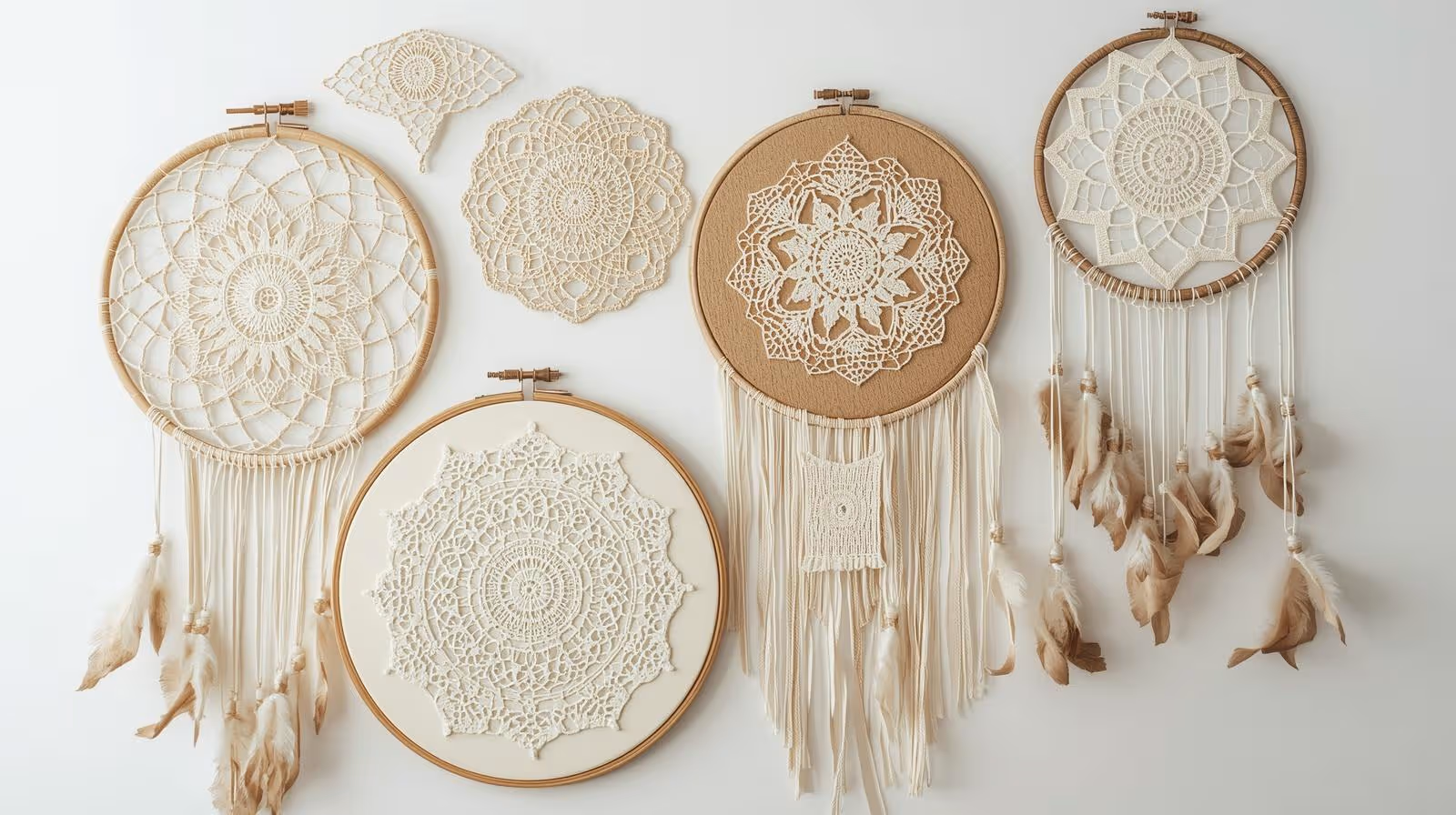
Selecting the correct size hoop is crucial for this project. If the hoop is too large, you will have empty space around the edges that requires extra netting to fill. If it is too small, you will lose the beautiful scalloped borders that give the piece its character. Look for vintage wooden hoops at flea markets or new bamboo options at local craft suppliers.
Key Steps for Hoop Displays
- Wash the lace gently in lukewarm water with a mild detergent like Dawn or Woolite, then lay it flat on a towel to dry completely before mounting.
- Center the dry doily over the inner ring of a wooden embroidery hoop, ensuring the tension remains even across the entire pattern.
- Press the outer ring down firmly, tighten the top screw, and gently pull the edges to remove any sagging or fabric ripples.
- Trim away excess fabric if the doily was part of a larger cloth, or leave the edges free for a layered, textured appearance.
A popular design trend in Portland, Oregon, shops involves grouping five to seven varying sizes of hoop-stretched laces on a single accent wall. By mixing small coaster-sized pieces with large centerpieces, you create visual rhythm. Some creators attach long strands of cream wool yarn, cotton twine, and feathers to the bottom of the hoop to build a large, vintage-inspired dreamcatcher for a nursery or bedroom.
Creative Table and Surface Arrangements for Everyday Living
If you prefer to keep your textiles on flat surfaces, you can still avoid the look of a traditional mid-century parlor. The secret lies in layering and contrasting textures. Putting a delicate cotton lace runner directly onto a dark, rustic wood table or a cold concrete surface creates an interesting tension between soft and hard elements.
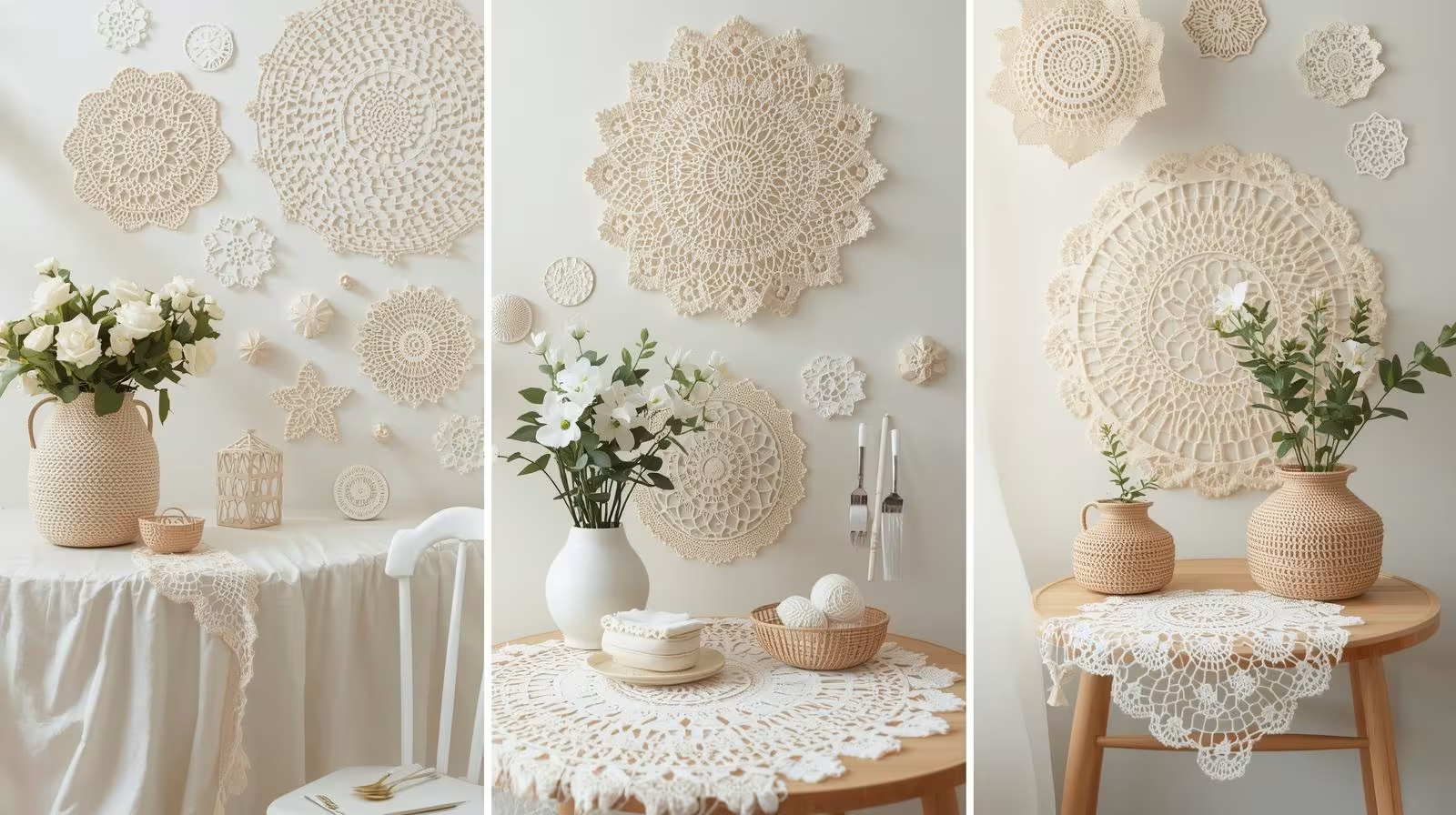
Placing these items in high-traffic areas introduces specific risks. Red wine spills, coffee rings, and candle wax can permanently ruin unsealed antique threads. If you plan to use them on a dining surface, consider placing a custom-cut sheet of tempered glass over the entire arrangement to protect the fabric from daily wear while keeping it fully visible.
Smart Strategies for Surface Placement
- Layer smaller round pieces on top of a solid, neutral table runner from Pottery Barn to ground the display.
- Use a clear museum wax under heavy vases or ceramic bowls to stop them from sliding and snagging the delicate crochet loops.
- Avoid placing brass or copper objects directly on white lace, as metal oxidation can cause dark green or black stains over time.
- Keep these displays away from damp areas like bathroom counters where mold and mildew can quickly develop in the fibers.
In a recent interior refresh of an upscale bistro in Charleston, the design team used a collection of mismatched white doilies underneath modern matte black ceramic plates. The contrast between the rough, dark ceramic and the soft, intricate white lace updated the look of the tables instantly. This setup preserved the historic feel of the building while appealing to a younger, design-focused clientele.
Crafting Functional Home Accessories from Upcycled Lace
For pieces that are already slightly damaged, stained, or torn, upcycling offers a brilliant rescue method. You do not need to throw away a beautifully stitched piece just because the outer edge has a tear. Cutting out the intact sections allows you to create new, functional items for your home.
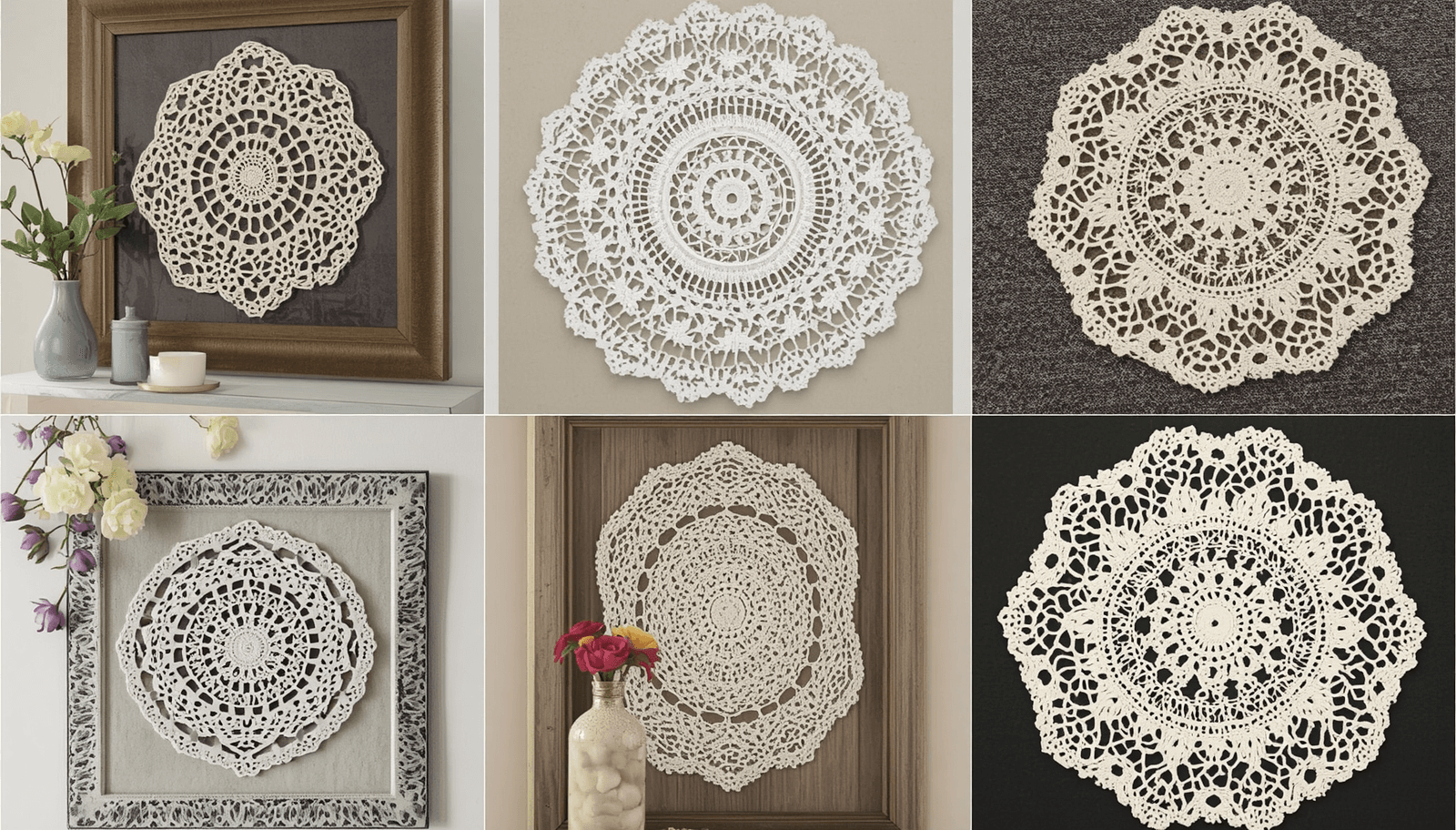
Starching is a classic technique that turns floppy fabric into a rigid, self-supporting structure. By soaking the cotton in a mixture of liquid fabric stiffener or water-soluble glue and drying it over a mold, you can shape the lace into bowls, lampshades, or candle holders.
Ways to Upcycle Damaged Linens
- Create a vintage lace bowl by soaking the doily in Mod Podge, draping it over an upside-down kitchen bowl wrapped in plastic wrap, and letting it dry for 48 hours.
- Stitch several small, matching pieces together to form a unique, textured throw pillow cover for a sofa or armchair.
- Adhere a large, flat piece of lace to the glass panels of a cabinet door using a light spray adhesive to create an elegant privacy screen.
- Wrap a wide lace runner around a plain glass cylinder vase, securing it with fabric glue to create beautiful shadow patterns when a candle is lit inside.
A textile artist based in Austin, Texas, specializes in collecting stained linens from thrift stores and giving them new life. In 2025, she created a series of hanging pendant lights by wrapping starch-stiffened vintage lace around inflatable beach balls. Once the glue dried, she popped the balls, leaving behind rigid, delicate lace spheres. When fitted with low-wattage LED bulbs, these custom globes cast intricate, romantic shadows across the bedroom walls, turning discarded materials into premium lighting features.
Wrap Up
Honoring the past does not mean your home has to feel like a museum. By framing, hooping, or cleverly layering vintage crochet doilies, you can celebrate historical craftsmanship within a modern interior design framework. Whether you choose to preserve an heirloom intact or upcycle a damaged piece into a functional light fixture, these textiles bring warmth and story to any room. Take those hidden pieces out of storage and experiment with these methods to find the perfect balance for your personal style.
FAQs Section
How do you clean old crochet doilies without damaging the delicate threads?
Soak the textile in lukewarm water mixed with a gentle, bleaching-free detergent like Orvus Paste or Woolite for 30 minutes. Never wring or twist the fabric; instead, press it gently between two clean white towels to remove excess water, then reshape it and lay it flat to dry.
What is the best way to attach a doily to a shadow box backing?
Use a fine sewing needle and acid-free cotton or silk thread to make tiny, hidden tack stitches through the existing holes of the crochet work into the backing board. Avoid all liquid glues, iron-on fusible tapes, or hot adhesive guns, as these chemicals will permanently discolor and destroy the vintage fibers over time.
Can you stiffen vintage lace permanently using natural household ingredients?
Yes, a traditional mixture of equal parts granulated sugar and boiling water can stiffen lace, but it risks attracting household pests and insects over time. For a safer, long-lasting alternative that will not attract bugs, use a commercial liquid fabric stiffener like Stiffy or a water-diluted white PVA craft glue.
Disclaimer
This content shared by Fall Rugs is solely for research and informational purposes. Fall Rugs is not a professional interior design or home renovation consultancy, and the information provided should not be considered professional advice for home improvement or decor. All ideas and suggestions are based on current trends and general knowledge in the home decor industry.