

TL;DR
Viewing or placing a couch from a side angle reveals silhouette, proportion, and spatial relationships that a straight-on view completely hides. Most furniture arrangement mistakes happen because people never consider the side profile when shopping or styling. Getting the angle right is one of the fastest ways to make a living room feel intentional and cohesive.
Introduction
Has a room ever felt slightly off, even after you rearranged everything twice? More often than not, the culprit is the couch. Not its color, not its fabric, but its angle. The side profile of a sofa communicates shape, scale, and visual flow in ways that facing it straight-on never can. Whether you are shopping online and rotating a 3D product image, or deciding where to float a sectional in an open-plan apartment, understanding what the side view tells you is genuinely useful knowledge that most decorating guides skip entirely.
What the Side Profile of a Sofa Actually Reveals
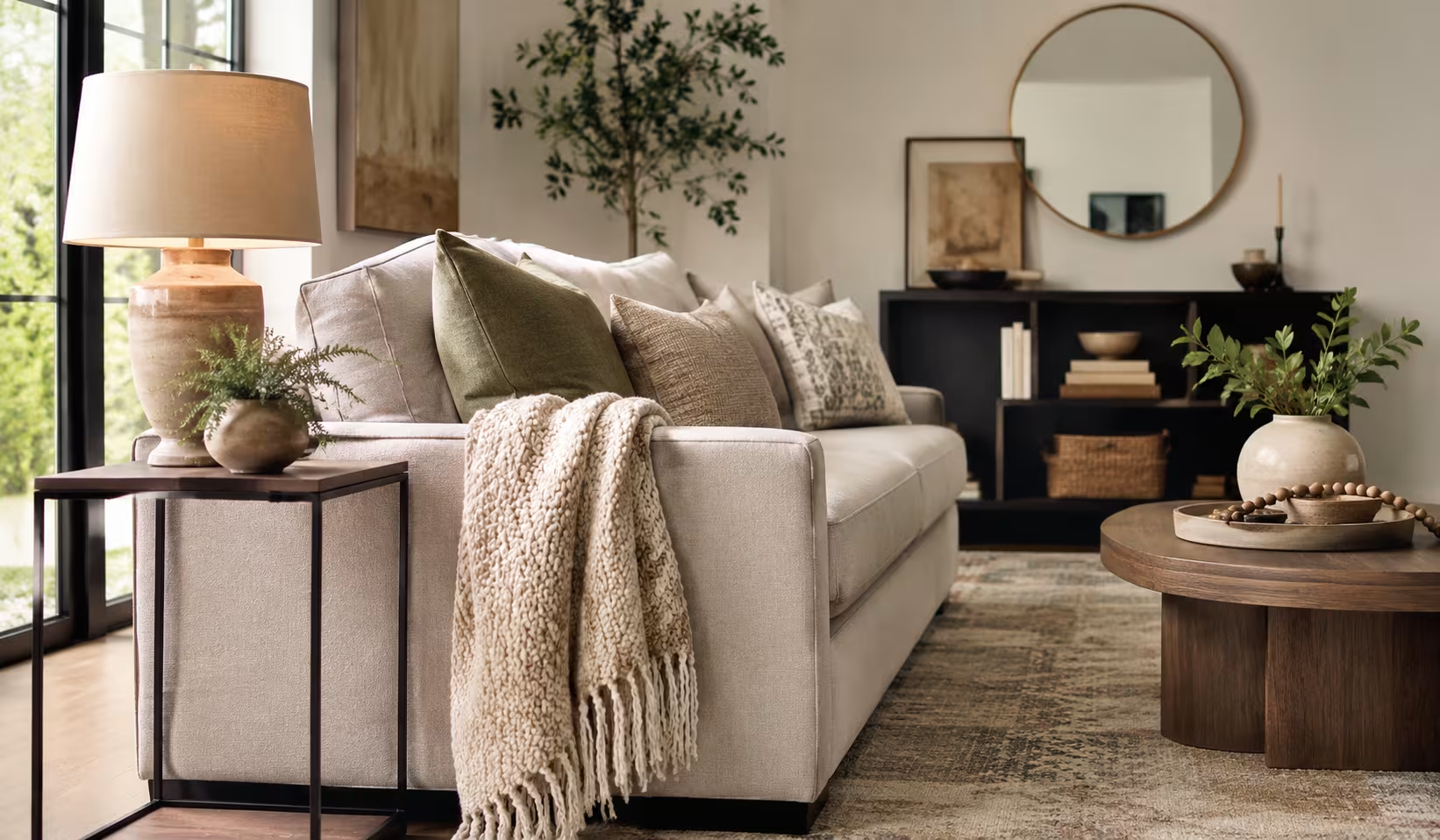
When you look at a couch straight on, you see cushions, a frame face, and fabric. Flip to the side view, and suddenly you see the real architecture of the piece. The arm height relative to the seat depth, the leg style, the back cushion slope, the overall silhouette from headrest to floor — all of it becomes visible only from the side.
This matters because a sofa’s profile is what guests and passersby see when they enter a room from the side door, walk through a hallway, or glance from the kitchen into a connected living area. Interior designers at firms like Studio McGee and Amber Lewis have long understood that a sofa’s side line is one of the most powerful visual statements in a room’s composition. It reads like a piece of sculpture when the profile is clean and intentional.
The side view also exposes proportion problems that a front view masks. A couch might look perfectly sized in a product photo taken head-on, but from the side you notice the back is too tall for a low-ceiling room, or the arms are so thick they eat into usable seating depth. These are real structural issues that only a side angle makes obvious.
Why Furniture Brands Photograph Sofas From an Angled Perspective
Visit the product pages of West Elm, Pottery Barn, or Article, and you will notice a pattern. The primary product photograph is almost never a dead-on front view. It is almost always a three-quarter angle, which blends the front and side into a single image. This is not accidental.
The three-quarter shot gives the viewer enough side profile information to read the sofa’s silhouette while still showing the cushion arrangement and fabric texture. Marketing teams at these brands know from A/B testing data that this angle increases purchase confidence because it answers more questions in a single glance. Buyers get a sense of the arm style, the leg length, and the overall body proportions.
Ruggable, which sells flat-woven washable rugs and often photographs them beneath styled sofas, uses side-angled couch views specifically to show how rug dimensions relate to sofa footprint. This is a functional use of side perspective: it tells you whether a 5×8 rug will extend past the front legs, which is the standard recommendation in most design guidelines.
How Angled Couch Placement Transforms a Room’s Flow
Placing a couch at an angle to the wall, even a subtle 15 to 30 degrees, is a technique that spatial designers use to break up the box-shaped monotony of most apartment floor plans. It creates diagonal sight lines, which the human eye finds more dynamic and inviting than perfectly parallel furniture arrangements.
Sarah, a Brooklyn-based interior stylist who works primarily with pre-war apartment layouts, repositioned a client’s L-shaped sectional from flush-against-the-wall to a floating diagonal position facing the fireplace. The room did not get any larger. No furniture was removed. But the angled placement opened a conversation zone between the sofa and the two accent chairs across from it, and the side profile of the sectional became a visual anchor rather than a flat backdrop. The client had lived in the apartment for four years and never realized the layout was working against her.
When you float a sofa away from the wall and tilt it even slightly, you expose the back panel and the legs, which adds visual lightness. This is why pieces like the IKEA Söderhamn with its open base and modular back sections work so well when placed diagonally. The side view stays airy rather than blocky.
Reading the Side Silhouette When Shopping for a New Sofa
If you are shopping for a sofa online, pulling up the side-angle view before committing to a purchase is not optional. It is the most informative photograph in the product gallery. Most retailers include it, but buyers routinely skip it in favor of the styled room shot.
From the side, check the back height first. A high-back sofa, defined roughly as anything over 36 inches from floor to top of back cushion, can overwhelm a room with low ceilings or small square footage. The Restoration Hardware Cloud sofa, for example, has a very specific side profile: deep seat, low back, ground-hugging silhouette. It reads as relaxed and horizontal. That same side profile would look completely wrong in a Victorian-style sitting room where vertical lines dominate the architecture.
Leg length is the next detail to examine from the side. Legs that are four inches or taller give the sofa a lifted, lighter look that suits transitional and Scandinavian-influenced interiors. Sofas that sit low or use a platform base, like many mid-century modern designs, create a horizontal emphasis that works best in rooms with enough ceiling height to balance them. Neither is universally better, but both are only legible from the side view.
Arm Styles and What They Say From the Profile
Rolled arms, track arms, and slope arms each communicate a completely different aesthetic when viewed from the side. A rolled arm reads as traditional and upholstered, with its rounded profile giving the sofa a softness that works in layered, collected interiors. Track arms are clean, geometric, and sharp-edged from the side, which is exactly why they dominate contemporary and Japandi-influenced design schemes.
Slope arms fall between the two. They angle gently from the seat up to the top, creating a mid-century silhouette that has been revived heavily in recent collections from brands like Burrow and Floyd Home. From the side, the slope arm gives the sofa a sense of movement and direction that neither rolled nor track arms produce.
Back Cushion Configuration and Depth
From a side angle, you can also see how the back cushion sits relative to the seat. Tight-back sofas have a fixed, integrated back that shows no depth variation from the side, which creates a tailored, formal appearance. Loose-back sofas, where cushions are separate and slightly puffed, look more relaxed and lived-in from the profile. Neither is inherently better. But if you pull a sofa from a tight-back profile and place it in a beach house full of organic textures and wicker, the tension between styles will read as dissonance.
Styling the Back of a Sofa When It Faces Away From a Wall
Once you place a sofa at an angle or float it in the middle of a room, the back becomes visible. This is where many people freeze. The back of most sofas is utilitarian by design because manufacturers expect it to face a wall. But if you choose to angle your couch so the side profile is prominent and the back is exposed, you need to address that back panel as part of the design.
A console table placed directly behind the sofa is the most common solution, and for good reason. It fills the gap between the sofa back and the open room, creates a surface for lamps and objects, and visually anchors the floating piece. West Elm’s Anton console and CB2’s Span series are frequently used in this configuration in professionally styled interiors.
Nate Berkus, the Chicago-born designer known for his work on textiles and residential interiors, has spoken often about the importance of treating the back of a sofa as a “fifth wall” when a room layout requires it to be visible. Draping a textured throw over the back, placing a low bookshelf behind it, or simply choosing a sofa with a tufted back panel rather than a plain one are all decisions that become necessary once you commit to an angled placement.
When the Side Angle Works Against You
Not every room benefits from angular couch placement, and the side profile does not always flatter a piece. A sofa with very thick, bulky arms that looked fine head-on can look almost comically heavy from the side in a small room. Before you commit to an angled arrangement, photograph the room from the doorway after you have moved the couch. The photograph will tell you immediately whether the side silhouette adds elegance or clutter.
Rooms with strong architectural features like built-in bookcases, bay windows, or fireplace alcoves generally want furniture aligned with those existing lines rather than cutting across them diagonally. Angling a sofa in a room like this often creates a visual argument between the sofa and the architecture that neither party wins.
The exception is a very large open floor plan where diagonal placement is the only way to create zones without physical walls. In those cases, the side profile of the sofa acts as a soft divider, signaling to the room that there is a seating area here without blocking light or sightlines.
Wrap Up
The side angle of a couch is not a minor detail. It is the view that reveals true proportions, informs placement decisions, and shapes how a room reads from the moment someone walks in. Whether you are shopping for a new sofa and finally opening that profile image in the product gallery, or rethinking a living room layout that has never quite clicked, treating the side view as your primary design reference changes everything. Profile before purchase, silhouette before styling, angle before arrangement.
FAQs
Should a couch be placed against the wall or angled in a room?
It depends on room size and layout goals. Floating a couch at an angle works well in open-plan spaces to define zones, while smaller rooms often benefit from wall placement to preserve walking paths.
What does the side profile of a sofa tell you when buying online?
The side view reveals the actual back height, arm thickness, leg length, and seat depth proportions that front-facing product photos obscure. It is the most informative angle for assessing fit before purchasing.
How do I style the back of a sofa that is visible in an angled arrangement?
Place a slim console table directly behind the sofa to fill the visual gap, or choose a sofa with a finished, tufted, or upholstered back panel that looks intentional from all sides.
Disclaimer
This content shared by Fall Rugs is solely for research and informational purposes. Fall Rugs is not a professional interior design or home renovation consultancy, and the information provided should not be considered professional advice for home improvement or decor. All ideas and suggestions are based on current trends and general knowledge in the home decor industry.