
TL;DR
Identifying a tree with heart-shaped leaves requires looking at leaf margins, flower structures, and seasonal colour shifts. Core species like the eastern redbud, northern catalpa, and katsura offer distinct growth habits and ecological benefits for residential landscaping. Proper matching of soil conditions and sunlight ensures these visually striking specimens thrive across varied climate zones.
Introduction
Why do certain silhouettes in the forest or suburban canopy immediately catch your eye? The distinctive shape of a leaf can transform a standard green backdrop into a focal point that anchors an entire landscape design. For homeowners and arborists alike, recognizing these specific botanical forms simplifies tree care and guides smart planting choices. This guide breaks down the most prominent trees featuring heart-shaped foliage, providing the practical field notes you need to identify them and integrate them into your outdoor space.
The Early Blooming Radiance of the Eastern Redbud
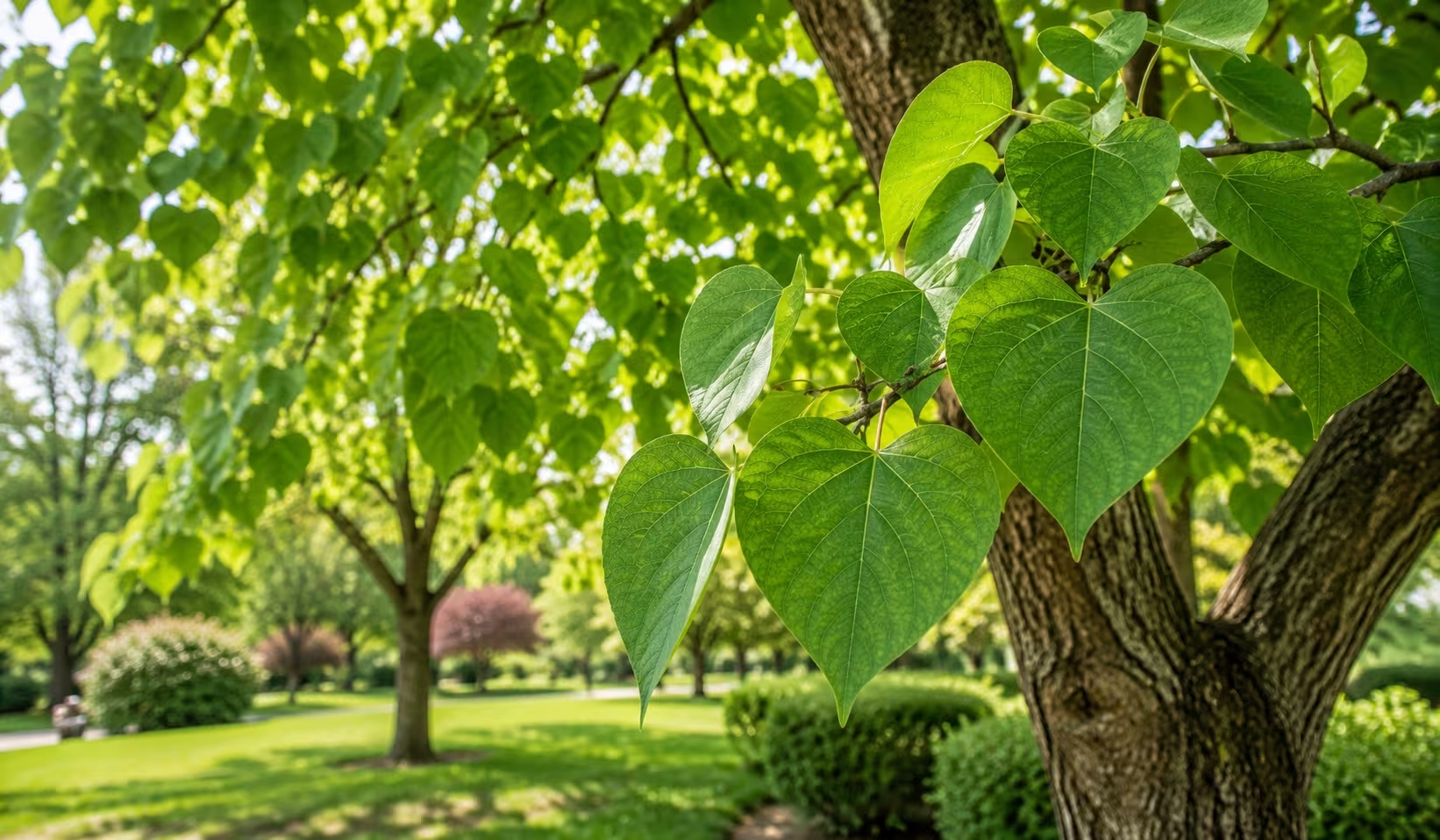
The Eastern Redbud, known scientifically as Cercis canadensis, stands out as a premier small-scale specimen across eastern North America and Midwest suburbs. Homeowners frequently spot this tree in early spring when clusters of magenta, pea-like blossoms erupt directly from the bark before any foliage appears. Once the flowers fade, the tree develops a dense canopy of tightly structured, deeply cordate leaves that offer a rich green hue throughout the summer months.
Early in my landscaping career, I watched a homeowner plant a Forest Pansy redbud variation in a poorly drained clay dip in Columbus, Ohio. The tree suffered severe root rot within two seasons because these specimens require sharp drainage to thrive. Moving the replacement tree to a gentle slope with loamy soil solved the issue completely, resulting in a robust, multi-stemmed canopy that resisted common fungal spots.
[Leaf Margin: Smooth] ---> [Flowers: Pink/Purple] ---> Cercis canadensis (Redbud)
[Leaf Margin: Toothed] ---> [Flowers: Yellow/White] ---> Tilia americana (Basswood)
Arborists categorize the redbud as an understory tree, meaning it naturally prefers the dappled light found beneath larger oaks or maples. Cultivars like the Rising Sun or Ruby Falls have become staples in modern garden design, often sourced from major nurseries like Monrovia. The heart-shaped leaves of the standard species turn a subtle, clear yellow in late autumn, providing a quiet finale to the growing season.
Identifying Redbud Cultivars by Color Patterns
Selecting the right cultivar requires looking closely at the specific leaf color progression throughout the spring and summer. The Hearts of Gold variety emerges with bright tangerine tones before settling into a luminous chartreuse that brightens shady corners of a yard.
Another excellent option for tight spaces near patios is the Ace of Hearts, which maintains a highly compact growth habit and stacks its small, distinct leaves in an overlapping, shingle-like pattern. These specialized variations allow municipal planners in cities like Chicago to use redbuds in narrow sidewalk cutouts where traditional shade trees would outgrow the available space.
The Dramatic Scale and Bold Structure of the Northern Catalpa
The Northern Catalpa, or Catalpa speciosa, offers a massive contrast to delicate understory trees by producing some of the largest heart-shaped leaves in temperate zones. Native to the midwestern United States, this fast-growing giant can easily reach heights of seventy feet, casting broad shade with foliage that can measure a foot long. The leaves are notably thick with a soft, fuzzy underside, emitting a distinct pungent odor when crushed between your fingers.
City planners in Louisville routinely utilize the northern catalpa in large public parks due to its ability to tolerate tough urban soils and temporary drought conditions. In late spring, the tree commands attention by producing huge, orchid-like white flowers with yellow and purple interior striping. These blooms eventually give way to long, cigar-shaped seed pods that dangle from the branches well into the winter months.
Large Leaf (12") + Orchid-like Blooms + Long Seed Pods = Catalpa speciosa
Woodworkers value the mature timber of the catalpa because the wood resists rot exceptionally well, making it a historic choice for fence posts and utility poles. The sheer weight of the dense foliage means the tree requires structural pruning during its youth to prevent storm breakage later in life. While it may drop significant debris in autumn, the sheer visual impact of its tropical-looking canopy makes it an irreplaceable asset for large-scale properties.
Managing the Lifecycle of Catalpa Seed Pods
The notable debris field created by fallen catalpa pods requires careful placement away from sensitive roof gutters and formal swimming pools. Homeowners often place these trees along the back perimeter of a property where the dropped pods can naturally decompose into the lawn or garden mulch. This placement also protects the brittle winter twigs from high winds while still allowing the spectacular June floral display to be visible from the main house.
The Sweet Fragrance and Delicate Texture of the Katsura Tree
The Katsura tree, or Cercidiphyllum japonicum, brings an international flair to North American gardens, originating from the rich woodlands of Japan and China. The leaves closely resemble those of the redbud, but they feature slightly scalloped edges and arrange themselves in neat, opposite pairs along the delicate twigs. This tree truly excels during the autumn transition, when the entire canopy shifts into shades of apricot, gold, and soft pink.
A memorable project in Portland, Oregon, involved using a katsura tree as a central courtyard feature for a commercial office building. As the leaves began to drop in October, the surrounding air filled with a distinct, comforting aroma mimicking caramelized sugar or warm cotton candy. This unique olfactory characteristic is caused by the release of maltol from the dying leaf tissues, a trait that delights visitors every autumn.
[Scalloped Edges] + [Opposite Leaf Pairing] + [Cotton Candy Scent] = Katsura Tree
Katsura trees require consistent moisture throughout the summer heat, often dropping their leaves early if subjected to prolonged drought or hot, dry winds. Landscape architects frequently pair them with drip irrigation systems or position them near natural water features to maintain optimal humidity levels. When properly watered, the elegant, pyramidal form of a mature katsura creates a refined silhouette that works beautifully alongside minimalist architectural designs.
Sun Exposure and Soil Prep for Katsura Success
Achieving the best autumn color transformation requires balancing afternoon shade with enough morning sunlight to trigger the pigment changes. Planting a katsura in full, baking afternoon sun often results in scorched leaf margins, particularly in southern zones like Atlanta. Incorporating generous amounts of organic compost into the planting hole helps retain the steady moisture these sensitive roots demand.
The Historic Presence and Urban Resilience of the Linden Tree
The Linden genus, comprising species like Tilia americana and Tilia cordata, features heart-shaped leaves with asymmetrical bases and finely serrated edges. Commonly known as basswood in America or lime trees in Europe, these sturdy shade trees have lined famous boulevards for centuries, including the historic Unter den Linden in Berlin. The foliage forms a dense, dark green canopy that provides exceptional shade for suburban homes and urban walkways alike.
In midsummer, tiny, pale yellow flowers hang from specialized, leaf-like bracts, releasing a heavy, sweet perfume that attracts thousands of local pollinators. Honey produced from linden orchards is highly prized by specialists for its light, crisp flavor profile and clear coloration. Brands like Pottery Barn often feature indoor dining tables crafted from solid linden wood, celebrated for its fine grain and ease of carving.
Asymmetrical Base + Finely Serrated Edges + Sweet Summer Perfume = Linden Tree
A common mistake when managing older lindens is ignoring infestations of aphids, which secrete a sticky substance known as honeydew onto the leaves below. This residue quickly attracts sooty mold, turning the pristine heart-shaped leaves a dull, unattractive black by late August. Applying a systemic neem oil treatment early in the spring season controls these pests effectively, preserving the glossy beauty of the canopy until winter arrives.
Choosing Between American and Littleleaf Linden Varieties
The native American basswood produces much larger leaves and thrives in expansive park settings where its massive root system can spread without restriction. For tighter residential properties, the Littleleaf Linden offers a more manicured, symmetrical shape that requires minimal maintenance over time. Cultivars such as Greenspire have become industry standards for street plantings due to their high tolerance for road salt and compacted clay soils.
Indoor Counterparts and Small Space Design Solutions
Homeowners who lack the acreage for a massive shade tree can still enjoy this classic foliage geometry by looking at indoor options and compact shrubs. The Philodendron cordatum, an adaptable indoor vining plant, brings the exact heart-shaped aesthetic into living rooms and home offices across the country. These trailing houseplants thrive in indirect kitchen light, requiring minimal water while purifying interior air spaces throughout the year.
[Outdoor Yard] ---> Cercis canadensis (Redbud Tree)
[Indoor Room] ---> Philodendron cordatum (Heartleaf Vine)
For outdoor patios, container-grown shrubs can mimic the look of larger trees without risking damage to nearby concrete foundations. Retailers like West Elm frequently showcase minimalist stone planters holding dwarf woody plants to soften the hard lines of modern urban balconies. This approach allows urban dwellers to experience the seasonal shifts of unique foliage shapes within a highly controlled, small-scale environment.
Wrap Up
Selecting a tree with heart-shaped leaves involves matching your specific climate zone with the right soil and moisture conditions. Whether you choose the vibrant spring colors of the eastern redbud or the grand scale of the northern catalpa, these species bring unmistakable character to any property. Investing time into proper site preparation ensures your chosen specimen will provide beautiful shade and structural elegance for decades to come.
FAQs Section
How do I tell the difference between a redbud leaf and a katsura leaf?
Redbud leaves feature completely smooth outer edges and attach to branches in an alternating pattern. Katsura leaves have finely scalloped margins and grow directly opposite each other along the stem.
Do catalpa tree roots cause damage to residential sidewalks or sewer lines?
The large size of a mature catalpa means its root system can lift shallow concrete if planted less than ten feet from a walkway. Position these trees in open lawn areas to give the vigorous roots plenty of room to expand safely.
Why are the heart-shaped leaves on my linden tree turning brown around the edges?
This condition is typically caused by leaf scorch resulting from prolonged periods of dry weather and high winds. Providing a deep, slow watering at the tree base once a week during summer heatwaves will quickly halt the browning.
Disclaimer
This content shared by Fall Rugs is solely for research and informational purposes. Fall Rugs is not a professional interior design or home renovation consultancy, and the information provided should not be considered professional advice for home improvement or decor. All ideas and suggestions are based on current trends and general knowledge in the home decor industry.