
TL;DR
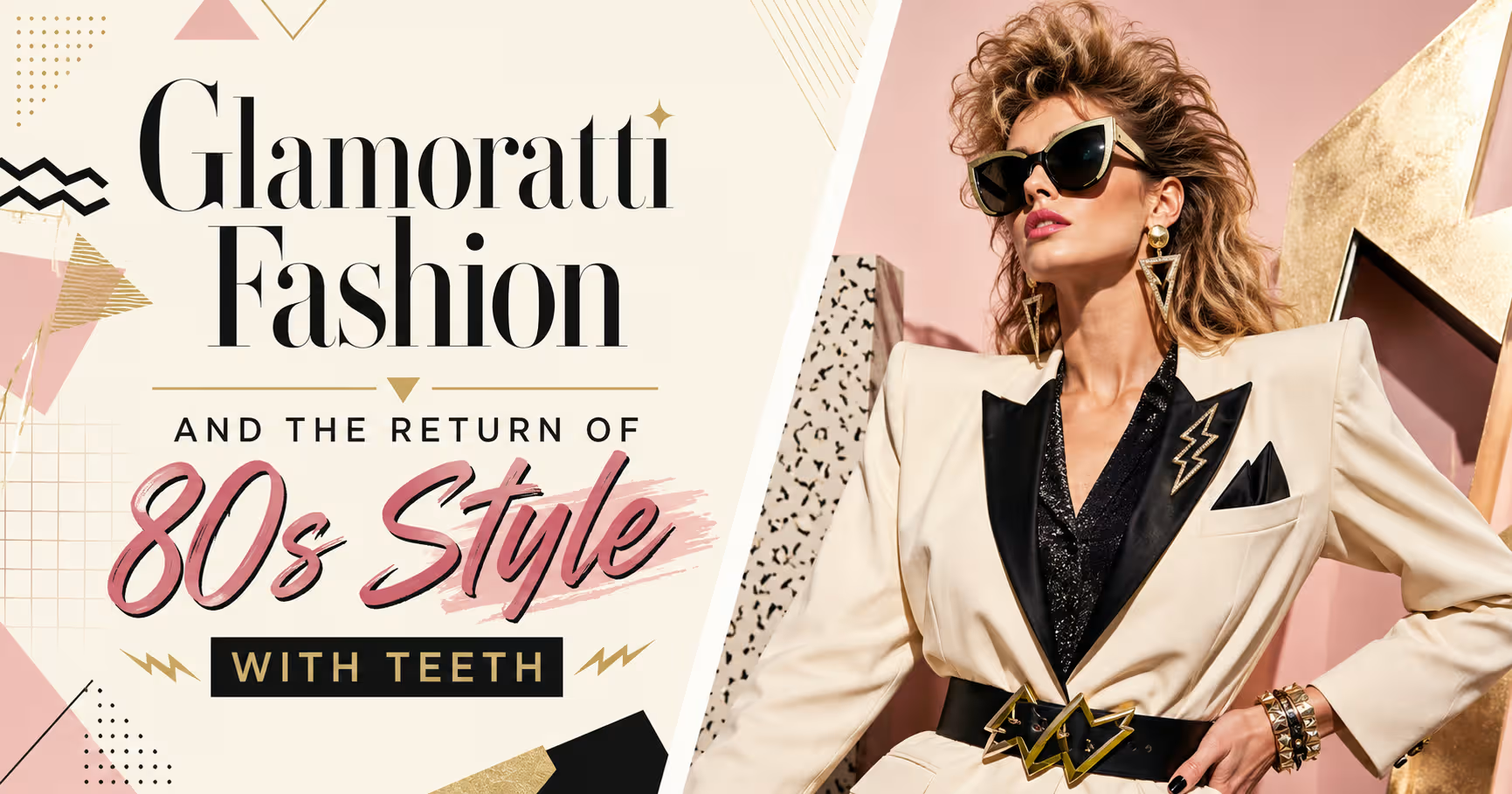
Glamoratti Fashion brings back the sharp glamour of the 1980s through bold shoulders, glossy fabrics, statement jewelry, and confident styling. The revival works because it borrows the decade’s drama while editing the excess for modern wardrobes.
Introduction
Fashion rarely returns as a copy; it comes back with cleaner lines and sharper context. The 80s style revival is a good example, especially in the rise of Glamoratti Fashion, where power dressing, nightclub polish, and luxury attitude meet today’s taste for self-expression. Readers are looking for more than nostalgia now; they want to know which parts still look current and which parts belong in a costume box. The answer sits in proportion, fabric, styling discipline, and a respect for the designers who made the decade feel larger than life.
The 80s Gave Fashion a Louder Vocabulary
The 1980s were not quiet years. In New York, London, Paris, and Milan, clothes started speaking in boardroom volume. Giorgio Armani softened tailoring through relaxed suiting, while Thierry Mugler and Claude Montana pushed the shoulder line into architecture. Those shapes mattered because they reflected a cultural mood: more women entering corporate spaces, more visibility for music television, and more fashion moving from private salons into mass media.
Glamoratti Fashion borrows that bigger vocabulary without copying it word for word. The modern version keeps the shoulder, the shine, and the attitude, then removes the visual clutter that made some original 80s looks feel heavy. A satin blazer with tapered trousers now reads sharper than a full lamé suit, while a sculpted mini dress can nod to Mugler without looking like archival cosplay.
Power Dressing Was Never Just About Jackets
Power dressing is often reduced to shoulder pads, but that misses the point. The real idea was controlled authority. Princess Diana’s Catherine Walker suits, Joan Collins’s Nolan Miller costumes on Dynasty, and Grace Jones’s sharply tailored image all showed different versions of command. The shoulder was a signal, not the whole message.
The mistake many people make with 80s revival styling is adding every reference at once. I’ve seen strong outfits collapse under oversized earrings, bright pumps, a metallic bag, a cinched belt, and teased hair in one look. The fix is usually subtraction. Keep one major 80s code, such as the shoulder or the jewel tone, then let the rest of the outfit breathe.
Glamoratti Fashion Blends Luxury Drama with Street-Level Wearability
Glamoratti Fashion works because it sits between high-gloss fantasy and real-life dressing. It has the shine of Versace, the polish of Saint Laurent, and the accessibility of modern brands like Zara, Mango, and H&M when they reinterpret retro silhouettes. The style isn’t about dressing like an 80s celebrity at a themed party. It’s about using the decade’s confidence as a design language.
A practical example comes from evening dressing. A black velvet blazer, straight-leg jeans, crystal earrings, and pointed heels can carry the same energy as 1980s after-dark glamour without becoming loud. Westwood-era punk references, Madonna’s lace-and-leather contrast, and Studio 54’s late disco shimmer all feed into the look, but the modern outfit is edited enough for dinner in London or a gallery opening in Dubai.
Shine Needs Structure or It Starts Looking Cheap
Metallic fabric is one of the fastest routes into 80s style, and one of the easiest to get wrong. Lurex, sequins, patent leather, and satin were everywhere in the decade, from clubwear to music videos. The reason some pieces still look expensive is construction. A sequined Saint Laurent jacket holds shape differently from a thin, stretchy party top with no lining.
For today’s wardrobe, shine works best when anchored by structure. A silver skirt looks more refined with a crisp white shirt. A glossy black pump looks stronger with matte wool trousers. This is the same principle interior stylists use with reflective surfaces: glass, brass, and lacquer need texture nearby. Fashion follows a similar visual rule.
The Strongest 80s Revival Pieces Are Built on Proportion
Proportion decides whether Glamoratti Fashion feels intentional or dated. The 1980s loved contrast: broad shoulders with narrow waists, high-cut legs with oversized jackets, big hair with clean cheekbones, bright color against black. Designers used imbalance to create energy. Modern styling can use the same trick, but with a lighter hand.
A good working formula is volume in one area and restraint elsewhere. An oversized blazer looks current with slim trousers or a column skirt. A puff-sleeve blouse works better with straight denim than with a ruffled skirt. Ruggable and IKEA may belong more to home decor than fashion, yet their popularity shows a larger taste pattern: people like bold design when it stays practical, washable, and easy to live with.
Denim, Leather, and Tailoring Carry the Trend Best
Denim was a major 80s fabric story, from acid wash jeans to Guess campaigns and Levi’s 501s. Today, the strongest version is less distressed and more sculptural. High-rise straight jeans with a cinched blazer can suggest the decade without copying its most chaotic details. Leather has the same advantage. A cropped leather jacket gives enough edge without needing neon accessories.
Tailoring remains the most reliable entry point. Armani’s relaxed suits changed how the world saw business clothing, while Donna Karan’s Seven Easy Pieces in 1985 helped frame a modular wardrobe for professional women. Those ideas still feel relevant because they solve real dressing problems. Clothes that create shape, authority, and movement rarely lose their usefulness.
Color and Pattern Bring the Revival to Life
The 80s were fearless with color. Electric blue, fuchsia, emerald, red, gold, and black-and-white contrast appeared across music, film, retail, and magazine editorials. MTV launched in 1981, and the music video quickly became a fashion engine. Cyndi Lauper’s playful color, Michael Jackson’s military jackets, and Madonna’s layered accessories helped push style into living rooms across the United States and Europe.
Glamoratti Fashion uses color with more discipline. Instead of wearing five saturated tones together, a modern outfit might place one vivid piece against neutrals. A cobalt blazer over a black slip dress has the right tension. A red belt over a camel coat gives the waist definition. A zebra print shoe can carry the pattern story without letting it take over.
Animal Print Works Better as an Accent
Animal print is strongly tied to 80s glamour, especially leopard, zebra, and snakeskin effects. Roberto Cavalli later made animal print part of his larger brand identity, while Versace used bold pattern as a symbol of wealth, body confidence, and Mediterranean excess. The print still carries that charge, which is why restraint matters.
A leopard coat can look sensational, but it demands calm styling. Black knitwear, gold hoops, and clean boots usually do more for it than another bright piece. A small snakeskin bag with a plain suit can be enough. Pattern should act like seasoning, not the full meal.
Celebrity Culture Keeps the 80s Revival Visible
The 80s were a celebrity-fashion machine before social media existed. Red carpets, album covers, television dramas, and glossy magazines gave clothes cultural force. Grace Jones worked with Jean-Paul Goude to create images that still influence fashion photography. Madonna made thrift, lingerie, crosses, lace, and streetwear feel like a personal code. Princess Diana turned royal dressing into a study in color, tailoring, and public messaging.
That influence continues because modern celebrity styling loves recognizable references. Zendaya, Dua Lipa, Miley Cyrus, and Beyoncé have all worn looks that echo 80s glamour through bodysuits, sculpted shoulders, metallic finishes, or stage-ready tailoring. On runways, brands such as Balmain and Saint Laurent have returned often to strong shoulders and high-impact eveningwear because the silhouette photographs well and reads instantly on digital platforms.
The Camera Changed the Clothes Then, and It Still Does
MTV changed fashion by rewarding clothes that looked clear on screen. Big jackets, shiny surfaces, bright color, and graphic accessories translated well on television. Today, Instagram, TikTok, and red-carpet close-ups create a similar pressure. Clothes need to read fast, sometimes in less than three seconds.
That’s one reason the 80s revival keeps returning. A sculpted shoulder is easy to recognize. A metallic boot catches light. A bold earring frames the face in a cropped video. The style has strong visual grammar, which makes it valuable in a media culture built around fast recognition.
How to Wear Glamoratti Fashion Without Looking Costumed
The cleanest way to wear this revival is to start with one anchor piece. A sharp blazer, a satin blouse, a leather skirt, a metallic heel, or a pair of oversized gold earrings can carry the mood. The rest of the outfit should support it, not compete with it. That is where many trend-led outfits fail. They collect references instead of building a point of view.
A retail buyer in Manchester once described a familiar pattern from fitting-room feedback: customers loved bold jackets on the hanger but felt overwhelmed once they added matching trousers. The better solution was to pair the jacket with denim, a plain tank, and low jewelry. Sales improved because the piece stopped feeling like a risk. That lesson applies broadly. One dramatic item becomes wearable when the surrounding pieces are calm.
Fit Is the Difference Between Vintage and Dated
Vintage 80s clothing can be beautifully made, but fit standards have shifted. Many original jackets were cut with heavy shoulder pads, lower armholes, and longer sleeves. A tailor can shorten sleeves, refine the waist, or reduce padding, but not every garment is worth the alteration cost. The smarter buy is often a vintage-inspired piece with modern construction.
For beginners, shoes and accessories offer a lower-risk entry. A pointed pump, wide belt, crystal clip-style earring, or structured clutch can bring Glamoratti energy into a familiar wardrobe. For experts, the stronger play is proportion mixing: a boxy blazer over a slip skirt, a leather bustier under tailoring, or a jewel-tone coat over a monochrome base.
The Revival Works Because Confidence Is Back in Demand
Minimalism dominated many wardrobes through the 2010s, shaped by brands like COS, The Row, and Uniqlo’s cleaner basics. That influence isn’t gone, but many shoppers now want more character. The return of 80s style answers that desire with visible confidence: shine, shape, color, and personality. It gives people permission to dress with presence again.
The best version is not loud for the sake of noise. It has control. Glamoratti Fashion feels fresh when it pairs old drama with modern editing, when a Versace-like print meets clean denim, or when a Mugler-inspired shoulder sits over a simple black trouser. The result is not a costume. It is memory, taste, and attitude in the same outfit.
Wrap Up
Glamoratti Fashion proves that the 80s style revival has more depth than shoulder pads and neon jokes. Its strongest ideas come from power dressing, celebrity image-making, structured tailoring, glossy texture, and fearless color. The modern wardrobe only needs a selective approach: one dramatic code, clean supporting pieces, and fit that feels current. The takeaway is simple: borrow the decade’s confidence, not its clutter.
FAQs Section
What is Glamoratti Fashion in 80s style?
Glamoratti Fashion is a polished revival of 1980s glamour, built around bold shoulders, shine, strong color, statement accessories, and confident tailoring. It feels modern when the styling is edited rather than overloaded.
How do I wear 80s fashion without looking outdated?
Choose one clear 80s-inspired piece, such as a structured blazer, metallic shoe, leather jacket, or oversized earring, then pair it with clean modern basics. Fit, fabric quality, and restraint keep the look current.
Which brands influenced the 80s fashion revival?
Giorgio Armani, Thierry Mugler, Claude Montana, Versace, Yves Saint Laurent, Donna Karan, and Jean Paul Gaultier shaped many of the decade’s strongest fashion codes. Their influence still appears in modern tailoring, eveningwear, and celebrity styling.
Disclaimer
This content shared by Fall Rugs is solely for research and informational purposes. Fall Rugs is not a professional interior design or home renovation consultancy, and the information provided should not be considered professional advice for home improvement or decor. All ideas and suggestions are based on current trends and general knowledge in the home decor industry.