
TL;DR
Start tomato seeds indoors 6 to 8 weeks before your region’s average last spring frost date. Planting too early causes leggy, weak stems, while planting too late delays your summer harvest.
Introduction
Why do so many backyard growers end up with weak, spindly tomato plants before winter even clears? Getting the indoor planting calendar right means balancing soil temperature, light hours, and local weather patterns. This analysis reveals the precise calculations required to produce sturdy transplants that thrive immediately upon entering outdoor garden beds.
Calculating the Calendar Based on Local Frost Dates
Count backward from the spring frost date to establish a reliable planting window. Most regions across North America require a 6 to 8 week head start inside a controlled environment. If your local safe planting date lands on May 15, your sowing window opens between March 20 and April 3. Planting prior to this window fills your indoor space with oversized, stressed root systems before the outdoor soil warms.
Growers often rely on historical data from the National Centers for Environmental Information to pinpoint their frost thresholds. A common error involves planting seeds during an unseasonably warm week in February, forgetting that March blizzards will trap the seedlings inside. When plants remain indoors past their prime transplant window, they exhaust the nutrients within their starting cells.
Utilizing Regional Climate Zones
The United States Department of Agriculture hardiness zones offer a broad baseline for thermal minimums, but local microclimates dictate actual frost safety. For instance, a gardener in Zone 6b Ohio faces different spring soil warming patterns than a grower in Zone 6b coastal Massachusetts. Always cross-reference your specific zip code data with local extension office records rather than relying solely on the back of a seed packet.
Tracking Spring Temperature Thresholds
Tomato seeds require consistent ambient warmth to spark germination within the seed tray cells. The physical transformation begins when the growing medium reaches 21 to 27 degrees Celsius. Cold basement floors slow this process, stretching a standard five-day germination period into a multi-week struggle that encourages fungal decay.
- Track local soil temperatures using a long-stem metal dial thermometer.
- Map your targeted outdoor planting date to historical evening lows above 10 degrees Celsius.
- Factor in a two-week safety buffer for unpredictable high-latitude spring weather patterns.
- Record yearly frost dates in a dedicated garden journal to track shifting microclimate trends.
How Variety Dictates Your Planting Timeline
Different tomato varieties exhibit unique growth rates during their initial vegetative phases. Heirloom indeterminate varieties like Brandywine or Cherokee Purple require a full 8 weeks to develop a sturdy main stem and root architecture. These tall, vining plants grow rapidly once they sprout, demanding quick transitions to larger containers if outdoor weather delays occur.
In contrast, determinate bush varieties like Roma, San Marzano, or Celebrity often develop on a tighter schedule. These compact selections grow more predictably, reaching an ideal transplant size within 6 weeks of germination. Sowing determinate varieties too early causes them to set blossoms inside small plastic pots, which permanently stunts their outdoor production potential.
Early Season Selection Strategies
Early-maturing varieties like Early Girl or Fourth of July possess genetics bred for rapid cold-soil adaptation. Gardeners can push these varieties to the early side of the 8-week window, provided they utilize protective coverings outside. These cold-tolerant selections focus energy on early root expansion, allowing them to withstand minor spring temperature dips after transition.
Late Season Varieties Requirements
Beefsteak varieties require an extended summer season to mature their heavy fruits. Starting these varieties exactly 8 weeks before the last frost ensures they hit the ground running during peak June sun. Missing this window by even ten days can push your harvest into the chilly autumn months, where damp nights cause fruit splitting.
- Indeterminate heirlooms demand early sowing due to their lengthy vegetative requirements.
- Determinate paste varieties require closer to 6 weeks to prevent premature indoor blooming.
- Cherry varieties like Sun Gold grow with extreme speed and require strict timeline management.
- Cold-tolerant varieties allow for experimental early planting when paired with protective row covers.
Equipment Calibration and Seedling Development Milestones
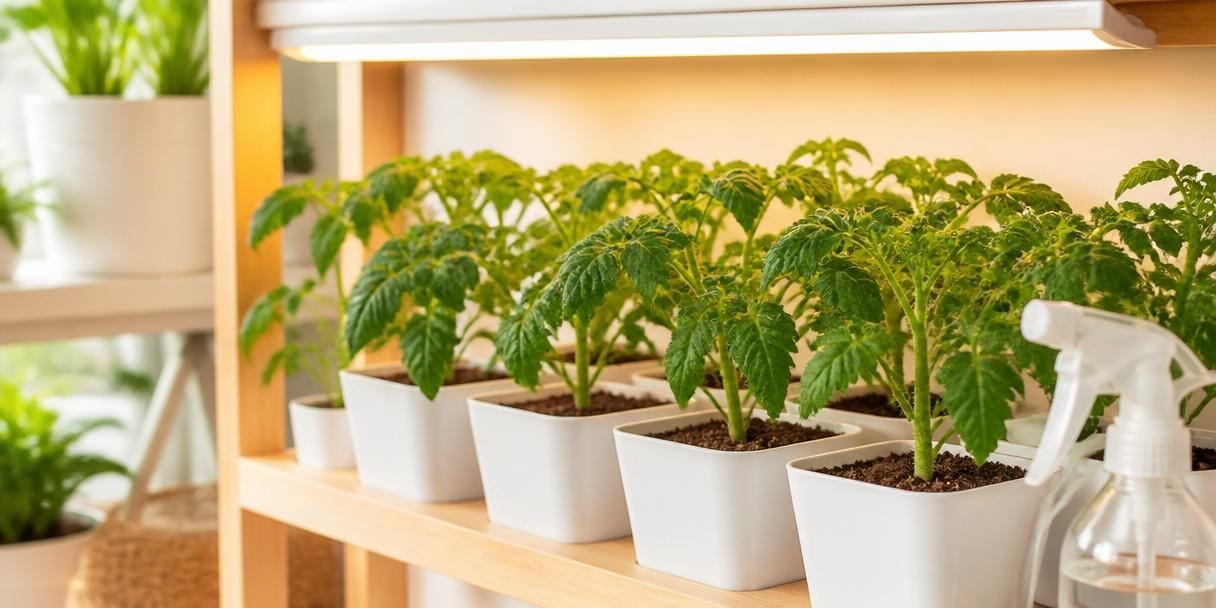
Successful indoor seed starting depends on matching your timeline with the proper technical setup. A standard windowsill rarely delivers the 14 to 16 hours of daily light required for compact growth. Utilizing high-output T5 fluorescent fixtures or specialized LED grow lights prevents seedlings from stretching toward weak natural light sources.
A real-world example involves a grower named Marcus in Columbus, Ohio, who sowed his Burpee Brandywine seeds in late February using only window light. By early April, his plants stood 30 centimeters tall but possessed stems thinner than a pencil. The plants lacked the structural integrity to survive outdoor winds, collapsing within forty-eight hours of transplanting due to severe stem vascular failure.
Selecting the Right Growing Medium
Never use standard backyard garden soil in your indoor starter trays. Heavy outdoor soil packs down tightly inside small cells, suffocating young roots and introducing pathogens like Pythium. Opt for a sterile, soil-less seed starting mix containing peat moss, perlite, and vermiculite to ensure rapid root penetration.
Temperature Control Devices
Electric heat mats like those produced by Hydrofarm keep the root zone at an optimal 24 degrees Celsius during germination. Remove the trays from these heat mats immediately after the first green loops break through the surface of the soil. Sustained bottom heat combined with low light causes rapid, weak structural growth in young stalks.
- Position adjustable LED grow lights exactly 5 to 10 centimeters above the plant canopy.
- Employ automated outlet timers to maintain a strict 16-hour light and 8-hour dark cycle.
- Introduce a small oscillating fan on the lowest setting to simulate natural wind currents.
- Utilize self-watering cell trays like the Park Seed BioDome to maintain uniform soil moisture.
Recognizing the Costs of Planting Too Early or Late
Sowing seeds in mid-winter creates an artificial environment where plants outgrow their containers before spring arrives. When roots encircle the interior of a plastic pot, the plant enters a root-bound state. This restriction signaling slows overall growth, hardens the main stem prematurely, and limits the plant’s future ability to absorb soil nutrients.
Conversely, waiting until May to sow seeds indoors leaves you with fragile seedlings during the peak summer heat. Small plants with shallow root systems cannot tolerate the intense July sun in regions like the American Midwest. These late starters spend their energy trying to survive thermal stress rather than producing fruit clusters.
The Problem of Root Restriction
When a tomato root system hits the walls of a cell insert, it begins spinning in a tight spiral. This physical configuration restricts the downward taproot growth necessary for drought resistance in open garden plots. The plant struggles to anchor itself, making it susceptible to falling over during summer thunderstorms.
Mitigating Leggy Growth
If unexpected spring blizzards delay your outdoor planting date, you must intervene to save leggy plants. Repot the elongated seedlings into deeper containers, burying the bare stem right up to the lowest set of true leaves. Tomatoes possess the unique ability to grow adventitious roots along their buried stems, transforming a structural problem into an expanded root mass.
- Root-bound plants exhibit yellowing lower leaves and stunted terminal growth points.
- Leggy stems occur when the distance between leaf nodes exceeds 3 centimeters.
- Late-planted seeds face severe moisture stress during the hot dry months of July.
- Deep repotting fixes early stretching by converting weak stems into functional root systems.
Managing the Transition to Outdoor Soil
The transition from a protected indoor grow room to an open garden plot requires systematic acclimatization. This process, known as hardening off, takes place over a 7 to 10 day period. Abruptly moving tender plants from soft LED lighting to direct solar radiation causes immediate leaf scorch and cell collapse.
A case study from a market garden in Portland, Oregon, demonstrates this dynamic clearly. The farm staff moved three hundred greenhouse-raised Roma transplants directly into open field beds during a bright, windy morning in late April. Within three days, the intense ultraviolet rays bleached the leaves white, destroying the photosynthetic capacity of the crop and forcing a complete replanting cycle.
Establishing an Acclimatization Schedule
Begin the hardening process on a calm, overcast day by placing your seed trays in a shaded location for 2 hours. Gradually increase the outdoor exposure time by 1 hour each day while slowly introducing partial morning sunlight. Bring the trays back inside every evening to protect them from chilly nighttime temperature drops.
Preparing the Final Planting Site
While your plants adjust to the outdoor air, prepare the garden beds with aged compost from brands like Coast of Maine. Ensure the outdoor soil temperature reaches at least 15 degrees Celsius before burying your transplants. Planting into cold, waterlogged soil causes root rot and locks up essential phosphorus, turning your tomato leaves a distinct purplish hue.
- Day one requires 2 hours of outdoor exposure in a fully shaded, wind-protected area.
- Day five introduces 5 hours of exposure including direct, non-peak morning sunlight.
- Day nine allows the plants to remain outdoors overnight if temperatures stay above 10 degrees.
- Plant the hardened tomatoes on a cloudy day to minimize initial transplant shock.
Wrap Up
Successful tomato production depends on working backward from your local spring frost dates to hit the 6 to 8 week indoor growing target. Matching your sowing schedule to specific variety traits and providing strong artificial light prevents structural flaws like leggy stems. Taking the time to properly acclimatize your seedlings ensures they transition smoothly into the garden for a bountiful summer harvest.
FAQs Section
What happens if I start my tomato seeds 12 weeks before the last frost date?
Starting seeds 12 weeks early results in oversized, root-bound plants that exhaust their soil nutrients and suffer severe transplant shock when moved outdoors. The crowded root systems struggle to adapt to open soil, which permanently reduces your total fruit yield.
Can I grow tomato seedlings on a standard south-facing windowsill without grow lights?
Windowsill light is usually too weak and directional, causing tomato seedlings to stretch out and develop thin, brittle stems. Using a dedicated LED or T5 grow light hung close to the plants is necessary to grow thick, stocky stalks.
How do I know if my tomato seedlings are ready to be transplanted into the garden?
Your seedlings are ready when they stand 15 to 20 centimeters tall, possess a thick pencil-width stem, and have developed several sets of true leaves. You must also ensure your local frost danger has completely passed and outdoor soil temperatures have warmed up.