

TL;DR
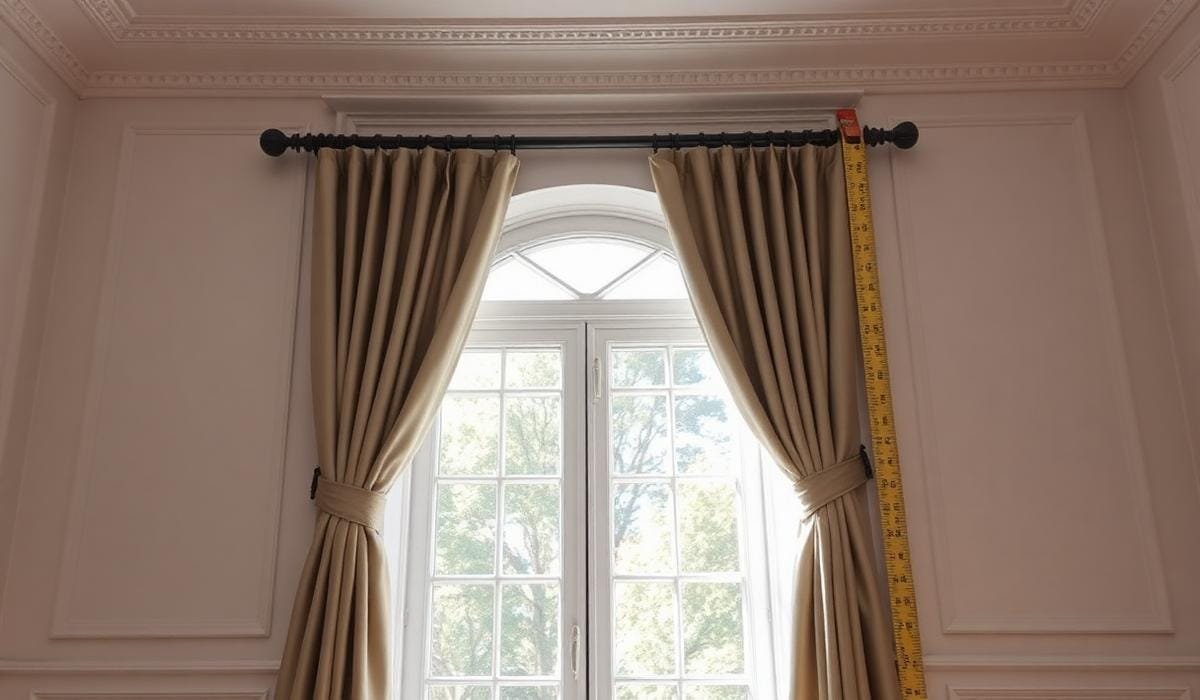
Measure the planned curtain position rather than measuring only the glass. Record the rod width, required drop, mounting height, panel fullness, and any nearby obstacles before buying fabric or ready-made curtains.
Introduction
Why do well-made curtains sometimes look too narrow, too short, or awkward around the window? The mistake often happens before installation, when someone measures the frame but ignores rod placement, fabric fullness, flooring, radiators, or furniture. Accurate measurements create balanced proportions, cleaner folds, better light control, and fewer costly returns. A metal tape measure and a written measurement plan solve most problems.
Choose the Curtain Position Before Measuring
Curtain measurements depend on where the hardware will sit. An outside-mounted rod usually extends beyond the window frame, while an inside-mounted treatment fits within the recess. Measuring the frame without choosing a mounting position produces misleading numbers. Wall space, ceiling height, trim, handles, radiators, and nearby cabinets can all change the final width or drop.
Designers often place curtains higher and wider than the frame to make a window appear larger. Emily Henderson has regularly used this approach in residential interiors, especially where narrow windows need stronger visual proportions. IKEA, West Elm, and Pottery Barn room displays also show rods extending beyond the trim rather than ending directly above the glass.
Decide these points first
- Choose an inside mount or outside mount before recording measurements.
- Check whether the rod will sit on the wall, window trim, or ceiling.
- Identify radiators, deep sills, handles, shelves, and furniture near the opening.
- Decide whether the curtains will touch the sill, apron, floor, or form a fabric puddle.
- Confirm whether the curtains need to close fully or serve as decorative side panels.
An outside mount usually provides better light coverage because the fabric overlaps the frame. It also gives open curtains space to stack beside the glass. Inside-mounted curtains suit deep recesses, café curtains, and compact rooms, though handles and tilt mechanisms may limit the available depth.
Gather Accurate Measuring Tools
A rigid metal tape measure gives more reliable results than a soft sewing tape, which can sag across wide openings. A Stanley tape measure works well for most homes, while a Bosch laser measure can confirm long wall-to-wall distances. Laser tools may struggle with reflective glass, angled bays, or narrow recesses, so a physical tape remains useful.
Record every measurement immediately and label it clearly. Write “rod width,” “frame width,” “left clearance,” and “finished drop” instead of keeping a row of unexplained numbers. Measurements such as 182 centimetres and 128 centimetres can easily be reversed during ordering. That error becomes expensive when a £50 ready-made pair turns into a £500 custom replacement.
Useful tools and preparation
- Use a metal tape measure marked in millimetres or eighths of an inch.
- Keep a pencil, paper, calculator, and spirit level nearby.
- Measure from a stable step ladder rather than stretching from the floor.
- Record each dimension twice before moving to the next window.
- Use one measurement system throughout the project.
Measure each window separately, even when two openings look identical. Builders may adjust framing, plaster, trim, or flooring during construction. A difference of 10 to 20 millimetres can affect an inside mount, especially when the fabric, track, or blind cassette has little clearance.
Measure the Correct Curtain Width
For an existing rod, measure the usable rod width between the finials, not the full tip-to-tip length. The finials are decorative end pieces and do not support curtain fabric. On a track, measure the section along which the gliders travel. Include any overlap arm used where two curtains meet in the centre.
For a new rod, measure the window frame and add space on both sides. An extension of about 10 to 15 centimetres on each side suits many standard windows. Wider extensions create more stacking room and reveal more glass when the curtains open. Pottery Barn and John Lewis displays often use generous side clearance for fuller, more formal window treatments.
Calculate fabric fullness
- Use approximately 1.5 times the rod width for a relaxed, lightly gathered look.
- Use about twice the rod width for standard domestic fullness.
- Use 2.5 times the rod width for deep folds or luxurious pleats.
- Add the widths of all panels before comparing them with the required fullness.
- Check whether the listed package width refers to one panel or the full pair.
A 200-centimetre rod needs about 400 centimetres of total curtain width for standard twice-full coverage. Two panels measuring 200 centimetres each would meet that target. Two panels measuring 140 centimetres each would provide only 280 centimetres, leaving shallow folds and possible gaps when closed.
Fullness affects more than appearance. Extra fabric improves privacy, reduces light leakage, and gives pleated headings enough material to hold their shape. Too much fullness can crowd a short rod or block part of the glass. Heavy velvet also occupies more stacking space than linen, cotton voile, or lightweight polyester.
Measure the Curtain Drop From the Hanging Point
Curtain drop starts at the point where the fabric hangs, not automatically at the top of the rod. Eyelet curtains usually hang from near the rod’s upper edge, while pencil pleat and pinch pleat curtains hang from hooks beneath a track or ring. Measure from that working point to the chosen finishing position.
Ready-made curtains often come in fixed drops. UK retailers such as Dunelm commonly organise products around standard centimetre lengths, while US brands often use inch-based sizes such as 84, 96, or 108 inches. The available size may influence rod height, but hardware should not be placed so low that the curtain looks compressed above the frame.
Choose the finished length
- Sill-length curtains usually finish about 1 centimetre above the sill.
- Apron-length curtains finish below the sill but above a radiator or furniture.
- Floor-length curtains end around 1 centimetre above the finished floor.
- Trouser-length curtains rest lightly on the floor with a small fabric break.
- Puddled curtains include extra fabric that spreads across the floor.
Floor-level measurements must account for finished flooring. Carpet, underlay, laminate, tile, and timber can create different heights across the same room. Measure the left, centre, and right side of the proposed rod. Use the shortest drop when the goal is to prevent fabric from dragging across an uneven floor.
Nate Berkus often favours curtains that create strong vertical lines from near the ceiling to the floor. That treatment can make a standard room feel taller, but it works only when the drop is measured accurately. Curtains ending several centimetres above the floor can look accidental rather than tailored.
Account for Curtain Headings and Hardware
The heading style changes both the finished width and the hanging height. Eyelets slide directly onto a rod and create broad waves. Pencil pleats use adjustable gathering cords. Pinch pleats need hooks or rings positioned at fixed intervals. Wave curtains run on compatible tracks that control the spacing between folds.
A curtain labelled 140 centimetres wide does not always cover 140 centimetres after gathering. Pencil pleats may reduce to roughly half their flat width, depending on the required fullness. Pinch pleat curtains often arrive with a more fixed finished width. The Shade Store and Hunter Douglas treat hardware, heading, and fabric as one system because each part affects the final fit.
Check the heading specifications
- Confirm whether the product width is flat, gathered, or finished.
- Measure the diameter of the rod before buying eyelet curtains.
- Allow room above the rod for fabric extending beyond eyelets.
- Check hook positions when using rings or curtain tracks.
- Include centre overlaps and returns where the fabric turns toward the wall.
Returns reduce side light gaps by bringing the curtain edge back toward the wall. They also hide the rod brackets from a side view. A return of several centimetres can improve blackout performance in bedrooms, though it adds fabric to the width calculation and may require special brackets.
Blackout linings, thermal linings, and interlinings increase bulk. Velvet panels from West Elm will stack differently from lightweight IKEA sheers, even at the same stated width. Allow extra rod extension when thick fabric needs to clear the window fully.
Measure Bay Windows, Recesses, and Difficult Shapes
Bay windows require several connected measurements rather than one straight width. Measure each wall section, each angle, and the available depth around handles or sills. A flexible bay track can follow the shape, while separate rods may leave gaps at the corners. Measure along the intended track path rather than drawing a straight line across the front.
In a Manchester renovation, a homeowner ordered three equal curtain panels for a three-sided bay. The centre section was wider than the two angled sides, so the folds looked dense in the corners and flat across the middle. The installer fixed the balance by redistributing fabric according to each track section rather than dividing the total width equally.
Special situations to check
- Measure each section of a bay window independently.
- Check the depth of recessed windows at the top, middle, and bottom.
- Allow clearance around opening handles and inward-swinging windows.
- Use ceiling tracks where wall space above the frame is limited.
- Treat arched, triangular, and roof windows as custom projects.
VELUX roof windows usually need fitted blinds or specialised tracks because normal curtains fall away from the angled glass. French doors need enough clearance around handles and hinges. Sliding patio doors require wide tracks and generous stacking space, often on the side opposite the main opening panel.
Inside recesses can be uneven. Record the width at the top, centre, and bottom, then use the smallest measurement for hardware that must fit inside. Subtract only the clearance requested by the track or bracket manufacturer. Guessing the deduction can leave the hardware loose or too wide to install.
Verify Every Number Before Ordering
The final check should compare the window measurements with the exact product specification. Retailers may list curtain sizes by individual panel, pair, flat fabric width, or finished coverage. Product photography can hide these differences because display curtains often use more panels than the package contains.
A Chicago renter selected IKEA curtains for a 240-centimetre rod and assumed one pack would provide full coverage. The panels covered the opening, but the fabric looked nearly flat when closed. Adding a second pack created proper folds, improved privacy, and reduced the bright centre gap during afternoon sun.
Use a final measurement record
- Note the room name and exact window location.
- Record frame width, rod width, rod height, and finished drop.
- Write down the heading style, panel count, and required fullness.
- Confirm centimetres or inches beside every figure.
- Photograph the window and nearby obstacles before visiting a store.
Check the numbers again after installing the brackets but before hemming the curtains. Rod position can shift slightly when installers avoid electrical cables, weak plaster, steel lintels, or uneven trim. Temporary hemming tape or pins allow the fabric to hang for a day before the final hem is sewn.
Wrap Up
Accurate curtain sizing starts with the planned rod or track position, not the glass alone. Width, fullness, heading type, drop, hardware, flooring, and nearby obstacles all affect the finished result. Measure every window twice and compare the figures with the retailer’s sizing method. A careful record prevents short hems, weak folds, blocked glass, and unnecessary replacement costs.
FAQs Section
How much wider should curtains be than the window?
The combined flat curtain width usually works well at 1.5 to 2.5 times the usable rod width. Standard gathered curtains commonly use about twice the rod width.
Do I measure curtains from the window frame or the curtain rod?
Measure from the curtain rod or track when hardware already exists. For new hardware, decide its position first, then calculate the required width and drop from that planned location.
How far should curtains hang below the window?
Sill curtains normally finish just above the sill, while floor-length curtains usually end about 1 centimetre above the floor. Curtains placed over radiators should stop high enough to avoid blocking heat.