
TL;DR
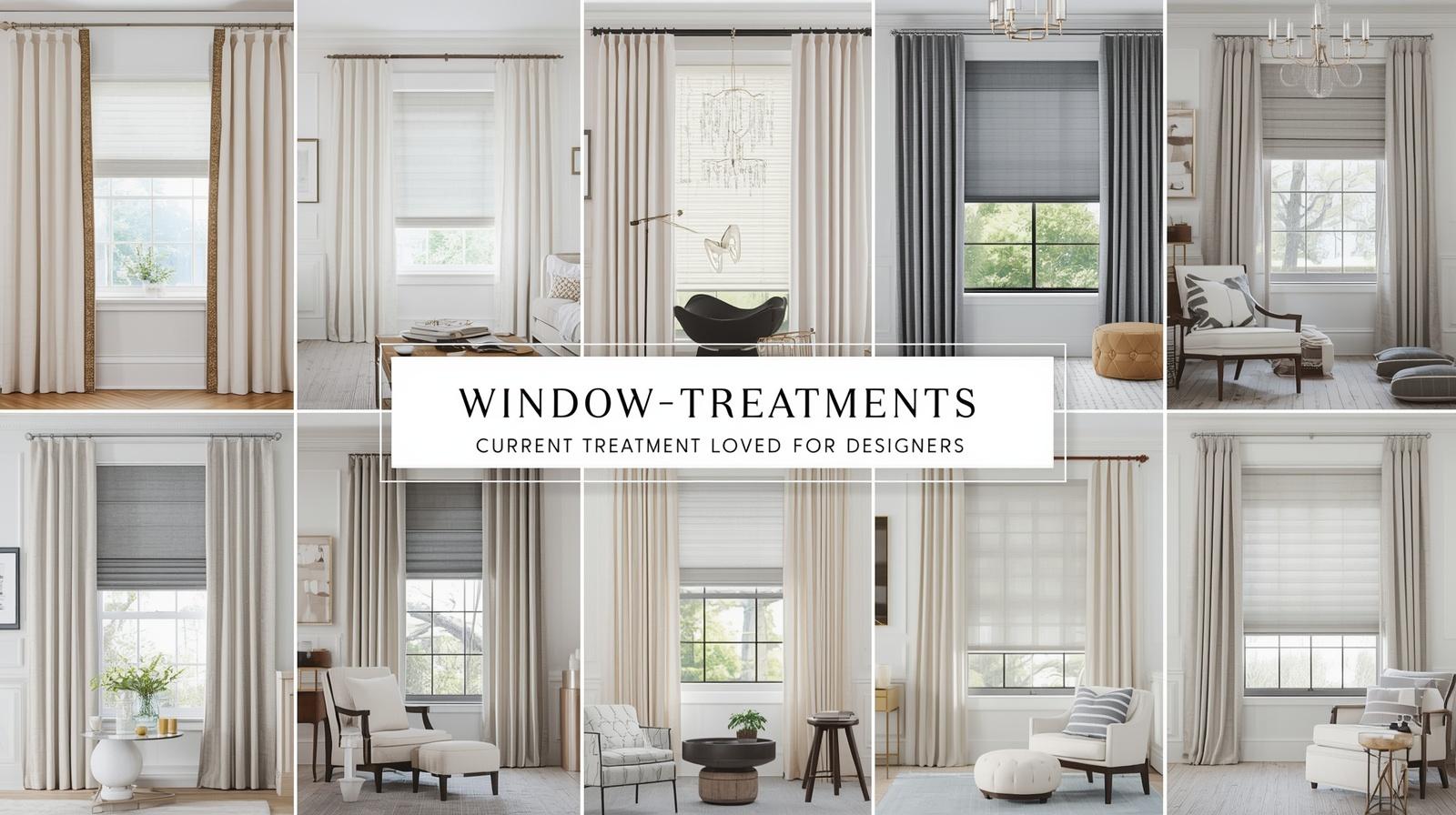
Designers are moving away from heavy drapes and standard roller blinds toward layered, texture-rich window treatments that balance natural light control with visual depth. The ten approaches covered here reflect what’s actually showing up in professionally finished interiors right now, from sheer linen panels to woven wood shades and everything in between.
Introduction
A window is never just a window. It’s the first thing that tells a room how it feels at 7 a.m. and again at dusk, and the treatment you choose either works with that or fights it for years. Most homeowners pick something practical and call it done. Designers, on the other hand, treat the window wall as seriously as the furniture plan, because they’ve seen firsthand how a wrong covering flattens a room that should sing.
What’s shifted in recent years isn’t just aesthetic preference. It’s a deeper rethinking of how people want to live with light, texture, and privacy simultaneously. The treatments gaining traction with designers right now reflect all three of those demands at once.
1. Sheer Linen Panels Layered Over Woven Wood Blinds
Layering sheers with woven wood is one of those combinations that looks effortless and takes real thought to execute correctly. The woven wood blind does the structural privacy work, usually in a warm natural weave like jute or bamboo, while the sheer linen panel softens the entire composition and diffuses light into something almost coastal in quality.
What makes this pairing work beyond aesthetics is the way it manages heat. Woven wood blinds filter direct sun without killing the view, and the linen layer adds a second degree of insulation that single-layer treatments simply can’t match. Designers working on west-facing rooms have leaned into this combination specifically because it handles afternoon glare better than any single product.
Marta V., an interior designer based in Austin, installed this exact pairing in a client’s kitchen-adjacent sitting room with floor-to-ceiling windows. The client had rejected blackout blinds after feeling the room turned cave-like. The sheer-and-woven layering gave her the light diffusion she wanted without surrendering the brightness the room depended on.
2. Ripple Fold Curtains in Textured Fabric
Ripple fold curtains have been in the trade for years, but they’re entering mainstream residential design with more intentional fabric choices behind them. The uniform wave pattern of a ripple fold works because it creates continuous visual rhythm across a window wall, unlike pinch pleat or grommet styles that interrupt the eye.
Textured boucle, slubbed linen, and velvet-finish polyester are the materials designers are spec-ing most. These fabrics catch light differently at each fold, which means the curtain panel changes mood depending on the time of day without you changing anything. That kind of passive visual interest is what separates a room that feels designed from one that just has furniture in it.
The hardware matters as much as the fabric in this treatment. Ripple fold requires a continuous track system rather than a rod, which adds a small cost but dramatically improves the draw and the finished look. Designers who cut corners here find the curtain bunches unevenly at one end, which defeats the whole point of the technique.
3. Roman Shades With Contrasting Trim
Roman shades are a classic that cycles back through design conversations every decade, but the current version carries a detail that distinguishes it from its predecessors: a contrasting border or tape trim at the hem and sometimes along the sides. It reads almost tailored, like a well-finished jacket, and it anchors the shade visually in a way that a plain edge never does.
The trim detail works best when it references something else in the room, a pillow fabric, a painted accent wall, or a rug border. That kind of internal repetition is how designers create cohesion without matching things to death. A charcoal linen Roman shade with a warm terracotta tape trim in a room that already has clay-toned ceramics feels intentional in a way that’s hard to explain but immediately visible.
Flat Roman shades are the most popular construction for this treatment because the fabric lays smooth when lowered and the trim reads as a clean edge. Hobbled or stacked Romans pile up at the top and obscure the trim detail that’s doing the design work, so they’re less suited to this particular trend.
4. Interior Shutters in Painted Wood
Plantation shutters built a reputation in coastal and traditional homes, but interior shutters in a flat painted finish have broken away from that context entirely. Painted white or warm off-white, they work in contemporary apartments, mid-century renovations, and transitional family rooms without reading as period or regional.
What designers value about shutters that fabric treatments can’t offer is permanence. A shutter doesn’t fade, doesn’t need dry cleaning, and doesn’t shift with a draft. For clients with young children or allergy sensitivities, the pitch practically writes itself. The louvres offer genuine light control from full open to fully closed, with every gradation in between.
The specification detail that most homeowners miss is louvre width. Wider louvres at 3.5 or 4.5 inches suit larger windows and rooms with higher ceilings. Narrower louvres at 2.5 inches read better on smaller windows and more intimate spaces. Getting that proportion wrong isn’t catastrophic, but getting it right elevates the entire window wall in a way that photographs noticeably better too.
5. Motorised Cellular Shades for Clean Architecture
In rooms where the architecture is the feature, any treatment that competes visually is a mistake. Motorised cellular shades solve this by disappearing into the window frame when raised and delivering crisp, flat coverage when closed. Their honeycomb cell construction provides genuine insulation value, and the motorised lift removes the visual clutter of cords entirely.
Designers working on new builds or major renovations increasingly specify these early in the process so the window frames can be set up to receive them cleanly. When cellular shades are an afterthought they often sit proud of the frame or gap at the sides. Specified from the start, they sit flush and look like part of the window’s original design.
The available opacity range in cellular shades has widened considerably. Light-filtering options now transmit enough natural light to read by while still diffusing glare, and blackout versions have improved to the point where the fabric’s colour reads neutrally from the outside. For street-facing windows in urban homes, that external aesthetic matters more than most clients realise until they see their building from the pavement.
6. Floor-to-Ceiling Curtain Panels That Start at the Ceiling Line
This is less about a specific product and more about a specification decision that changes everything: mounting the curtain rod directly at the ceiling line rather than above the window frame. When curtains run from ceiling to floor, the wall height feels claimed rather than interrupted, and the window itself appears taller.
The effect is especially valuable in rooms with standard 8-foot ceilings, where the goal is to borrow every visual inch available. Designers use this technique routinely in bedrooms and living rooms where the budget doesn’t allow structural changes but the client wants a grander sense of proportion.
The practical requirement is that the curtain panel must be long enough. Most off-the-shelf curtain lengths stop at 84 or 96 inches, which isn’t sufficient for a true ceiling-to-floor drop in rooms with standard or higher ceilings. Custom lengths or panels that puddle slightly on the floor are the two solutions, and the choice between them is a matter of formality. Puddled fabric reads more relaxed and romantic. A clean break at the floor reads more architectural.
7. Café Curtains Revisited in Linen or Cotton Voile
Café curtains were dismissed as old-fashioned for a long stretch, but they’ve come back with better fabric and better styling context. A half-window café curtain in unbleached linen or cotton voile gives a kitchen or breakfast nook privacy at seated eye level while keeping the upper window entirely clear for light and sky.
The revival version works because it’s paired with almost nothing else. No valance, no top treatment, no decorative hardware beyond a simple rod or thin tension wire. That restraint is what makes it feel current rather than nostalgic. When the curtain panels are hung with relaxed gathering rather than tight pinch pleats, the whole thing reads as unfussy and genuinely comfortable.
James and Rachel, a couple who renovated a 1940s bungalow, debated this treatment for their kitchen window for months before their designer pushed them toward it. The window faces a narrow side passage and needed privacy without blocking the morning light that made the kitchen worth spending time in. The linen café curtain handled both. Two years later it’s the detail visitors comment on first.
8. Woven Grass Cloth Roman Shades
Different from standard woven wood blinds, grass cloth Roman shades bring a flat, tailored silhouette combined with the organic texture of natural materials. When raised, they fold into a structured stack. When lowered, they present a surface that has genuine visual complexity, almost like a textile artwork filling the window.
The texture works particularly well in rooms that trend neutral in their palette. Grass cloth carries warm golden and green undertones that shift slightly depending on the light, which means the shade becomes one of the room’s most interesting surfaces without requiring any additional colour commitment.
Durability is a fair question with natural grass cloth. In rooms with high humidity like kitchens and bathrooms, the material can warp or discolor over time. Designers typically specify these in living rooms, bedrooms, and studies where the humidity stays controlled. For humid rooms, a jute-polyester blend gives a similar aesthetic with significantly better longevity.
9. Blackout Roller Shades Behind Decorative Curtain Panels
The most functional combination on this list is also one of the most versatile: a blackout roller shade fitted behind or inside the frame, entirely hidden when raised, with a decorative curtain panel mounted on the wall in front. The roller does the work at night or during naps. The curtain carries the room’s design intent all day.
This is how most good hotel rooms are designed, and the logic translates cleanly to residential spaces. The decorative panel doesn’t need to be blackout or even light-filtering because that job is handled by the shade. That opens up a much wider range of fabric options, including lighter, more delicate textiles that wouldn’t work as standalone treatments in any room that needs genuine darkness.
The pairing is especially practical in children’s bedrooms, where the blackout function is non-negotiable and the curtain design can shift as the child grows without touching the shade underneath. A sail-boat print at age five becomes a simple linen panel at fourteen, and the blackout functionality stays exactly where it was.
10. Arched Window Treatments Using Tension Wire Systems
Arched windows are one of the most architecturally beautiful features a home can have and one of the most treatment-resistant. Standard rods don’t follow the curve, and custom arched shutters require significant lead time and budget. Tension wire systems with curtain clips have emerged as the practical, design-forward answer.
The wire runs between two small eye hooks anchored inside the arch’s curve, and lightweight fabric panels clip onto the wire at intervals. The effect is gathered and slightly informal, which suits the organic shape of an arch much better than rigid solutions. Linen, cotton voile, and light canvas work best because they hang with natural softness and don’t overwhelm the architectural detail they’re meant to complement.
This approach keeps the arch’s silhouette visible from the street or hallway, which matters for the building’s exterior reading as much as the interior atmosphere. A heavy Roman shade or solid shutter across an arched window solves the privacy problem but erases the architectural story. The tension wire system keeps both.
Wrap Up
What connects all ten of these treatments is a shared commitment to doing more than one thing at once: managing light while adding texture, providing privacy while keeping architecture visible, functioning practically while reading beautifully at any hour. The designers who use these approaches aren’t chasing trends. They’re solving real problems with more thoughtful tools than the industry defaulted to a decade ago. Choose the treatment that answers your actual room conditions first, then let the aesthetic layer on top of that honest foundation.
FAQs
What are the most popular window treatments for living rooms right now?
Layered sheer and woven wood combinations, ripple fold curtains in textured fabric, and floor-to-ceiling curtain panels mounted at the ceiling line are among the most widely used treatments in professionally designed living rooms currently.
How do I choose between blinds and curtains for my bedroom?
If light control and blackout function are the priority, pairing a blackout roller shade with a decorative curtain panel gives you both sleep-quality darkness and a finished look without compromising either function.
Are natural material window treatments like grass cloth or woven wood durable?
Natural grass cloth and woven wood treatments are durable in low-humidity rooms like living rooms and bedrooms. In kitchens or bathrooms, opt for jute-polyester blends that mimic the texture while resisting moisture damage more reliably.
Disclaimer:
This content shared by Fall Rugs is solely for research and informational purposes. Fall Rugs is not a professional interior design or home renovation consultancy, and the information provided should not be considered professional advice for home improvement or decor. All ideas and suggestions are based on current trends and general knowledge in the home decor industry.