
TL;DR
A boucle sofa is upholstered in a looped, textured fabric that adds warmth, depth, and tactile richness to a living space. It suits both minimalist and layered interiors, though it requires deliberate care to maintain its signature look. Choosing the right frame and colorway matters more than most buyers expect.
Introduction
What makes a sofa feel like it belongs rather than just fits? That question sits at the heart of why the boucle sofa has moved from boutique showrooms to mainstream living rooms with surprising speed. The fabric itself, a tightly looped, nubby textile rooted in mid-century European weaving traditions, does something flat materials simply cannot: it holds light differently at every angle, giving a room a sense of quiet movement even when nothing in it is moving. This piece covers what boucle actually is, how it performs over time, how to choose the right version for your space, and what no one tends to tell you about caring for one.
What Boucle Fabric Actually Is
Boucle comes from the French word for “curl” or “buckle,” and the name is accurate. The fabric is woven or knitted using yarns that have intentional loops built into them, creating that characteristic nubby, uneven surface texture. Traditional boucle incorporated wool, mohair, or cotton, and the finest versions still do. Contemporary upholstery boucle often blends synthetic fibers like polyester or nylon into the mix to improve durability and stain resistance without sacrificing much of the tactile character.
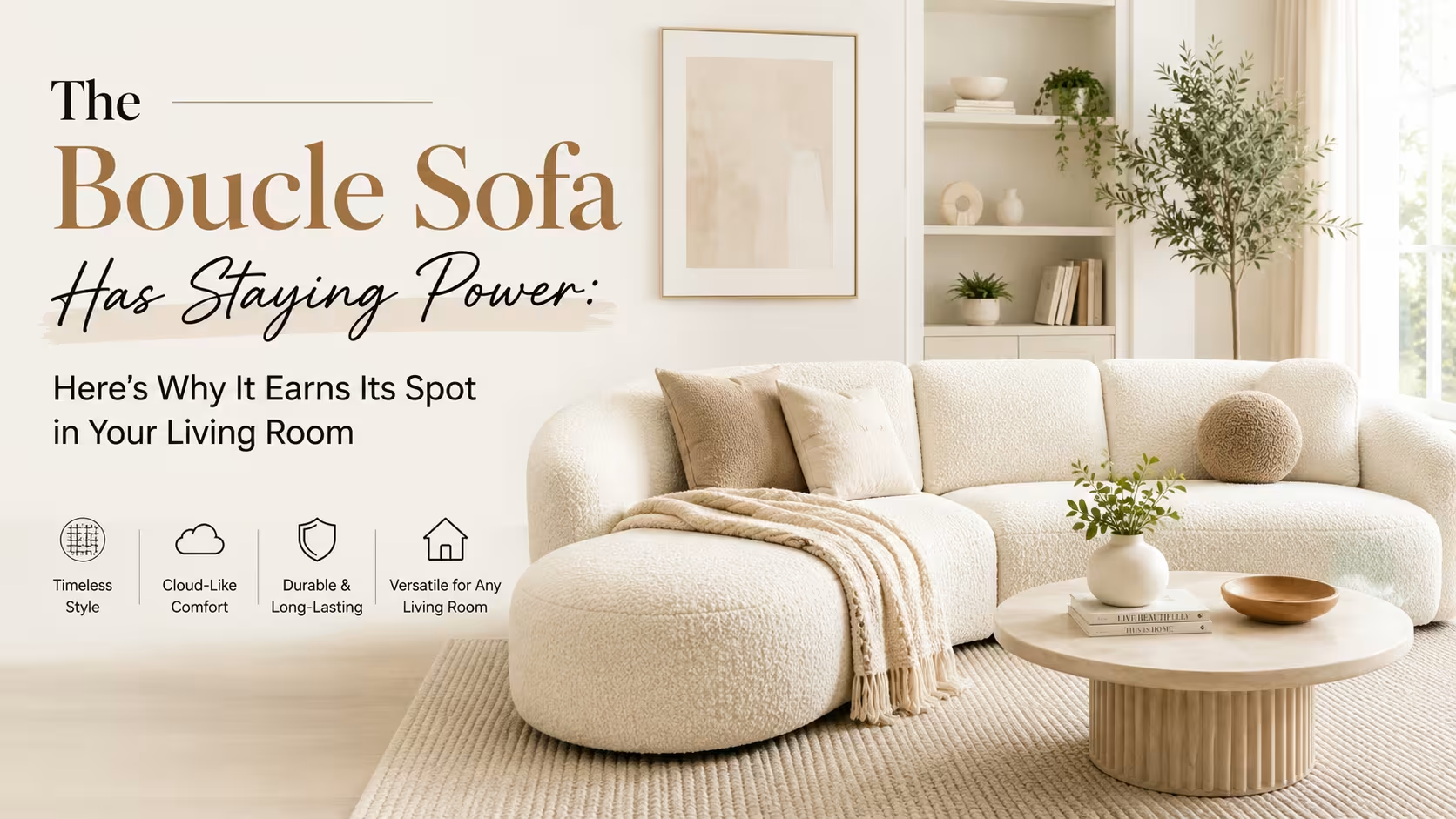
The texture is the whole point. On a flat linen or velvet sofa, light lands evenly and the silhouette does the aesthetic work. On a boucle sofa, the looped surface catches light at micro-scale, producing shadow and highlight across every inch of the upholstery. That visual complexity is what makes even a simple, boxy sofa frame look considered and layered. It also means boucle photographs exceptionally well, which partly explains its sustained popularity across interior design platforms.
Not all boucle upholstery is created equal, though. A tight, dense loop with a high wool content feels substantial and ages with a kind of dignified character. A loose weave with cheaper yarns can pull, snag, or pill faster than expected. Feeling the fabric before purchasing or requesting a swatch sample is not optional; it is the single most important step in the buying process that most first-time buyers skip entirely.
The Aesthetic Case for a Boucle Sofa
There is a reason boucle sofas consistently appear alongside natural stone floors, aged brass hardware, and unfinished oak furniture. The fabric sits at an interesting intersection of warmth and restraint. It reads as luxurious without being fussy, and textured without being rustic. That tonal flexibility is rare in upholstery and explains why interior designers return to it across very different project types.
In a minimalist room stripped back to pale walls and clean architectural lines, a cream or oat-toned boucle sofa provides exactly enough visual weight to anchor the space without competing with the architecture. The texture does the decorative work that pattern or color might do in a busier room. James, a furniture buyer based in London, described his boucle sectional purchase this way: he had tried two velvet sofas over five years, and both demanded the room be designed around them. The boucle, he said, fit into four different styling phases of the same room without ever feeling out of place.
The fabric also pairs well with hard, reflective materials precisely because it is soft and matte. Concrete, glass, polished metal, and lacquered surfaces all benefit from the visual contrast a boucle piece introduces. The sofa becomes the room’s textural anchor, a grounding element that makes other materials feel more intentional.
Colorways That Perform Best
Cream, ivory, oat, and warm white remain the most popular boucle sofa colorways, and with good reason. They reflect the loops and shadows in the fabric most clearly, making the texture itself the visual feature. Darker shades like charcoal, slate, or deep taupe work well in rooms with strong natural light, where the texture reads clearly even without high contrast.
Avoid very saturated colors in boucle unless you are buying from a high-quality manufacturer. The dye process for looped textiles is more complex than for flat weaves, and mid-range manufacturers often produce uneven color saturation that looks muddy rather than rich in person.
Frame Styles That Suit the Fabric
The boucle fabric works across a wide range of silhouettes, but it performs best on frames with some visual simplicity. A sofa with elaborate carved legs or decorative detailing can look cluttered when covered in a textured fabric, because both the frame and the upholstery are competing for attention. Clean-lined frames, softly rounded silhouettes, and low-profile Scandinavian-inspired designs give boucle the space it needs to be the focal point.
Mid-century modern frames with tapered walnut legs are a particularly strong match. The warmth of the wood echoes the warmth of the textile, and the slim legline keeps the overall piece feeling light rather than heavy.
How a Boucle Sofa Actually Performs in Daily Use
This is where honest conversation matters. Boucle fabric is not low-maintenance, and sofas upholstered in it are not the right choice for every household. Understanding the real-world performance characteristics before buying saves considerable frustration.
The looped construction that creates boucle’s texture is also its vulnerability. Pets with claws, children with toys, and rougher daily use can catch and pull the loops. A single snagged thread does not destroy a boucle sofa, but it does create a visible pulled loop that is difficult to reverse without professional repair. Households with cats, in particular, should think carefully before choosing an upholstered boucle piece as the primary seating.
Spills are a more manageable concern than most people assume. Because boucle is typically a fairly tight weave, liquids tend to bead on the surface initially rather than immediately soaking in, which gives a reasonable window for blotting. Water-based stains respond well to gentle blotting with a clean cloth. Oil-based stains are more problematic and almost always require professional upholstery cleaning. Applying fabric protection spray at purchase is a practical step that genuinely extends the life of the upholstery.
Pilling is a natural characteristic of looped textiles, particularly in high-friction zones like seat cushions and armrests. It is not a defect so much as an expected behavior of the material. High-quality boucle with denser construction pills less. Running a fabric shaver over affected areas a few times a year keeps the surface looking fresh without damaging the underlying weave.
Real-World Scenario: A Studio Apartment in Berlin
Sara, an architect working in Berlin, furnished a 42-square-meter apartment with a single statement piece: a two-seater boucle sofa in warm ivory on a slender oak frame. The room had concrete floors, white walls, and a large industrial window. The sofa’s job was to make the space feel lived-in without filling it with furniture. Two years in, she reported that the seat cushions had developed some flattening and light pilling, both corrected with regular brushing and occasional rotation. The texture of the fabric had, if anything, softened attractively with use, and the sofa remained the defining object in a room that had gone through three other styling evolutions.
That scenario reflects what experienced buyers consistently report: boucle ages with more character than comparable smooth-fabric sofas, provided it is maintained with basic regularity.
Sizing and Placement Decisions That Matter
A boucle sofa’s textural presence means it reads as slightly larger and heavier visually than its dimensions suggest. This is worth accounting for when selecting size. A three-seater boucle sofa in a medium-sized room can feel proportionally similar to a larger sectional upholstered in a flat, lighter fabric.
Leave adequate clearance around the sofa to let the texture breathe visually. Cramming a boucle piece into a tight corner or against multiple surfaces reduces the three-dimensional quality that makes the fabric interesting. Ideally, at least one full side of the sofa sits in open space where the nubby surface can catch ambient light.
Placement near a window creates the most dramatic version of boucle’s light-play characteristics. Morning or evening light raking across the surface at a low angle produces visible shadow and highlight across every loop, giving the fabric an almost three-dimensional quality that cannot be replicated with artificial lighting alone.
Working with Layered Textiles
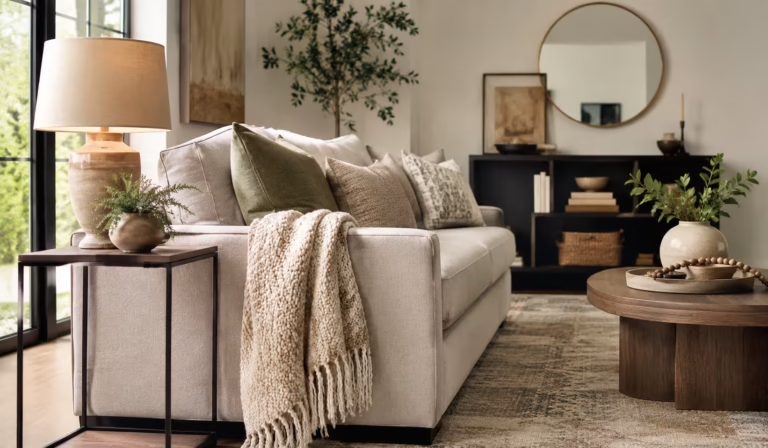
A boucle sofa layers well with throw blankets and cushions in contrasting textures: linen, velvet, cotton knit, and even leather all complement rather than compete with the base fabric. Avoid placing additional boucle or heavily textured accessories directly on the sofa, as the result tends toward visual noise. One or two smooth-faced cushions in a complementary tone let the sofa’s own texture remain the primary element.
Buying Considerations Worth Knowing Before You Commit
Price is one of the more confusing aspects of the boucle sofa market because the range is genuinely extreme. Entry-level boucle sofas from high-street retailers can start around 600 to 800 dollars and use a predominantly synthetic looped fabric over a basic engineered wood frame. Mid-range pieces from furniture brands with stronger manufacturing standards typically fall between 1,500 and 3,500 dollars and use better frame construction, higher wool content, and more durable loop construction. Bespoke or designer pieces from makers like Kvadrat-upholstered brands or high-end Scandinavian manufacturers can reach 6,000 dollars and above.
The price difference is mostly justified at the mid-range threshold. The jump from entry-level to mid-range usually brings a meaningfully better frame, seat cushion construction, and loop quality. The jump from mid-range to luxury tends to bring material provenance, longer-term craftsmanship guarantees, and the kind of fabric character that improves with decades of use rather than years.
Seat depth is a frequently overlooked specification. Boucle sofas marketed with a “cloud” or “plush” aesthetic often have very deep seats, which look inviting in photos but can be uncomfortable for shorter users who cannot comfortably sit with their back against the cushion and their feet on the floor. Checking seat depth against your own physical proportions, not just the visual appeal of the piece, avoids a common and expensive mistake.
Wrap Up
A boucle sofa earns its place in a room through textural richness that flat fabrics cannot replicate, and its versatility across interior styles makes it a considered choice rather than a trend-chasing one. The fabric requires honest maintenance and is not ideal for every household, but for those who match their lifestyle to its care requirements, the investment holds up. Choose a quality construction, a colorway that suits your room’s light, and a frame silhouette simple enough to let the fabric speak. The rest tends to follow naturally.
FAQs
Is a boucle sofa durable enough for everyday use?
Yes, provided the household does not include pets with claws or very rough daily use. High-quality boucle with dense loop construction withstands regular use well and responds to basic maintenance like brushing and occasional professional cleaning.
What colors does boucle sofa fabric come in?
Cream, ivory, oat, charcoal, and warm taupe are the most commonly available and most visually successful colorways. Saturated colors exist but perform better from higher-quality manufacturers who can maintain even dye distribution across the looped surface.
Can you clean a boucle sofa at home?
Water-based stains can be blotted gently with a clean cloth and mild upholstery solution. Oil-based stains are better handled by professional upholstery cleaners. Applying a fabric protection spray at purchase significantly reduces the difficulty of routine cleaning.
Disclaimer
This content shared by Fall Rugs is solely for research and informational purposes. Fall Rugs is not a professional interior design or home renovation consultancy, and the information provided should not be considered professional advice for home improvement or decor. All ideas and suggestions are based on current trends and general knowledge in the home decor industry.