
TL;DR
A kitchen balcony herb garden works when you treat it as a microclimate problem rather than a decoration project. Sun mapping matters more than planter aesthetics. Wind tunneling between buildings, reflected heat from walls, and container depth dictate success long before your choice of basil variety enters the picture. Eight specific setups follow, each solving a distinct spatial or environmental constraint that kills most balcony herbs by week three.
Introduction
You step onto the kitchen balcony, scissors in hand, ready to snip fresh chives for an omelette. That image propels countless balcony herb gardens into existence. The reality often involves leggy basil, bolted cilantro, and a rosemary shrub slowly browning from the base upward. I have killed enough thyme plants on a six-square-foot ledge to know the difference between nursery-fresh optimism and what actually persists. The gap lives in details the seed packets never mention. This piece walks through eight planted balconies that function. Each one grapples with a specific failure mode that shows up in tight urban spaces, the sort of micro-problems nobody documents until they have scraped dead roots out of a terracotta pot for the third time.
The Architecture of a Balcony Microclimate
A kitchen balcony is not a miniature garden. It is a ledge suspended above street level with its own wind profile, solar reflection pattern, and thermal mass behaviour. Ignoring these three variables guarantees a graveyard of dried herbs by midsummer. Understanding them makes the difference between a harvestable crop and a composting lesson.
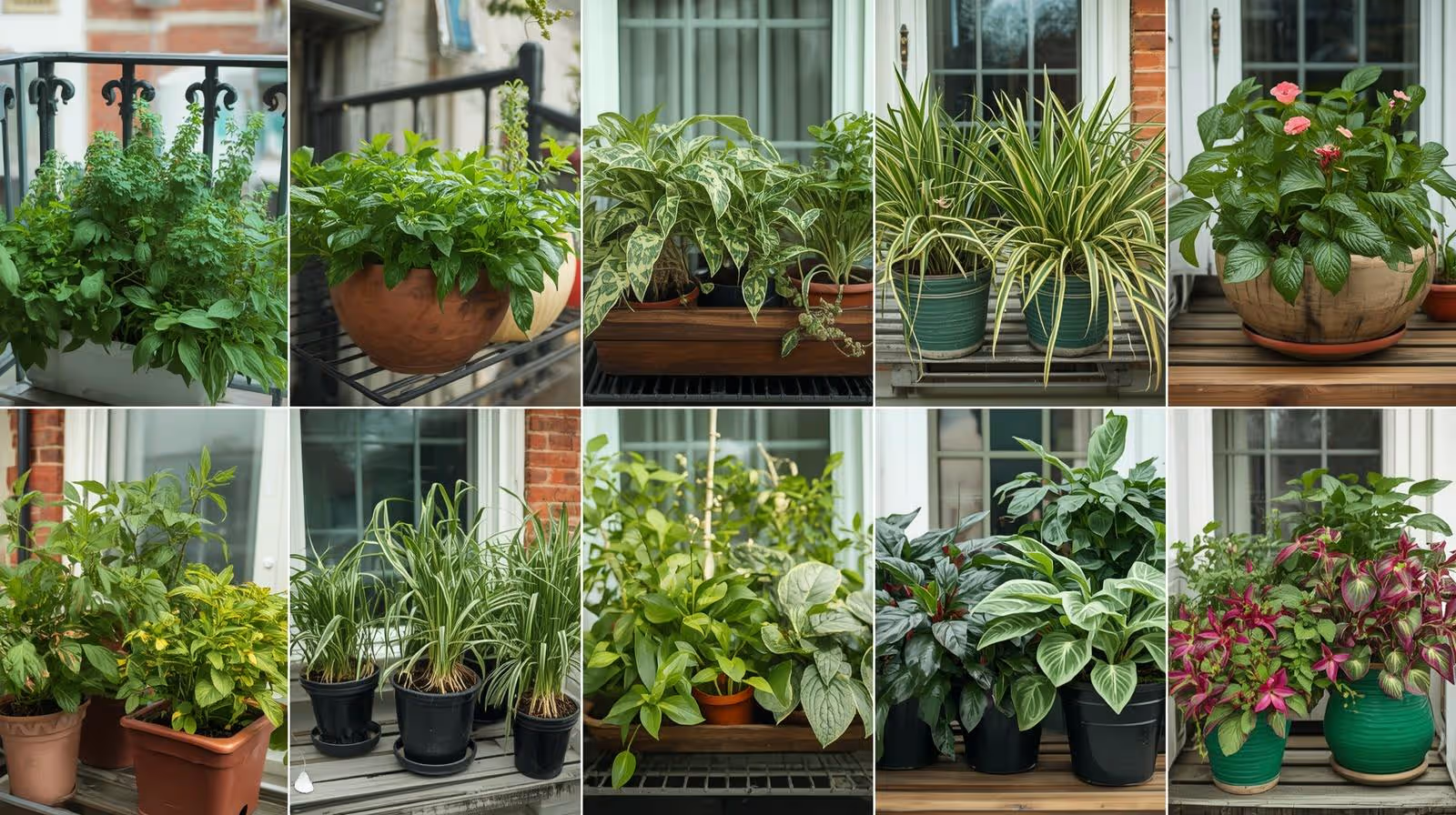
Most balconies attached to kitchens face either a service alley or a narrow side yard. The building itself acts as a radiator. Brick walls release stored heat long after sunset, which sounds helpful until you realize it pushes Mediterranean herbs into premature flowering cycles.
A south-facing concrete balcony in July can hit root-zone temperatures that literally cook the microbiology in your potting mix. I measured a thirteen-degree Fahrenheit difference between ambient air and container soil on a west-facing Chicago balcony one August afternoon. The rosemary survived. The cilantro bolted before producing its fourth true leaf.
Reading the Wind Path Before You Buy a Single Pot
Wind behaves strangely on balconies bounded by walls on three sides. It accelerates through the gap, creating a venturi effect that strips moisture from leaves faster than roots can replace it. Tender herbs like basil and parsley show wind stress within hours. Their leaves curl inward, edges desiccate, and the plant permanently shifts into survival mode.
Before positioning any container, spend a week observing. Light a candle on the balcony railing at different times of day. Watch the flame. If it dances violently or extinguishes, you have a wind tunnel. That spot gets rosemary or thyme, never basil.
The sheltered corner behind the kitchen door frame, where the flame barely flickers, that is your basil and chervil territory. This single observation saved my Genovese basil crop two summers ago after losing three successive plantings to wind shear I kept dismissing as a watering problem.
Eight Kitchen Balcony Herb Gardens Built Around Constraints
1. The Radiator Ledge Garden for Heat-Loving Mediterranean Herbs
The narrow ledge beneath a kitchen window that bakes in afternoon sun looks inhospitable. Most plants cook there. Mediterranean perennials thrive in it precisely because they evolved on rocky Greek hillsides receiving identical treatment.
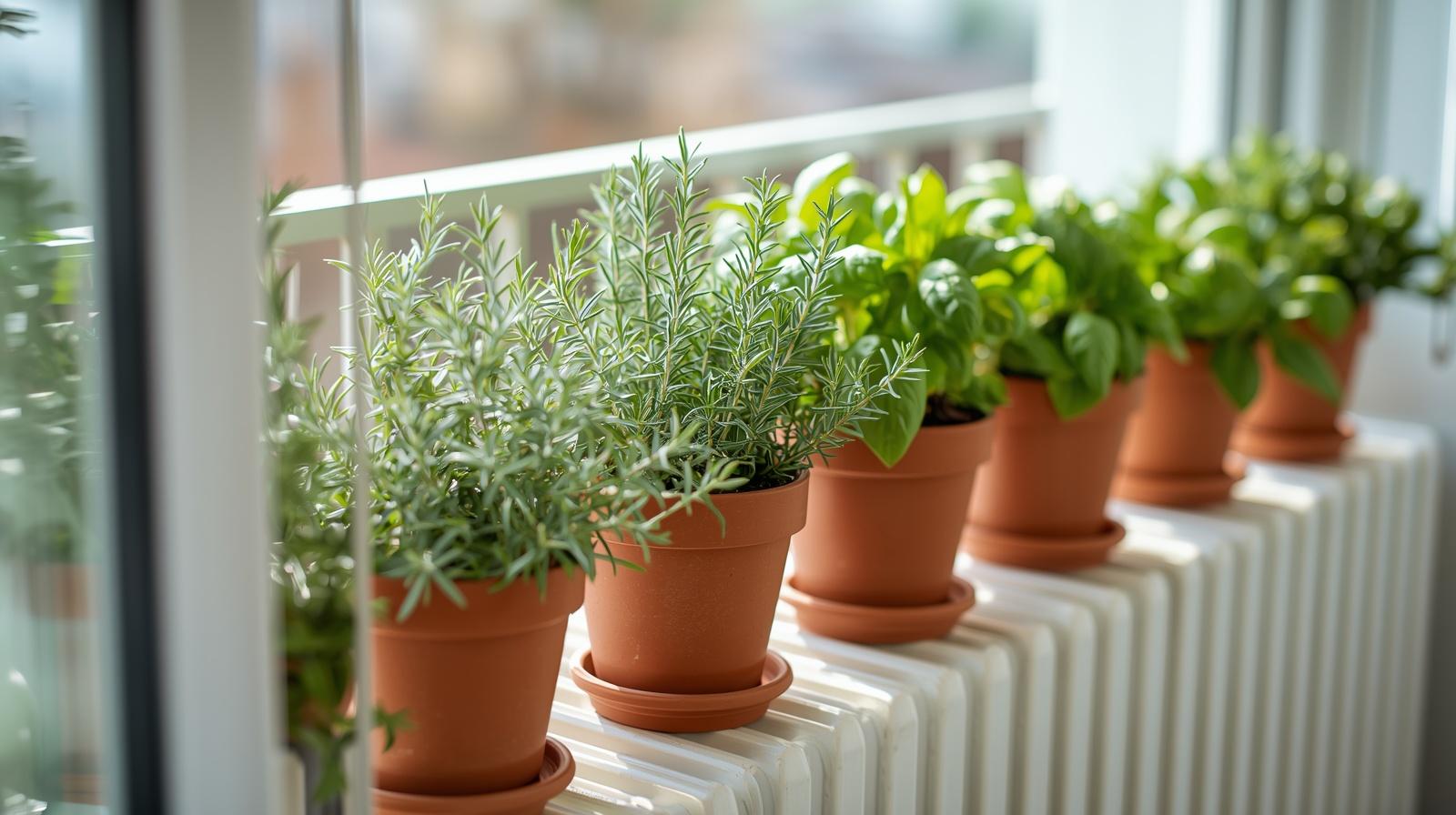
A cook who rents a fourth-floor walkup in Queens transformed her eighteen-inch-deep west-facing ledge using unglazed terracotta troughs. Glazed ceramic reflects too much heat back into the root zone. Terracotta breathes. She planted Greek oregano, lemon thyme, and a compact rosemary cultivar called Blue Boy that stays under eighteen inches.
The troughs sit directly on the concrete ledge without saucers. Water drains freely onto the ledge surface, evaporating within minutes and momentarily cooling the microclimate. She waters deeply every three days and has not fertilized in fourteen months. The herbs taste sharper and more concentrated than anything from the grocery store. Stress concentrates essential oils. Her rosemary has never shown the powdery mildew that plagues overwatered indoor specimens.
2. The Shade-Tolerant Kitchen Garden Below the Fire Escape
Kitchen balconies directly underneath a fire escape or upper-floor overhang receive dappled light at best. Many gardeners abandon these spaces entirely, assuming nothing edible will grow. That assumption holds true if you insist on basil and oregano. It collapses once you reframe the light deficiency as a microclimate asset.
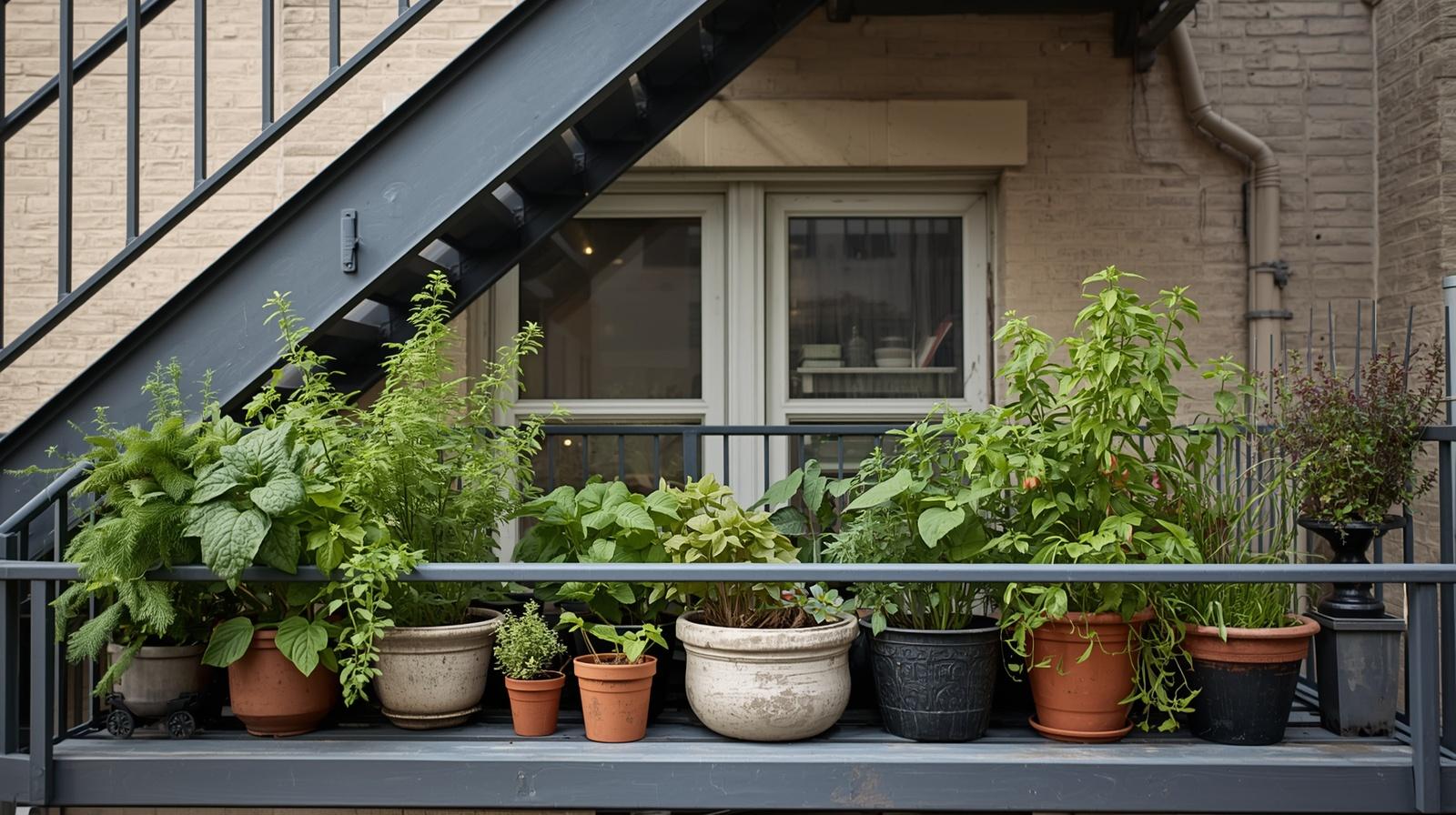
A couple in Philadelphia planted a narrow planter box beneath their cast-iron fire escape, a space that receives roughly three hours of direct sun in early morning then bright indirect light the rest of the day. They filled it with chervil, French tarragon, and a slow-bolting cilantro variety called Calypso.
These three herbs bolt quickly in full sun. Under filtered light, they produce tender leaves for months longer. The fire escape also shields the planter from pounding rain, preventing the soil compaction and splash-back fungal issues that plague exposed containers. Their tarragon survived a Philadelphia winter in that protected pocket when identical plants on an open rooftop three blocks away died back to the root.
3. The Vertical Pocket System on a Dividing Wall
When the balcony floor measures four feet by three feet, horizontal space disappears after a single chair. The only available real estate is vertical. Living wall pockets mounted on the dividing wall between apartment balconies convert unused surface area into productive growing space.
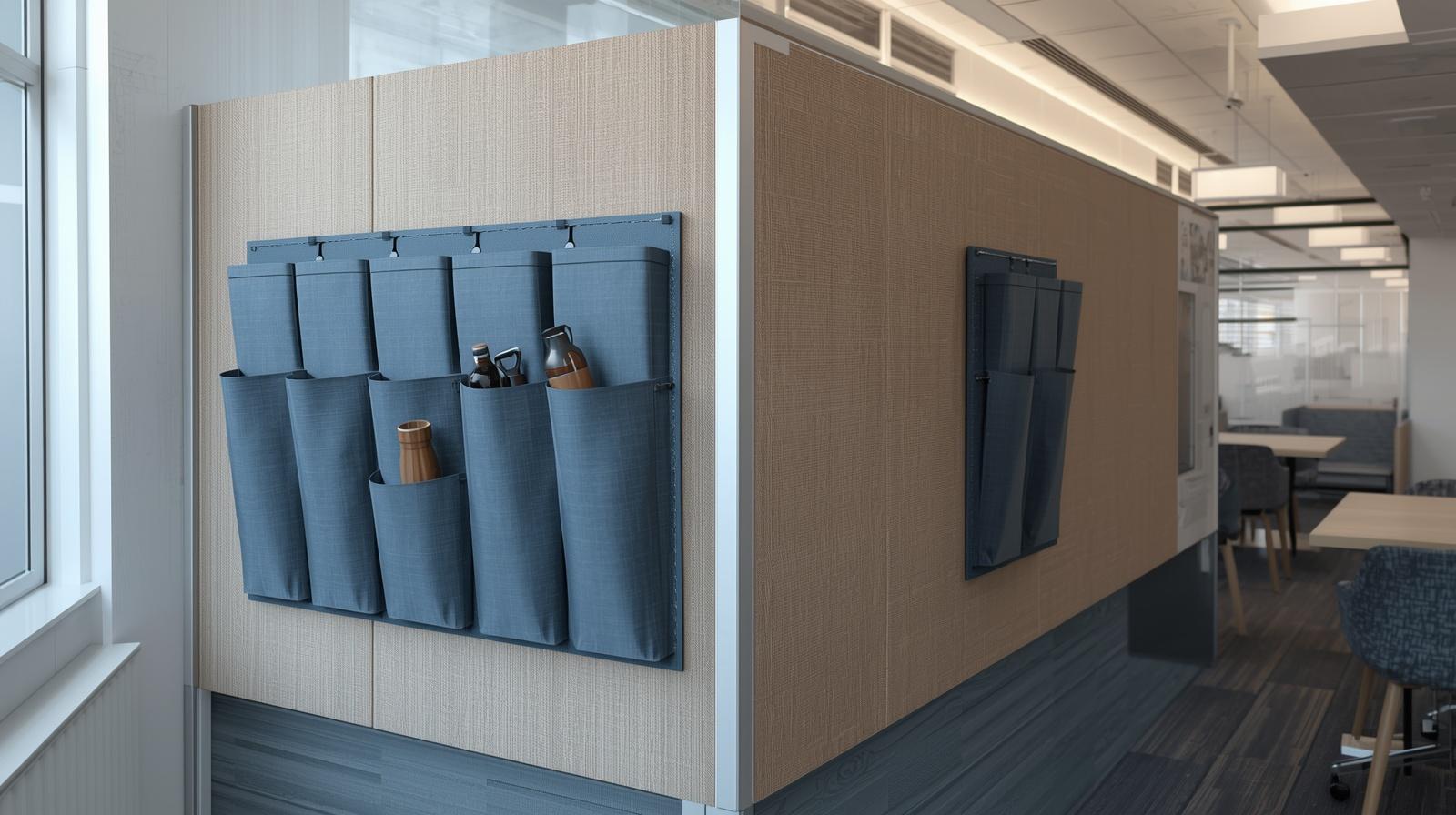
A studio renter in Seattle installed six felt pocket planters in a grid on the privacy partition separating her balcony from the neighbour. She filled each pocket with a lightweight coir-based mix instead of potting soil. Standard potting soil becomes dangerously heavy when saturated and strains wall anchors. Each pocket holds one herb: chives, Thai basil, flat-leaf parsley, mint confined to its own pocket, and two trailing oregano varieties that cascade downward.
The felt breathes, preventing root circling. One critical detail she learned by accident. The pockets needed watering every single day in August because felt evaporates moisture from all sides. She rigged a simple drip line from a plastic reservoir on the top rail. Before that, her Saturday morning ritual involved apologising to wilted parsley.
4. The Galvanized Tub Island for Aggressive Spreaders
Mint is the herb equivalent of a charming houseguest who takes over your guest room, changes the curtains, and invites twelve friends. Contain it poorly and you will spend a year pulling runners from every neighbouring pot. A galvanized steel tub solves this by creating an impermeable island.
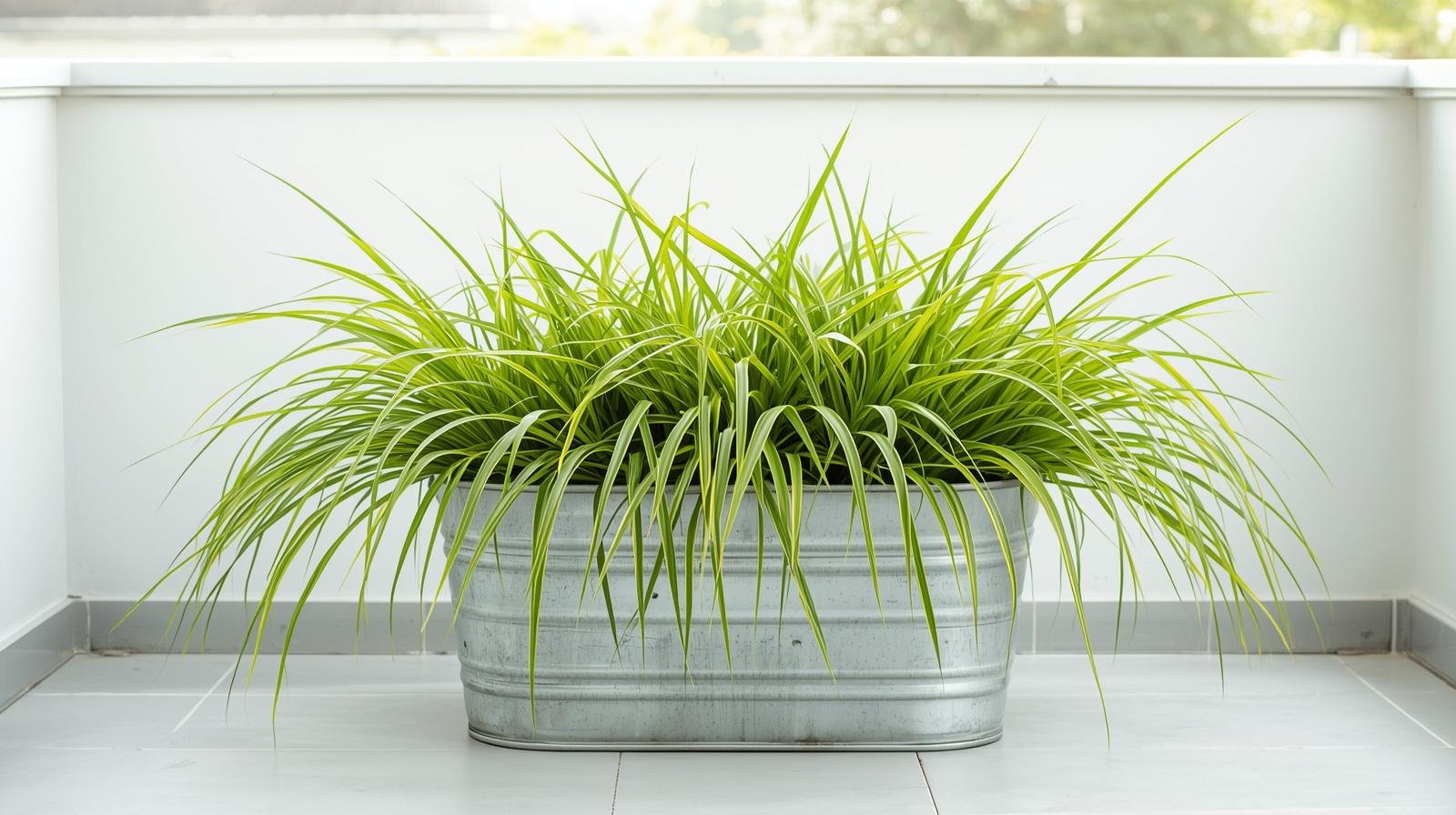
A cook in Portland placed a twenty-inch oval tub directly on the balcony floor, filled it six inches from the rim with a rich compost-heavy mix, and planted peppermint, chocolate mint, and lemon balm in a triangular arrangement. Each variety stays within the tub walls. The steel conducts heat during cool spring mornings, giving the mint an early start.
During a July heatwave, the metal grew alarmingly hot to the touch, so she wrapped the exterior with a strip of burlap and kept it damp. Evaporative cooling dropped the soil temperature enough to prevent root damage. She harvests aggressively three times per season, drying the excess for winter tea. The tub has contained the mint for four years without a single escape.
5. The Airflow-Optimized Rail Planter for Mildew-Free Basil
Basil on a balcony gets the same foliar diseases as basil in a field, often worse because balcony gardeners crowd plants for maximum yield. Overcrowding basil is the fastest way to introduce downy mildew, a pathogen that destroys leaf tissue and spreads via water splash.
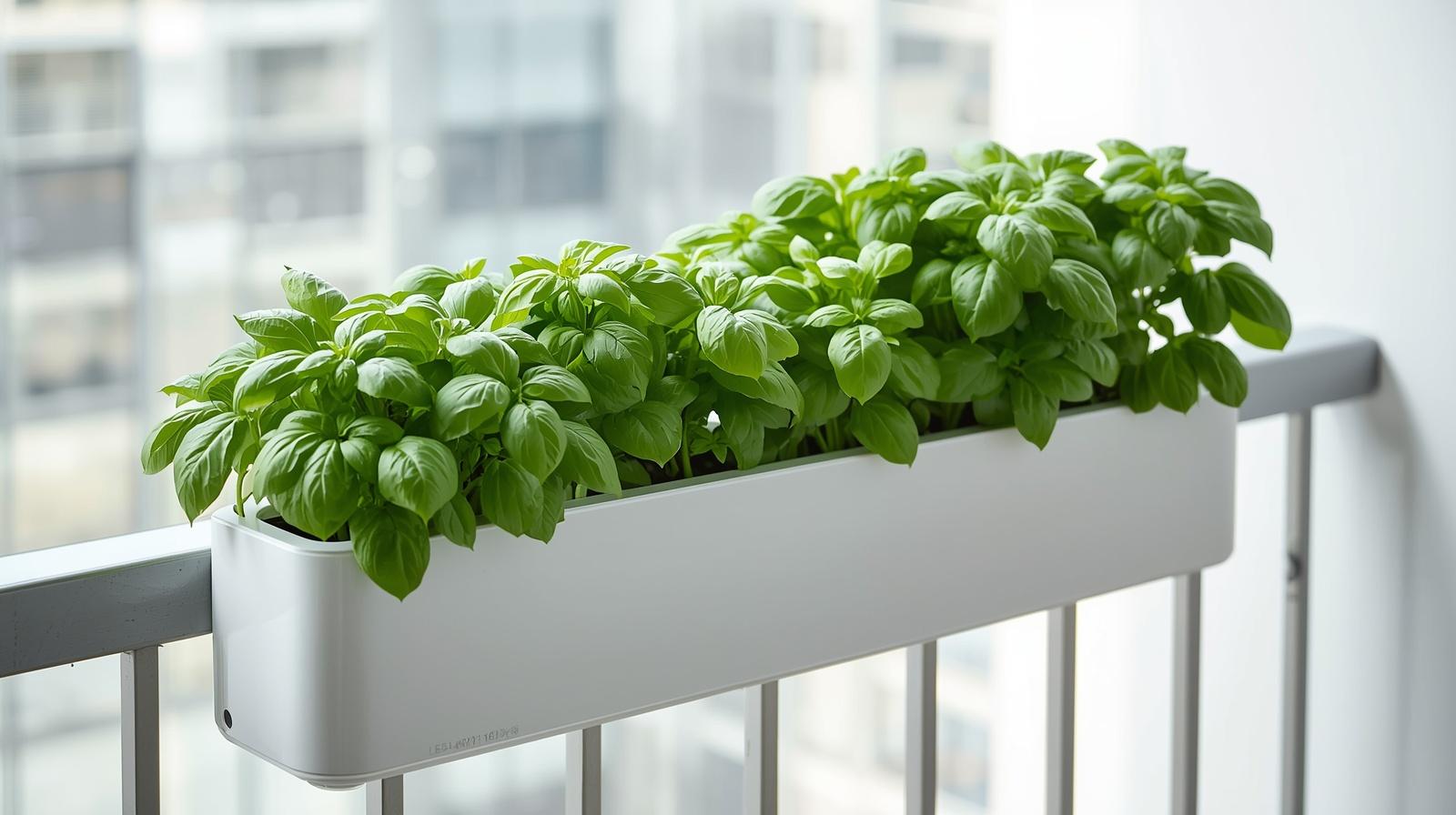
A home cook in Austin mounted two oblong rail planters on her balcony railing, spacing Genovese basil seedlings eight inches apart instead of the four inches most starter packs suggest. The planters sit in a location that catches the prevailing breeze without being battered by gusts. Airflow between plants dries leaf surfaces within minutes after morning dew or a watering session.
She waters the soil directly through a buried section of perforated PVC pipe, never wetting the leaves. Her basil produced continuously from April through October. The stems grew as thick as pencils. She attributes the yield not to any fertilizer regimen but to disease prevention through air circulation, a principle commercial greenhouse operators treat as non-negotiable and home gardeners routinely ignore.
6. The Root-Depth-Stacked Balcony Shelf System
Most balcony herb failures trace back to root confinement. A standard six-inch-deep windowsill planter seems sufficient for most herbs because they look small above ground. Below the soil surface, parsley sends a taproot down nine inches. Cilantro roots reach eight inches. Cramming them into shallow containers produces stunted, bitter plants regardless of how carefully you water.
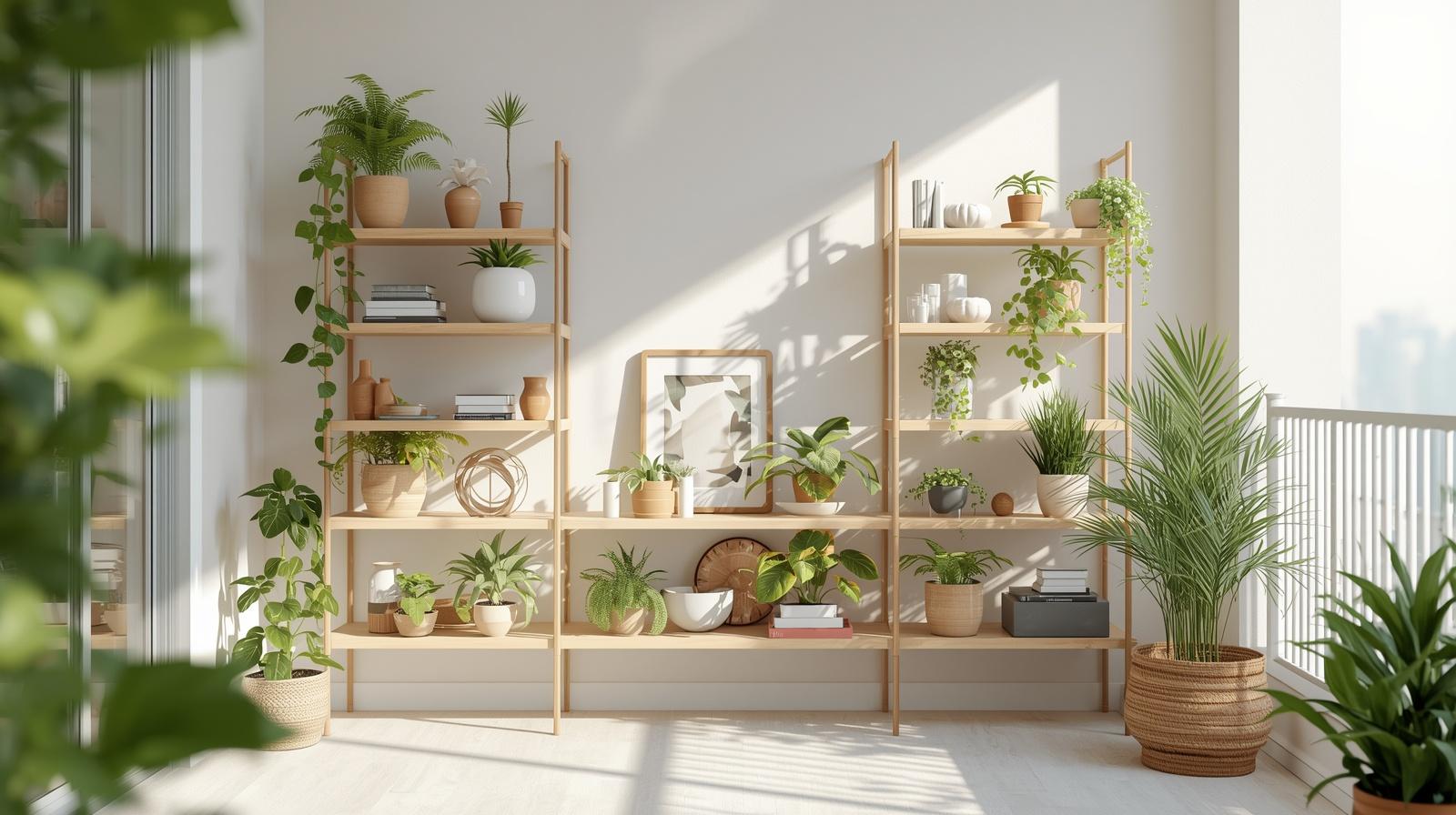
A retired chef in San Francisco built a simple cedar shelf unit with three tiers, each holding a different container depth matched to root morphology. The top shelf holds shallow four-inch pans for tight-rooted herbs like creeping thyme and Corsican mint. The middle shelf supports eight-inch-deep boxes for bush basil and chervil. The bottom shelf carries a twelve-inch-deep oak barrel half for parsley, cilantro, and dill, the deep taproot species that sulk in anything shallower.
The shelf unit occupies the same footprint as a single large planter but triples the usable growing depth. If you enjoy this kind of vertical organization, you might also like these kitchen bookshelf ideas for your indoor space. His parsley leaves remained tender and full-sized all season. No bitterness. No premature seed stalks. Just deep roots drinking from mineral reserves surface planters never reach. If you’re looking to upgrade your entire cooking space alongside your garden, check out these kitchen remodel ideas to complement your new greenery.
7. The Cool-Microclimate Balcony Corner for Perennial Chives and Sorrel
Perennial kitchen herbs like chives, sorrel, and lovage need a cold dormancy period to reset their growth cycle. A balcony corner shaded by an exterior wall and exposed to winter chill provides exactly this.
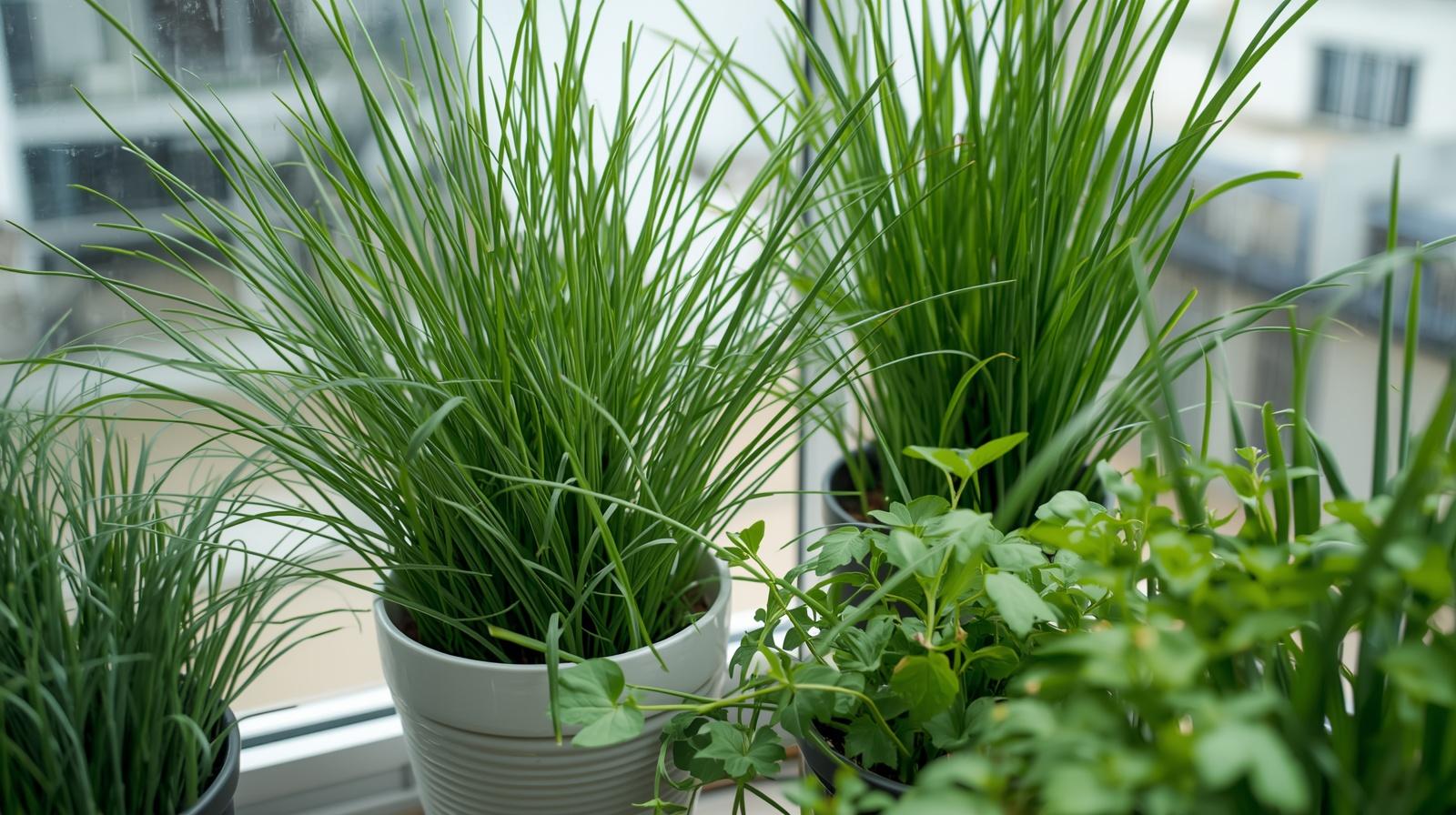
A long-time balcony grower in Minneapolis identified the northeast corner of her balcony, an area that stays cool well into spring and receives gentle morning light. She planted a wide, shallow ceramic bowl with common chives, garlic chives, and French sorrel. The bowl sits directly on the concrete, drawing coolness upward through the drainage hole. In winter, she leaves it entirely alone. No wrapping, no moving indoors, no coddling.
The Minneapolis cold kills the top growth back to the soil line. Come April, the chives emerge thicker than the previous year. She has maintained the same clump for six seasons. The sorrel sends up its arrow-shaped leaves early enough to harvest alongside the first spring asparagus at the farmers market. This corner garden demands zero summer watering beyond what rain provides and rewards her with the year’s earliest fresh green.
8. The Kitchen-Door Frame Pocket Garden for Instant Harvest Access
The distance between plant and pot matters. A herb garden twenty steps across the balcony gets harvested less often than one directly beside the kitchen door. Convenience dictates frequency, and frequency dictates plant health. Regular snipping triggers bushier growth and delays flowering.
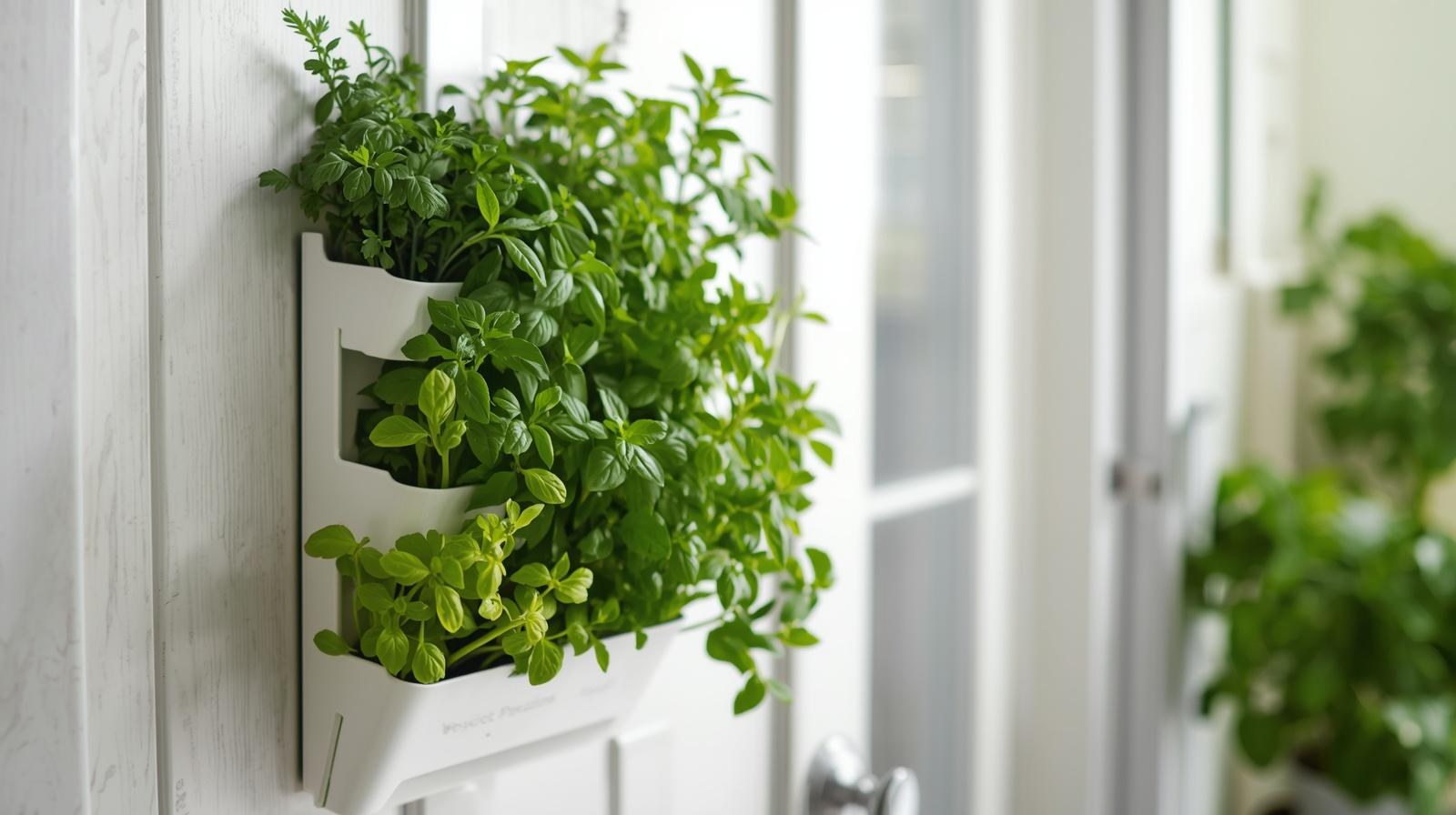
A family in London affixed three small terracotta pots to the door frame itself using sturdy metal brackets, placing them exactly at hand height. The left pot holds Thai basil for quick stir-fry additions. The center pot holds flat-leaf parsley, the workhorse herb that goes into nearly every savoury dish. The right pot holds a compact Greek oregano. The arrangement uses vertical space that would otherwise hold nothing but air. If you are looking to optimize this high-traffic area further, these smart entryway ideas can help.
More importantly, the herbs get harvested multiple times daily because reaching them requires zero additional steps beyond opening the door. The plants respond to constant gentle trimming with dense, compact growth. Their parsley produces side shoots faster than the family can use them. The oregano has never flowered because tips get pinched so frequently. This door-frame system redefines convenience not as an aesthetic preference but as a yield multiplier.
When Balcony Herb Gardens Collapse and Why
Death comes for balcony herbs in predictable patterns. Recognizing early signals prevents total losses. Yellowing lower leaves that drop while upper growth stays pale green almost always indicate nitrogen deficiency, not overwatering as commonly assumed. Container growing depletes nitrogen faster than ground soil because frequent watering flushes soluble nutrients out the drainage holes.
Brown, crispy leaf edges on the windward side of the plant signal salt buildup or wind desiccation, not sunscald. Windward damage appears asymmetrical. Sunscald is symmetrical across the plant’s sun-facing surface. This distinction saved a rosemary plant I nearly culled for supposed disease. The problem was simply a draft pattern I had not bothered to observe.
Wilting during midday heat with full recovery by evening is normal for large-leaved herbs like basil and does not indicate a watering need if the soil remains moist. Watering a heat-wilted basil with wet soil causes root rot. The correct response is temporary shade, not more water. These diagnostic details separate a balcony garden that produces steadily from one that oscillates between crisis and recovery all season.
Wrap Up
A kitchen balcony herb garden asks very little square footage and returns disproportionate cooking pleasure. The eight setups here solve specific problems that generic advice ignores. Your balcony has its own wind pattern, its own heat reflection profile, and its own pockets of surprising fertility. Learn those first. Match plants to microclimate rather than fighting the conditions you actually have. For more ways to optimize your cooking space, check out these kitchen bookshelf ideas. The herbs will do the rest, often more vigorously than anything planted in idealised garden beds at ground level.
FAQs
Which herbs survive best on a windy balcony?
Woody Mediterranean herbs like rosemary, thyme, Greek oregano, and winter savory tolerate wind best. Their small, thick leaves resist desiccation, and their stems flex without snapping.
How often should I water a balcony herb garden in hot weather?
Check the soil two inches below the surface daily during temperatures above 85 degrees Fahrenheit. Water deeply when that zone feels dry, never on a fixed schedule. Fixed schedules cause overwatering during cool spells and underwatering during heat waves.
Can I grow herbs on a completely shaded kitchen balcony?
Full shade excludes most culinary herbs except chervil, sweet cicely, and some mints. A balcony receiving at least three hours of direct or bright dappled light expands options to include parsley, cilantro, tarragon, and chives.
Disclaimer:
The content shared by Fall Rugs is solely for research and informational purposes. Fall Rugs is not a professional interior design or home renovation consultancy, and the information provided should not be considered professional advice for home improvement or decor. All ideas and suggestions are based on current trends and general knowledge in the home decor industry.