

TL;DR
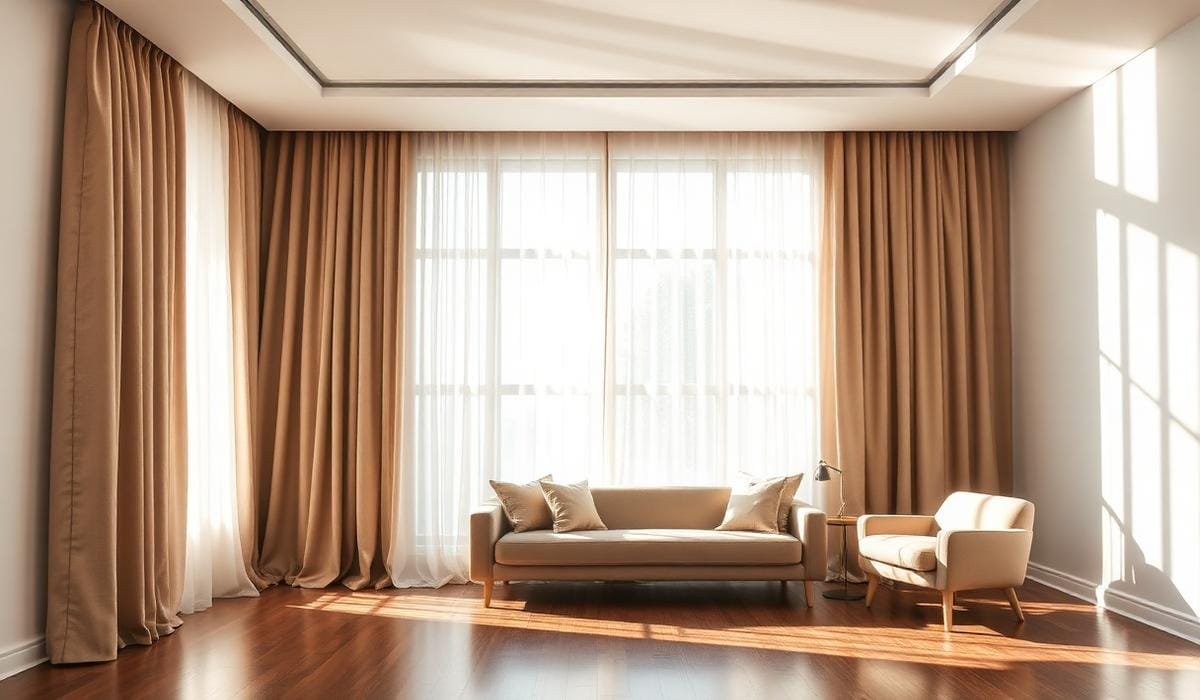
Hang sheer curtains closest to the window and place blackout panels on the room-facing rod. Use a double curtain rod, choose panels with enough width, and mount the hardware above and beyond the window frame for better light control, privacy, and visual balance.
Introduction
Can one window treatment provide soft daylight, night-time privacy, and a darker room for sleep? Layering sheer and blackout curtains can handle all three needs without making the window look heavy.
The sheer layer filters direct sunlight during the day, while the blackout layer closes when stronger privacy or darkness is needed. Good results depend on panel order, fabric weight, curtain width, rod placement, and accurate measurements. Small errors, such as narrow panels or a low rod, can leave light gaps and make the whole arrangement look unfinished.
Choose the Right Curtain Layering Order
The most practical arrangement places sheer curtains nearest the glass and blackout curtains toward the room. During daylight hours, the blackout panels can remain open while the sheers soften glare and reduce direct views from outside. At night, closing the blackout layer provides stronger privacy and blocks much more light than a sheer panel could manage alone.
This order also gives the heavier fabric enough space to move without catching on the lighter material. IKEA’s VIDGA track system and RÄCKA double-rod combination both support separate curtain layers. Interior designer Emily Henderson often uses light inner panels with more substantial outer drapes because the contrast frames the window without hiding it during the day.
- Place sheers on the inner rod, closest to the glass.
- Hang blackout panels on the outer rod, facing the room.
- Leave enough space between rods so the fabrics move separately.
- Use curtain rings or gliders when frequent opening is expected.
Reverse layering can work when the sheer fabric is highly decorative and meant to remain visible at night. Hotels sometimes place blackout curtains near the glass and decorative voile panels toward the room. That setup suits formal spaces, but it offers less flexible daytime use because the outer sheer may interfere when the blackout panels open.
Measure the Window Before Buying Panels
Accurate measurements prevent exposed edges, weak fabric folds, and bright strips of light around the window. Measure the full window width, then add space on both sides for rod extension. Extending the rod about 15 to 30 centimetres beyond each side lets the blackout panels stack away from the glass and reduces side-light leakage when closed.
Curtain fullness also affects appearance and coverage. A combined curtain width of roughly 1.5 to 2.5 times the rod width produces natural folds. A 180-centimetre rod, for example, usually needs between 270 and 450 centimetres of total fabric width. Sheer voile often looks better near the fuller end because thin material appears flat when stretched too tightly.
- Measure the window and surrounding wall, not only the glass.
- Add 30 to 60 centimetres to the total rod width.
- Buy enough panels to reach at least 1.5 times the rod width.
- Measure from the planned rod position to the chosen curtain length.
- Check skirting boards, radiators, furniture, and window handles.
Pottery Barn recommends measuring each window rather than assuming matching windows share identical dimensions. That advice matters in older houses in London, New York, or Lahore, where floors, frames, and ceilings may sit slightly out of level. A difference of only two centimetres can become noticeable when two curtain layers hang side by side.
Select Fabrics That Work Together
Sheer curtains usually use voile, polyester gauze, linen blends, cotton muslin, or organza. Each material handles light differently. Polyester voile provides a smooth, low-cost option with fewer wrinkles, while linen sheers create a softer, more textured appearance. Pottery Barn’s Belgian Flax Linen Sheer Curtain shows how natural fibres can filter sunlight without looking shiny or overly formal.
Blackout curtains contain either tightly woven fabric, a coated backing, or several bonded layers. True blackout material blocks considerably more light than products labelled room darkening. Room-darkening panels may reduce brightness enough for a television room, yet early sunlight can still enter a nursery, bedroom, or night-shift worker’s sleeping space.
- Pair plain sheers with textured blackout panels.
- Combine warm white sheers with beige, taupe, or brown outer curtains.
- Use cool white or pale grey sheers with navy, charcoal, or blue panels.
- Avoid combining two stiff fabrics that compete for space.
- Request swatches when colours appear different under shop lighting.
West Elm sells both linen-look sheers and blackout velvet curtains, which can work together when the colours share a similar undertone. A warm ivory sheer beside a cool silver-grey blackout panel may look mismatched, even when both pieces appear neutral online. View samples beside the wall paint, flooring, and furniture during daylight and under evening bulbs.
Install Double Rods at the Correct Height
A double curtain rod gives each fabric its own track and keeps the panels easier to operate. Mount the inner rod closer to the wall for the sheer panels and position the outer rod farther into the room for the blackout curtains. The outer rod may need stronger brackets because lined or velvet drapes can weigh several kilograms across a large window.
Mounting the rod higher than the window frame can make the wall and ceiling appear taller. Many decorators position curtain hardware 10 to 20 centimetres above the frame, depending on ceiling height and available wall space. Nate Berkus often favours curtains installed close to ceiling level because long vertical lines can give an average room a more deliberate architectural shape.
- Mark the centre and bracket positions with a pencil.
- Use a spirit level before drilling any holes.
- Fit wall plugs suited to plasterboard, brick, or concrete.
- Check that the outer rod projects beyond the inner layer.
- Test both curtains before tightening every screw.
Wall material changes the installation method. Standard plastic plugs may suit masonry walls, while plasterboard often needs toggle or self-drilling anchors. A blackout panel that weighs four kilograms can pull loose hardware from weak plaster. For rented properties, tension rods or IKEA VIDGA ceiling tracks may reduce wall damage, though wide windows still need firm support points.
Control Light Gaps Around the Window
Blackout fabric cannot darken a room fully when light enters above, below, or beside the curtains. Mounting the rod wider than the frame reduces side gaps. Hanging it higher controls light above the window, while floor-length panels limit brightness near the sill. Curtains that stop halfway between the sill and floor often leave a visible band of morning light.
A wraparound curtain rod can improve side coverage because its curved ends bring the outer panel back toward the wall. French return rods provide a similar effect and suit traditional rooms. In bedrooms, combining layered curtains with a blackout roller blind gives stronger control than fabric panels alone, especially on east-facing windows exposed to early sunrise.
- Extend blackout panels beyond both sides of the frame.
- Choose floor-length or slightly puddled curtains.
- Use magnetic strips or hook-and-loop tape at stubborn side gaps.
- Add a pelmet or valance when light enters above the rod.
- Pair curtains with a fitted blind for near-total darkness.
A family in Manchester installed expensive blackout curtains but still found the nursery bright at 5:30 a.m. during summer. The fabric worked correctly, yet the rod ended at the window edges. Replacing it with a wider return rod and adding a fitted roller blind removed most of the remaining glow without changing the curtain panels.
Style Layered Curtains for Different Rooms
Bedrooms benefit from full-length blackout curtains paired with soft, washable sheers. Neutral combinations such as white voile with oatmeal, forest green, or deep navy outer panels suit both modern and traditional interiors. For children’s rooms, cordless blinds behind the curtains can add light control while avoiding loose operating cords near beds and play areas.
Living rooms often need more daylight, so linen-blend sheers and room-darkening outer panels may feel less heavy than full blackout fabric. Kelly Wearstler frequently mixes materials with different textures rather than matching every surface. A fine sheer beside velvet or woven cotton creates depth, particularly when the curtain colour repeats a tone found in a West Elm sofa or Ruggable rug.
- Use full blackout lining in bedrooms and nurseries.
- Choose washable polyester sheers for kitchens and busy family rooms.
- Keep curtain fabric clear of heaters, stoves, and open flames.
- Match metal rods with nearby handles, lamps, or furniture details.
- Use wider panels for sliding doors and large picture windows.
Home offices need glare control without losing all natural light. Sheers can soften reflections on laptop screens during working hours, while blackout panels can close for video presentations or projector use. Dining rooms often suit lighter outer fabrics because total darkness rarely matters. The function of the room should shape the fabric choice before colour or decorative trim enters the decision.
Avoid Common Layering Mistakes
The most frequent mistake is buying too little fabric. Narrow panels barely meet in the centre and lose their folds when closed. Light can enter through the middle, and the window appears smaller. Buying two wider outer panels usually looks more balanced than stretching undersized curtains across the rod.
Another common problem involves mixing incompatible headings. Eyelet blackout curtains need a round rod, while pencil-pleat sheers may require hooks and a track. Both styles can share a double system, but each rod must support the correct heading. IKEA, Dunelm, Pottery Barn, and West Elm list heading types in product details, yet buyers often overlook them.
- Don’t mount both layers on one crowded rod.
- Don’t let heavy blackout fabric crush delicate sheers.
- Don’t assume “room darkening” means full blackout.
- Don’t buy panels before checking heading compatibility.
- Don’t ignore washing and care instructions.
I once corrected a layered installation where both curtain sets dragged across a radiator. The fabric trapped heat, gathered dust, and stopped the panels from closing evenly. Shortening the sheers to sill length and keeping the blackout panels clear of the radiator improved movement and reduced the risk of heat damage. Room layout always matters as much as window size.
Wrap Up
Layering sheers with blackout curtains works when each fabric has a clear job. The inner sheer filters daylight and provides light privacy, while the outer blackout panels control brightness, night-time views, and sleep conditions.
Use separate rods, generous panel widths, suitable wall fixings, and enough coverage around every edge. Choose fabrics that share compatible colours but offer different textures. A well-measured setup looks balanced when open, closes without resistance, and adapts to changing light through the day and across the seasons.
FAQs Section
Can sheer and blackout curtains go on the same rod?
They can share one rod with special double brackets or layered rings, but separate rods provide smoother movement and better control. A true double curtain rod usually gives a cleaner result.
Should blackout curtains be inside or outside the sheer curtains?
Sheer curtains normally sit closest to the window, while blackout curtains hang on the outer rod. This arrangement keeps the sheers useful during daylight and lets the heavier panels close at night.
How much wider should curtains be than the window?
The rod should usually extend 15 to 30 centimetres beyond each side of the window. Total curtain width should measure about 1.5 to 2.5 times the rod width for good coverage and natural folds.