
TL;DR
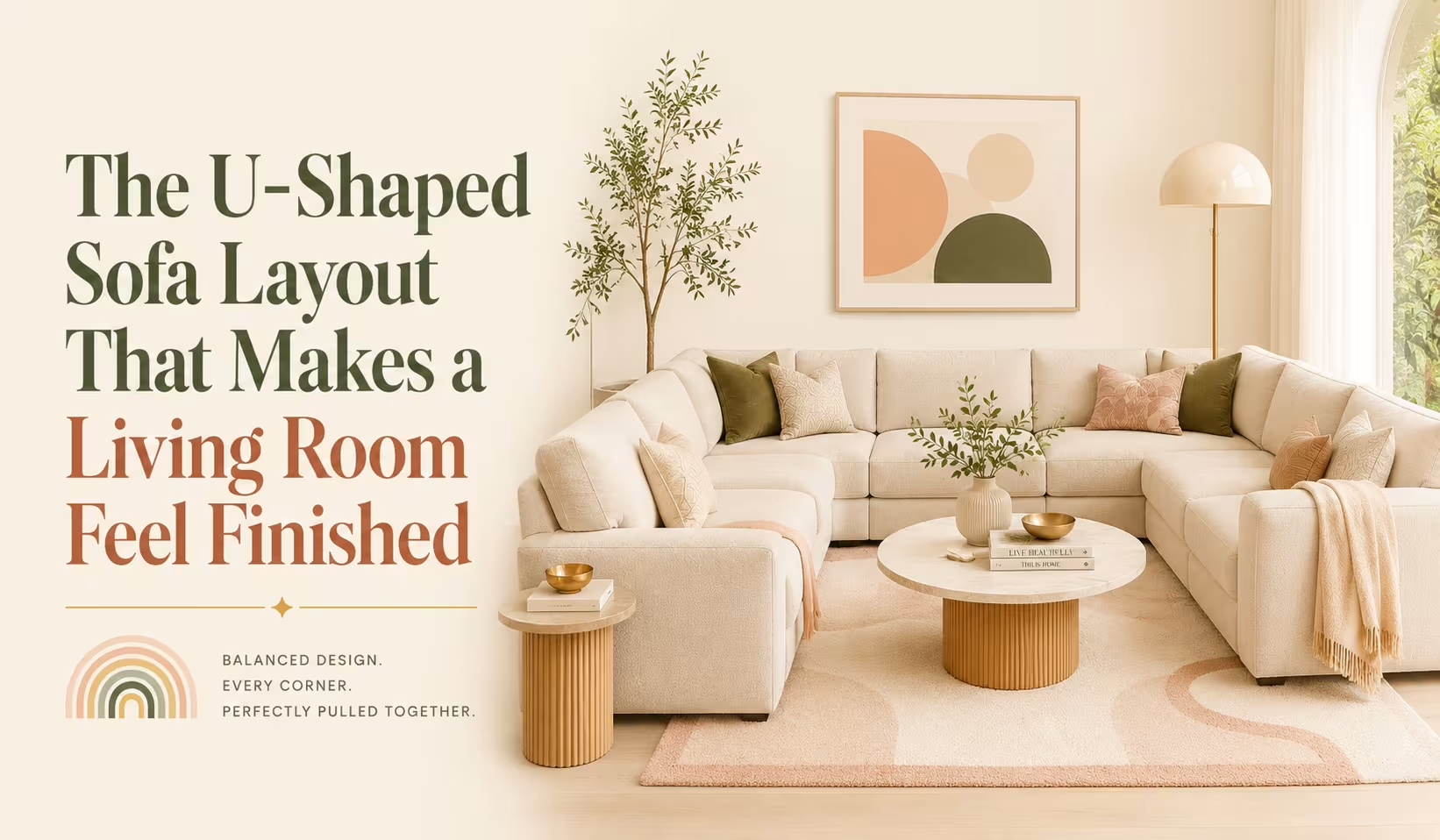
A U-shaped sofa works well in rooms where comfort, conversation, and shared seating matter more than open floor space. The right size, fabric, cushion depth, and placement can turn it into the anchor of a family room, media room, or open-plan living area.
Introduction
A living room can look expensive and still feel awkward if the seating doesn’t support real life. A U-shaped sofa solves that problem by creating a natural zone for talking, relaxing, watching TV, reading, and hosting without forcing people into stiff rows. It suits homes where the sofa isn’t just furniture, but the center of daily movement. The real decision isn’t whether it looks good, but whether its scale, shape, and material fit the room honestly.
Why a U-Shaped Sofa Feels Different From a Regular Couch
A standard three-seat couch faces one direction, while a U-shaped sectional sofa wraps the seating area on three sides. That change alters the room’s behavior. People face each other more naturally, side tables become easier to reach, and the coffee table starts acting like a shared center rather than a decoration floating in the middle of the floor.
The shape also gives the room a stronger sense of purpose. In open-plan homes, a U-shaped sofa can mark the living area without adding walls, screens, or heavy cabinetry. Designers often use this trick in apartments, suburban family rooms, and loft spaces because the sofa itself creates an invisible boundary between cooking, dining, and relaxing.
Large furniture gets blamed for making rooms feel smaller, but poor proportion usually causes the damage. A correctly scaled U-shaped couch can make a room feel calmer because it reduces the need for scattered chairs, ottomans, and random accent pieces. The eye reads one unified seating zone rather than five separate decisions fighting for attention.
The Room Types Where a U-Shaped Sofa Works Well
A large sectional couch fits naturally in family rooms, media rooms, finished basements, and wide living rooms with a clear focal point. That focal point might be a fireplace, a Samsung Frame TV, a built-in bookshelf wall, or a broad picture window. The sofa performs best where people already gather for long stretches, not in rooms used only for formal visits.
Open-concept layouts also benefit from this seating style. A U-shaped sofa can sit between a kitchen island and a TV wall, giving the living area a defined edge without closing the space. In many modern homes, that’s more useful than adding two armchairs that look elegant in photos but rarely get used by the family.
Smaller rooms need more caution. A compact U-shaped sofa can work in a city apartment, but only if walkways stay clear and the arms don’t block doors, radiators, balcony access, or window light. I’ve seen homeowners buy a beautiful sectional, then lose the natural path from the hallway to the kitchen. The sofa looked right on the invoice, not in the room.
Getting the Size Right Before You Buy
The smartest sofa decision starts with measurement, not style. Measure the wall length, room depth, doorways, stair turns, elevator width, and the path from delivery truck to living room. Many U-shaped sofas arrive in sections, yet corner units and chaise pieces can still be bulky. A tape measure prevents costly return fees and bruised door frames.
Comfort also depends on clearance. Leave enough walking space around the outer edges so people don’t sidestep through the room. A coffee table should sit close enough for drinks but far enough for knees and foot traffic. In most real living rooms, the difference between comfort and clutter is often just a few inches.
A retail showroom can distort scale because ceilings are high and floor space is generous. A sofa that looks moderate under bright showroom lighting may dominate a 12-foot-wide room at home. I’ve learned to mark the sofa footprint with painter’s tape before buying. That one quiet exercise reveals more than a dozen product photos.
Seat Depth, Back Height, and Real Comfort
Seat depth changes how people use the sofa. A deep seat suits lounging, movie nights, and taller adults, while a shallower seat supports upright conversation and older guests better. Many popular sectionals from brands such as IKEA, West Elm, Ashley, La-Z-Boy, and Crate & Barrel offer different cushion profiles, so the dimensions deserve close reading.
Back height matters just as much. Low backs create a cleaner modern look, but they may disappoint people who want neck support during long TV sessions. High backs feel cozier, though they can block sightlines in open layouts. Good seating balances posture, softness, and visual weight instead of chasing one showroom trend.
Choosing Between Modular and Fixed U-Shaped Designs
A modular sofa gives more flexibility because each section can move, expand, or shift with the room. Families who relocate, rent, or frequently rearrange furniture often get better long-term value from modular pieces. Brands like Lovesac and Burrow built much of their appeal around that flexibility, especially for homes where needs change every few years.
A fixed U-shaped sofa usually feels more tailored. The lines can look cleaner, the frame may feel more integrated, and the proportions often suit a specific room better. This option works well for homeowners who know their layout won’t change and want the sofa to feel like part of the architecture rather than a movable system.
Neither choice is automatically superior. Modular designs can separate slightly if connectors are weak or floors are uneven. Fixed sofas can become a problem during a move or renovation. The right answer depends on lifestyle. A growing family, a rental apartment, and a custom-built media room all ask different things from the same furniture shape.
Left-Facing, Right-Facing, and Symmetrical Layouts
Retail terms can confuse buyers. Left-facing and right-facing usually describe the side of the chaise or longer return when you stand facing the sofa. A misunderstanding here can place the longest section on the wrong wall, which then blocks a doorway, fireplace, or window. Product diagrams matter more than product names.
Symmetrical U-shaped sofas reduce that risk because both sides extend evenly. They work well in square rooms and media spaces where the TV or fireplace sits centered. Asymmetrical designs feel more casual and can suit open living rooms where one side needs to define the boundary near a kitchen or dining area.
Fabric, Leather, and Performance Materials
Fabric choice shapes daily satisfaction more than most buyers expect. Linen blends look relaxed and editorial, but they can wrinkle and stain faster in busy homes. Velvet brings depth and softness, yet it may show pressure marks. Bouclé looks current and sculptural, though pet hair and heavy use can challenge its texture.
Performance fabrics changed the sectional market because households want style without constant worry. Crypton, Sunbrella indoor fabrics, and many stain-resistant polyester blends can handle spills better than delicate upholstery. Families with children, pets, or frequent guests often find performance fabric more practical than pale natural fibers, especially on a large sofa with many seats.
Leather has a different personality. Full-grain and top-grain leather develop patina, while bonded leather can peel and disappoint over time. Brown leather U-shaped sofas suit warm interiors with wood, brass, and woven rugs. Black leather can look sharp, but it needs softness nearby, such as wool, cotton, plants, or textured cushions.
Color Choices That Age Well
Neutral colors remain popular because a U-shaped sofa covers a lot of visual territory. Beige, taupe, oatmeal, gray, charcoal, and warm white can hold the room together without overwhelming it. A large sectional in a loud color may look exciting at first, then become difficult to style as seasons, rugs, and wall colors change.
That doesn’t mean neutral has to feel dull. Texture carries much of the design. A nubby cream fabric, soft gray chenille, or warm camel leather can feel richer than a flat bright shade. Designers often create interest through layered materials instead of loud upholstery because the sofa already owns the room by size.
Darker colors suit high-traffic homes. Charcoal, olive, chocolate, navy, and mushroom tones hide everyday wear better than pale fabrics. A client-style scenario comes to mind: a family in Lahore replaced a white sectional with a warm gray U-shaped sofa after repeated juice spills and dust marks. The room still looked refined, but daily cleaning became far less stressful.
Placing a U-Shaped Sofa Without Crowding the Room
Placement should follow how people enter, sit, and move. A U-shaped sofa usually works best facing the main focal point, with the open side welcoming traffic from the room’s entrance. That open side matters. It tells guests where to walk and where to sit without anyone giving instructions.
Floating the sofa away from the wall can make a room feel more designed, especially in open-plan spaces. The back of the sectional then becomes a soft divider between living and dining. A console table behind it can hold lamps, books, baskets, or ceramic pieces, giving the rear view a finished look.
Pushing every section against the wall may save space, but it can flatten the room. The layout starts feeling like a waiting area instead of a home. Even a small gap behind the sofa can add depth. Good furniture placement gives breathing room to walls, windows, and human movement.
Rugs, Coffee Tables, and the Center Zone
A U-shaped sofa almost always needs a rug large enough to connect all seating sections. A tiny rug trapped under the coffee table makes the sofa look stranded. Wool, jute, viscose blends, and washable rugs all bring different strengths, but scale matters first. The front legs should relate clearly to the rug.
Coffee table shape also affects comfort. Round and oval tables soften the angles of a U-shaped sectional, while rectangular tables suit long, symmetrical layouts. In homes with children, rounded corners reduce knocks and bumps. In media rooms, a large ottoman can replace the table and double as footrest, tray surface, and casual seating.
Styling the Sofa So It Looks Intentional
Styling a U-shaped sofa takes restraint. Too many cushions can turn every seat into storage. A better approach uses a controlled mix of sizes, textures, and tones. Pair large back cushions with smaller lumbar pillows, then repeat one color from the rug, curtains, or artwork to make the room feel connected.
Throws should look usable, not staged beyond belief. A wool throw over one corner, a cotton blanket near the chaise, or a textured knit on the longest side can soften the sofa’s mass. The goal is comfort with order. Real homes need pieces that can move, fold, and return without fuss.
Lighting finishes the scene. Floor lamps, wall sconces, table lamps, and dimmable ceiling lights help the large seating zone feel warm at night. A sectional without layered lighting can feel like a dark block after sunset. Soft light on fabric texture, artwork, and side tables gives the room depth that upholstery alone can’t create.
Common Buying Mistakes and Smarter Fixes
The biggest mistake is buying for maximum seats instead of maximum use. A massive U-shaped sofa may technically fit, but it can still harm the room if it blocks storage, narrows walkways, or leaves no place for side tables. Seating capacity means little if everyone feels boxed in.
Another mistake is ignoring cushion construction. Foam density, spring support, frame material, and fabric rub count all affect lifespan. Kiln-dried hardwood frames usually perform better than weak particleboard frames. Removable cushion covers can also extend the sofa’s life because cleaning, rotating, and replacing parts becomes easier.
A retail manager once described a couple who returned three sectionals in one year. Their issue wasn’t taste. They kept choosing low-profile sofas for a room where they watched long sports matches every weekend. The final purchase had higher backs, firmer cushions, and washable covers. It looked less dramatic online, but it finally suited their life.
Price, Value, and Long-Term Ownership
A U-shaped sofa costs more than a small couch because it uses more frame, foam, upholstery, transport space, and labor. Budget models can work for light use, guest rooms, or temporary housing. A main family sofa needs stronger construction because it absorbs daily weight, movement, spills, pets, and long sitting sessions.
Value appears over time. A cheaper sofa that sags in two years may cost more per year than a better-built sectional kept for seven or eight years. Warranty terms, replacement cushion options, upholstery cleaning codes, and delivery service all belong in the buying decision. The sticker price tells only part of the story.
Resale also deserves thought. Neutral, modular, clean-lined sectionals usually sell more easily than oversized novelty shapes or unusual colors. People moving into apartments, starter homes, and family houses often search for practical sectional sofas. A U-shaped design with flexible pieces can hold value better than a fixed sofa that fits only one narrow layout.
Cleaning, Care, and Daily Habits
Care starts with small routines. Rotate cushions if the design allows it, vacuum seams where crumbs gather, and treat spills quickly according to the upholstery label. Water-based cleaners suit some fabrics, while solvent-based care applies to others. Guessing can leave rings, fading, or texture damage, so the fabric code matters.
Pets add another layer. Tight-weave performance fabrics resist snagging better than loose weaves. Leather can handle fur well, but claws may scratch it. Washable throws on favorite pet corners can protect the sofa without covering the whole piece. A good lint roller and vacuum attachment often matter more than expensive cleaning products.
Sunlight can fade upholstery, especially near large windows. Curtains, blinds, UV film, or strategic placement can reduce uneven fading. This matters with dark fabrics and leather, where one exposed side may age faster than the rest. A sofa that large becomes part of the room’s architecture, so care needs to match its role.
Wrap Up
A U-shaped sofa earns its place when the room needs shared comfort, clear zoning, and generous seating. The best choice respects scale, movement, fabric, cushion support, and the way people actually live. Style matters, but fit matters more. Buy the sofa that supports daily habits, not just the one that photographs well.
FAQs Section
What size room is good for a U-shaped sofa?
A U-shaped sofa usually works best in medium to large rooms where walkways stay open after placement. Measure the full footprint, then leave comfortable space around entrances, tables, and side paths.
Is a U-shaped sofa better than an L-shaped sofa?
A U-shaped sofa offers more shared seating and stronger conversation flow, while an L-shaped sofa saves more floor space. The better choice depends on room size, traffic paths, and how many people regularly use the living area.
Are U-shaped sofas good for small living rooms?
Compact U-shaped sofas can work in small rooms, but only with careful measuring and minimal extra furniture. A slim modular design often works better than a deep, bulky sectional in tight spaces.
Disclaimer
This content shared by Fall Rugs is solely for research and informational purposes. Fall Rugs is not a professional interior design or home renovation consultancy, and the information provided should not be considered professional advice for home improvement or decor. All ideas and suggestions are based on current trends and general knowledge in the home decor industry.