

TL;DR
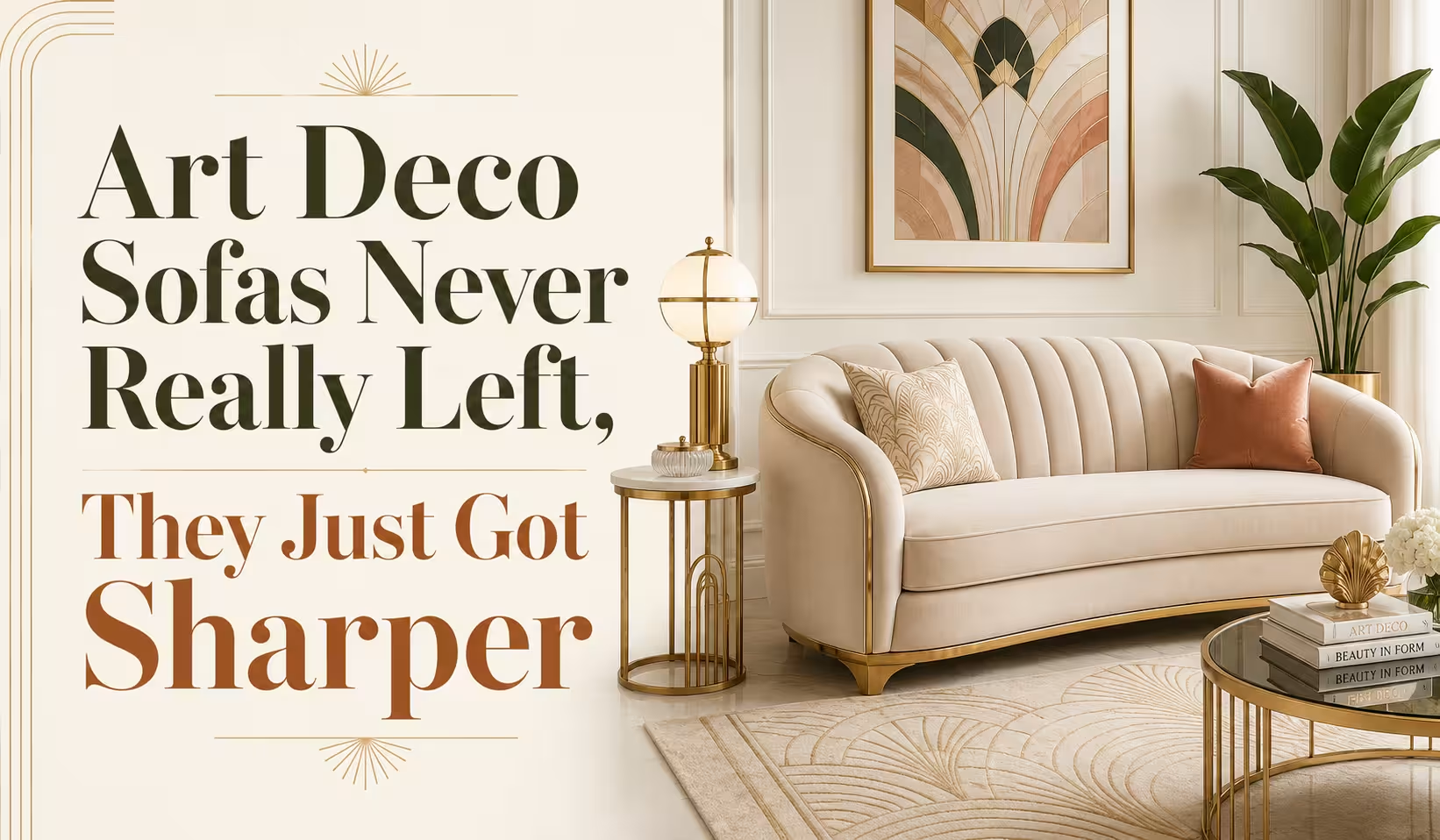
Art Deco sofas blend bold geometry with lavish materials to create seating that feels both sculptural and livable. Their modern revival focuses on cleaner lines and softer fabrics without losing the defining sense of glamour. A well-chosen Deco-inspired piece anchors a room with architectural confidence.
Introduction
Why does a design style born in 1920s Paris still make a room feel electric a century later? The Art Deco sofa carries something rare: a promise that furniture can be both opulent and impossibly chic without trying too hard. You pick up on the confidence right away, in the strong silhouette and the way light catches the velvet. This piece walks you through what actually defines these sofas, how to spot quality construction, and why they work in rooms that have zero interest in looking like a period film set.
A Short Trip Through the Geometry That Defined an Era
The 1925 Exposition Internationale des Arts Décoratifs et Industriels Modernes in Paris gave the movement its name, but the impulse behind it had been building for years. Designers like Émile-Jacques Ruhlmann and Sue et Mare rejected the flowing curls of Art Nouveau in favor of sharp angles, symmetry, and materials that announced luxury without whispering. An Art Deco sofa from this period was not meant to disappear into a room. It stepped forward, often on tapered legs, with fan motifs, sunburst inlays, and upholstery in velvet or shagreen.
That interplay of restraint and excess still defines the look. You see it in a sofa with a clean barrel back framed by exaggerated rolled arms, or a tight seat cushion edged in brass nailheads. The originals were expensive commissions for wealthy clients who wanted to telegraph modernity. Today’s versions borrow the silhouette but strip away the weight, making them practical for smaller living rooms and open-plan condos. The geometry still does the heavy lifting, it just no longer requires a grand Parisian salon to work.
What Actually Makes a Sofa “Art Deco”
The Silhouette Comes First
Start with the outline. Deco-inspired sofas lean on strong, architectural shapes: curved backs that feel almost aerodynamic, stepped profiles that echo skyscraper setbacks, and arms that either sweep dramatically or stand firm and rectangular. The Chesterfield gets reimagined with a lower back and chrome bun feet. A tuxedo-style frame grows taller and more upright. The common thread is a distinct boundary between the piece and the air around it. These sofas do not slump.
Materials reinforce the statement. Velvet remains the go-to fabric because it drinks light and gives everything a jewel-box quality. But high-performance velvets have replaced delicate silk blends, giving cat owners and parents a shot at the look without constant anxiety. You will also find linen weaves with metallic threads, top-grain leather in cognac and ebony, and the occasional shearling accent pillow.
Legs and trim often show up in polished brass, blackened steel, or lacquered wood. The mix of metallic sheen against plush fabric creates the tension that makes Deco feel alive instead of museum-stiff.
Scale and Proportion in the Real World
Here is where reproductions frequently stumble. A true Deco-inspired sofa understands that scale is its secret weapon. The best ones sit lower to the ground than mid-century designs but higher than a typical slouchy sectional. Seat depth matters tremendously.
Too deep and the upright frame looks like it is swallowing the user, too shallow and nobody wants to stay past one drink. Most well-made versions land between 22 and 24 inches in seat depth, with a back height that supports shoulders without towering over the room.
Arm height plays a role too. Low, curved arms encourage lounging while keeping the profile sleek. Higher, squared-off arms push the sofa into more formal territory, the kind of piece that anchors a lobby or a living room where the sofa itself is the focal point. Neither choice is wrong. The mistake comes when a manufacturer slaps a geometric pattern on an otherwise generic frame and calls it a day. The proportions have to commit.
Why the Revival Happened Now
Post-pandemic interior tastes shifted hard toward comfort, but people got bored of beige sectionals faster than anyone predicted. Designers started noticing clients asking for more personality, more risk, more color. Art Deco answers that call without tipping into maximalist chaos because its structure imposes order. You can upholster a Deco frame in peacock blue or burnt orange, and it still reads as intentional rather than loud.
Social media has fueled the revival too. A velvet sofa with a scalloped back photographs beautifully. The strong lines create shadows that give images depth, and the jewel tones pop on screens. But the appeal goes deeper than Instagram. After years of greige minimalism, homeowners are rediscovering that a single high-impact piece transforms a room faster than a dozen small accessories. The Deco sofa earns its place as that anchor.
Choosing Fabric That Survives Real Life
Performance velvet changed the game for anyone who loves the Deco look but lives with sticky fingers or shedding dogs. Unlike the silk velvet used in 1920s originals, modern performance versions repel moisture, resist crushing, and clean up with a damp cloth. Brands like Crypton and Sunbrella offer velvets that feel surprisingly soft while standing up to daily abuse. The trade-off is a slight difference in sheen. You lose some of the liquid-metal effect of high-end cotton velvet, but you gain a sofa that actually gets used instead of cordoned off.
For households without pets or kids, cotton velvet and mohair blends still offer the richest texture. Mohair in particular has a crisp hand and a subtle halo that shifts color as you move around it. It also wears like iron, a fact Deco-era designers knew well. Leather choices lean toward smooth, corrected-grain hides rather than distressed or pull-up leathers because the clean surface matches the precision of the frame. Look for aniline-dyed leather in deep navy, emerald, or cigar brown.
The Trim Tells You Everything
Walk up to any sofa claiming Deco inspiration and check the legs and welting. Cheap versions use plastic feet painted gold, which scratch and reveal black plastic within months. Quality pieces opt for solid brass, brushed stainless steel, or powder-coated aluminum. Welt piping along the seams should follow straight lines without wobble, and any tufting needs to be deep enough to create real shadow. Shallow, machine-pressed tufting looks apologetic and misses the point entirely.
Room Placement and the Power of Contrast
An Art Deco sofa does its best work when the room around it pulls back. Pair it with a low-profile coffee table in travertine or smoked glass. Let the sofa carry the room’s drama while the other furniture plays support. Rugs work best in solid colors or subtle geometric patterns, nothing that fights the sofa for attention. A cream wool rug under a navy velvet Deco piece creates a frame that makes both elements stronger.
Lighting matters more than most people account for. A Deco sofa needs at least one light source that hits it from an angle, something that creates highlights across the velvet and deepens the shadows in the tufting. A brass floor lamp with a domed shade, placed at either end of the sofa, does the job perfectly.
Overhead cans alone will flatten the texture and rob the piece of its dimensionality. If the room has tall ceilings, a statement chandelier in blackened metal or crystal completes the vertical composition and pulls the eye upward from the sofa’s horizontal line.
A Real-World Scenario That Went Wrong Before It Went Right
A couple in a 1920s Milwaukee bungalow fell hard for a curved-back Deco sofa in dusty rose velvet. They positioned it against the living room’s longest wall, which faced a bank of original leaded-glass windows, and expected the whole room to sing. Instead, the sofa fought the warm oak trim and the Persian rug they had inherited. The proportions were fine, but the color read as cold against the wood, and the rug’s busy pattern muddied the sofa’s clean shape.
Their fix was not to replace the sofa but to swap the rug for a solid charcoal wool piece and repaint the walls in a warm ivory. The change took a weekend and cost under six hundred dollars. The sofa snapped into focus, and the original woodwork suddenly felt like an intentional backdrop instead of visual noise. The lesson was simple: the strongest element in the room sets the rules, and everything else needs to follow.
Construction Details That Separate Investment Pieces from Impulse Buys
Lift the sofa or ask about the frame. Kiln-dried hardwood, usually maple or birch, resists warping and holds joinery tight through seasonal humidity shifts. Dowelled and corner-blocked joints outlast stapled frames by decades. In a Deco-style piece, the frame also has to support the distinctive shape without creaking. Curved backs and deep channel tufting put stress on specific points, and shortcuts in joinery show up fast.
Suspension comes next. Eight-way hand-tied springs remain the gold standard, but sinuous wire springs have improved dramatically. The difference shows up in how the sofa feels after three years of daily use. Hand-tied springs distribute weight evenly and recover their shape faster. Sinuous springs can develop soft spots, especially under the heaviest seat cushion. If the budget allows, pay for the upgrade. If not, look for a manufacturer that pairs sinuous springs with high-resiliency foam cushions of at least 2.0 density. Anything less will sag within eighteen months and ruin the crisp lines that define the silhouette.
Cushion fill deserves its own conversation. Down-wrapped foam gives that initial soft sink while maintaining the tailored look. All-down cushions look luxurious but require constant fluffing and lose their shape during a single movie night. For a Deco sofa, the ideal is a foam core with a thick down or down-alternative wrap, firm enough to hold an edge, soft enough to invite lounging.
Integrating Deco into Rooms That Are Not Themed
One hesitation people express is that a Deco-inspired sofa will pigeonhole the entire home into looking like a themed cocktail lounge. The fear makes sense but rarely plays out in practice. A single strong piece registers as intentional, not costume-y, especially when the surrounding elements stay simple. Imagine a channel-tufted emerald green sofa sitting across from a mid-century teak credenza with a contemporary abstract painting above it. The mix of eras creates tension and personality. It feels collected, not decorated.
The safest bridge between a Deco sofa and a modern room is neutral art, organic textures, and restraint on metallics. You do not need brass shelves, mirrored side tables, and a geometric rug to complete the look. In fact, those pieces dilute the impact. Let the sofa be the only metallic-accented piece in the room. Its brass legs or chrome trim will pop against linen drapery and matte plaster walls. The principle is simple: contrast amplifies, matching mutes.
Another Real-World Case Where Restraint Made the Room Work
A graphic designer in Austin rented a loft with polished concrete floors, exposed ductwork, and floor-to-ceiling windows. She chose a cognac leather Deco sofa with a low, stepped back and squared arms, then paired it with a jute rug, a single oversized Monstera in a terracotta pot, and a vintage floor lamp with a white glass shade.
No other metallic finishes, no velvet pillows, no geometric accessories. Visitors commented on the sofa every time, not because it matched the loft but because it stood out against the rawness in a way that felt deliberate. The contrast between industrial shell and refined leather shape made both the architecture and the furniture look better.
Common Mistakes and How to Dodge Them
Buying too large is the most frequent error. Deco sofas with high backs and defined arms take up visual mass beyond their physical dimensions. Measure the space, then tape the footprint on the floor and walk around it for a day. If the room feels choked, drop down a size. A loveseat or settee often reads more generously than a full sofa because the proportions stay balanced within the frame.
Ignoring seat height is another trap. Older or taller users need a seat height of at least eighteen inches to get up without struggling. Some low-slung Deco designs drop to sixteen inches, which looks fantastic in photos but becomes a frustration point after a few weeks. Test it in person if possible. If ordering online, check the spec sheet carefully and compare it to a chair you already find comfortable.
Skipping the fabric sample costs you later. Velvets that look identical on a screen can have wildly different textures, weights, and sheens in person. Order samples and live with them for a few days. Set them on your existing furniture, check how they look in morning light and under lamps at night, and rub them against each other to test for crushing. A fabric that looks electric at noon may feel flat by dinner.
Wrap Up
An Art Deco sofa brings more than seating to a room. It brings shape, confidence, and a connection to a design language that has refused to fade out for over a hundred years. The right piece balances glamour with comfort, stands up to daily life through quality construction, and plays surprisingly well with rooms that lean modern, eclectic, or even industrial. Pay attention to scale, fabric performance, and the light in your space, and you end up with a sofa that anchors the room instead of just filling it.
FAQs
Can an Art Deco sofa work in a small living room?
Yes, a loveseat or apartment-scale settee with a curved back often works better than a full sofa because the shape creates flow without overwhelming the space. Stick to lighter upholstery tones to reduce visual weight.
What rug style complements an Art Deco sofa without looking too themed?
A solid wool rug with a subtle texture or a low-contrast geometric pattern balances the sofa’s strong silhouette. Avoid busy traditional Persian designs unless the color palette is tightly restrained to two or three tones.
Is a Deco-inspired sofa comfortable for everyday lounging?
Comfort depends on construction quality and cushion fill. Look for a seat depth between 22 and 24 inches and cushions with a down-wrapped foam core. Performance velvet adds softness and durability for daily use.
Disclaimer
This content shared by Fall Rugs is solely for research and informational purposes. Fall Rugs is not a professional interior design or home renovation consultancy, and the information provided should not be considered professional advice for home improvement or decor. All ideas and suggestions are based on current trends and general knowledge in the home decor industry.