
TL;DR
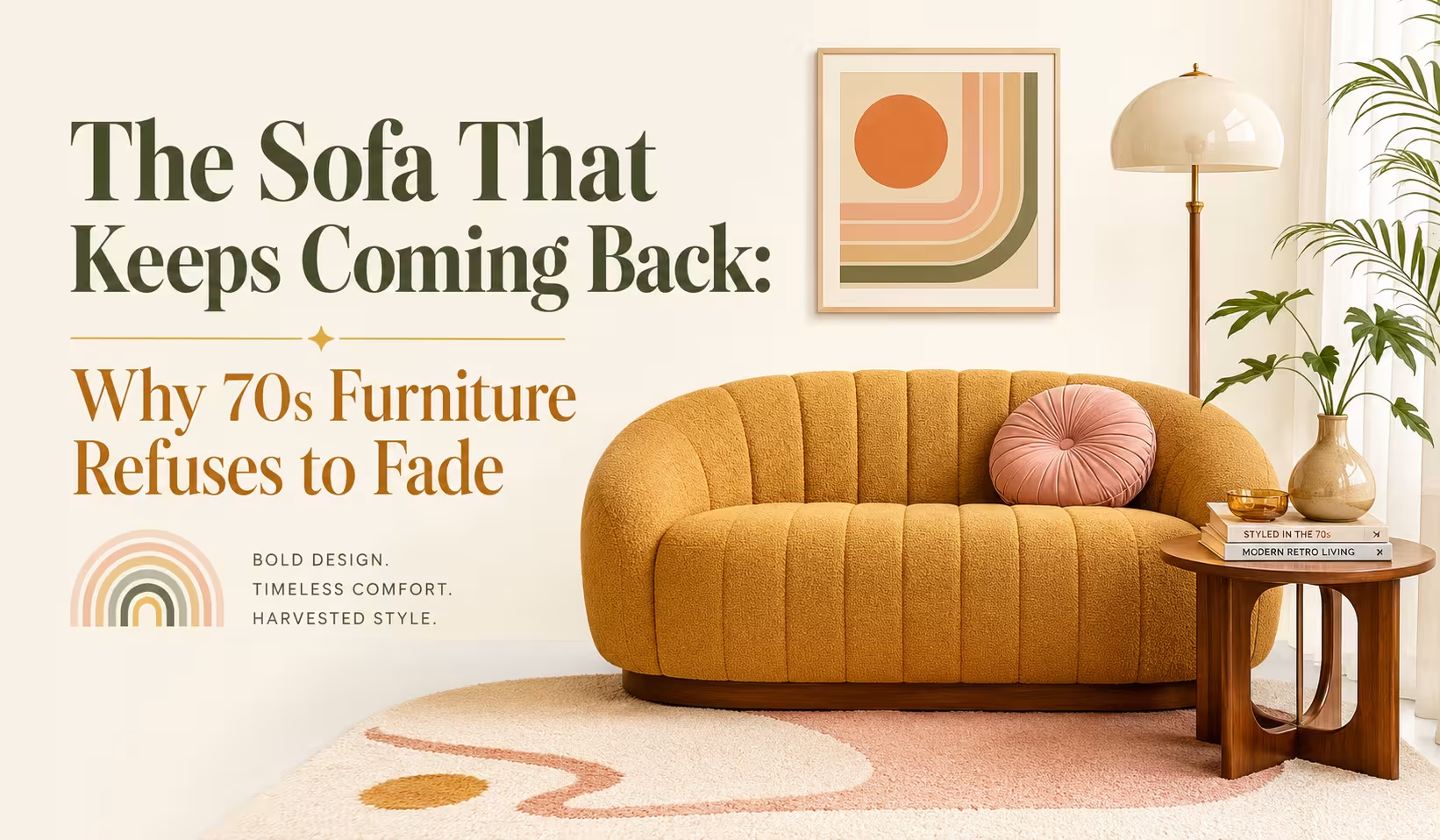
The retro 70s style sofa is defined by its low, wide silhouette, curved or modular form, and rich earth-tone upholstery in velvet, bouclé, or textured fabric. It works in modern interiors because it adds warmth and personality that minimalist furniture often lacks. Choosing the right scale, leg finish, and fabric makes all the difference between a cohesive room and a costume.
Introduction
What is it about a burnt-orange velvet sofa with stubby wooden legs that makes people stop scrolling? The 70s furniture revival is more than a trend cycle. It reflects a genuine craving for warmth, texture, and personality in living spaces that spent the last decade chasing all-white minimalism. A retro 70s style sofa carries all of that in one piece.
This article covers what defines the style, which versions hold up over time, and how real rooms have used these sofas without tipping into theme-park territory.
What Defines the Authentic 70s Sofa Silhouette
The 70s sofa is immediately recognizable, yet surprisingly hard to fake. Its proportions are specific: a low seat height, usually between 14 and 16 inches from the floor, a deep cushion with a relaxed sink, and an overall width that often stretches well past the standard 84-inch mark. The frame follows the body rather than fighting it. Straight lines were not the point.
Curved silhouettes dominated the decade’s furniture output. Designers like Milo Baughman and Adrian Pearsall were building sofas that swept in gentle arcs, sometimes wrapping into conversation pits or S-shaped sectionals. The curve was not decorative; it was structural, meant to keep groups facing inward and conversations alive. That social geometry still works in a modern living room.
The leg detail is often overlooked but critically important. Solid walnut or teak legs with a tapered silhouette are period-accurate. Chrome hairpin legs also appeared, though they lean more Scandinavian than strictly American 70s. When a reproduction sofa swaps these out for thin metal hairpins in brushed nickel, the whole read shifts and the authenticity dissolves instantly.
Earth Tones and Fabrics That Made the Era
No single element says “1970s” louder than color. The palette was built around ochre, burnt sienna, avocado green, harvest gold, and the now-iconic burnt orange. These tones were not accidental. Interior design of that period was reacting against the cool pastels of the 1960s and reaching toward something organic, grounded, and warm.
Velvet was the fabric of choice for upmarket 70s sofas. It caught light well under the warm incandescent bulbs of the era and held color depth in ways that woven cotton could not. Today’s performance velvet versions replicate that visual weight while surviving daily life, which original velvet absolutely did not. Spills on a 1974 Knoll sectional were an event. Spills on a modern performance velvet version are a paper-towel situation.
Bouclé also played a role, particularly in European interpretations of the style. Its loopy, textured surface reads as casual and handmade, which paired naturally with macramé wall hangings and ceramic lamp bases that populated the decade’s interiors. A bouclé 70s-profile sofa in cream or warm sand sits surprisingly well next to contemporary art, which is why design-forward apartments in cities like Milan and Copenhagen have been leaning on the combination for the past several years.
Modular Versus Single-Piece: Which Format Ages Better
The 70s gave the world the modular sofa. Pieces could be arranged in lines, L-shapes, U-shapes, or free-floating clusters depending on the room and the gathering. This flexibility was genuinely revolutionary for home furnishing, where most sofas still came as fixed, three-seat units. The logic behind it was simple: furniture should adapt to people, not the other way around.
A single-piece curved sofa in the 70s tradition is a more committed purchase. It requires space, ceiling height proportional to its weight, and a room plan designed around it rather than alongside it. When that space exists, the payoff is architectural. Interior photographer Tara McMahon documented a Brooklyn apartment in 2022 that centered an original 1971 Roche Bobois curved sectional against a pale plaster wall. The sofa did not compete with anything in the room. It was the room.
Modular versions offer the opposite logic. They can be split apart for a move, rearranged for a dinner party, and expanded with an additional chaise when the budget allows. For renters or anyone living in a first apartment, the modular approach makes 70s-style upholstery practical in a way that a single sculptural piece simply is not. Both formats are legitimate, and the choice really comes down to whether the sofa is meant to anchor a permanent room or serve a more fluid one.
Placing a Retro Sofa in a Modern Interior Without It Looking Like a Museum
The most common mistake when buying a retro 70s sofa is surrounding it with too many other period references. One sofa does not need a matching macramé wall piece, a shag rug, an orange lava lamp, and a sunburst mirror to feel intentional. That combination moves the room from “edited” to “theatrical.” The sofa works precisely because it is strong enough to carry the era on its own.
Pairing a curved earth-tone sofa with contemporary elements is where the look earns its longevity. A low walnut sofa in burnt orange sitting across from a clean-lined concrete coffee table and white plaster walls is more interesting than it sounds on paper. The contrast between the warm, soft period piece and the cooler modern materials creates visual tension that flat, monolithic interiors rarely achieve. Leila Ortiz, an interior consultant in Austin, Texas, built an entire client brief around this principle: one retro anchor, everything else contemporary. The result photographed beautifully and held up just as well in person.
The rug beneath the sofa matters more than most people realize. A flat-weave kilim or a low-pile wool in a warm geometric pattern will ground the 70s sofa without adding visual noise. A high-pile shag pushes the room into pastiche. A cold-gray abstract rug undercuts the warmth entirely. The rug is not a supporting player; it is the foundation the sofa’s proportions rest on, and getting that relationship right separates a composed room from a jumbled one.
Lighting and the 70s Sofa
Lighting choices around a retro sofa shape how the entire vignette reads. The 70s was an era of warm, layered, low-hung light, and that logic still applies. A single overhead fixture floods the sofa area with flat light that erases its texture. Arc floor lamps in brass or antique bronze, positioned to one side, restore the dimension that makes velvet and bouclé look like what they actually are.
Scale Rules for Small and Large Rooms
In smaller rooms, a two-seat curved version at 60 to 66 inches wide carries the silhouette without overwhelming the floor plan. The low seat height actually helps here; the sofa reads as taking up less visual space than a taller, boxier contemporary alternative. In large, open-plan spaces, a full modular arrangement anchoring a conversation zone can define the room’s social center without relying on walls to do the spatial work.
Why the 70s Sofa Appeals to Both Vintage Collectors and First-Time Buyers
Original pieces from the 1970s still circulate through estate sales, auction platforms, and specialist dealers. A genuine Adrian Pearsall cloud sofa in recovered velvet can run anywhere from $3,000 to $12,000 depending on condition and provenance. The appeal for collectors is the craftsmanship: solid hardwood frames, eight-way hand-tied springs, and upholstery built to be reupholstered rather than discarded.
For first-time buyers, the reproduction market has expanded significantly. Brands like West Elm, Article, and Anthropologie’s furniture line have all released curved, low-profile sofas in the 70s tradition at accessible price points. The frames are not equivalent to vintage originals, but the silhouette and the color options are close enough that a room styled well around them reads as intentional rather than budget-driven.
The staying power of this category comes down to one simple fact: the 70s sofa is comfortable. Its low, deep seat is designed for actual resting, not performative sitting. In an era where many contemporary sofas prioritize photographability over usability, the 70s sofa offers a different proposition. It is a piece of furniture that people reliably want to sit in for longer than they planned.
Wrap Up
The retro 70s style sofa earns its place in contemporary interiors because it brings together elements that modern furniture often trades away: physical comfort, visual warmth, and a strong design personality. Getting the most from one requires respecting its proportions, pairing it with contrasting contemporary pieces rather than stacking on period references, and grounding it with the right rug and lighting. Whether the budget runs to an original estate-sale piece or a well-chosen reproduction, the sofa’s silhouette carries enough design authority to anchor a room on its own terms.
FAQs
What colors are most common in retro 70s style sofas?
Burnt orange, ochre, avocado green, harvest gold, and warm brown are the most period-accurate colors. Earth tones in velvet or bouclé fabric best capture the authentic look.
Can a 70s style sofa work in a small living room?
Yes, a two-seat curved version between 60 and 66 inches wide fits well in smaller spaces. The low seat height reduces visual bulk, making the sofa feel less imposing than its width suggests.
Is it better to buy a vintage 70s sofa or a modern reproduction?
Vintage originals offer superior frame construction and reupholstery potential but require more investment and sourcing effort. Modern reproductions from quality brands deliver the silhouette and color at a lower price point, which suits most buyers looking for a stylish, practical piece.
Disclaimer
This content shared by Fall Rugs is solely for research and informational purposes. Fall Rugs is not a professional interior design or home renovation consultancy, and the information provided should not be considered professional advice for home improvement or decor. All ideas and suggestions are based on current trends and general knowledge in the home decor industry.