
TL;DR
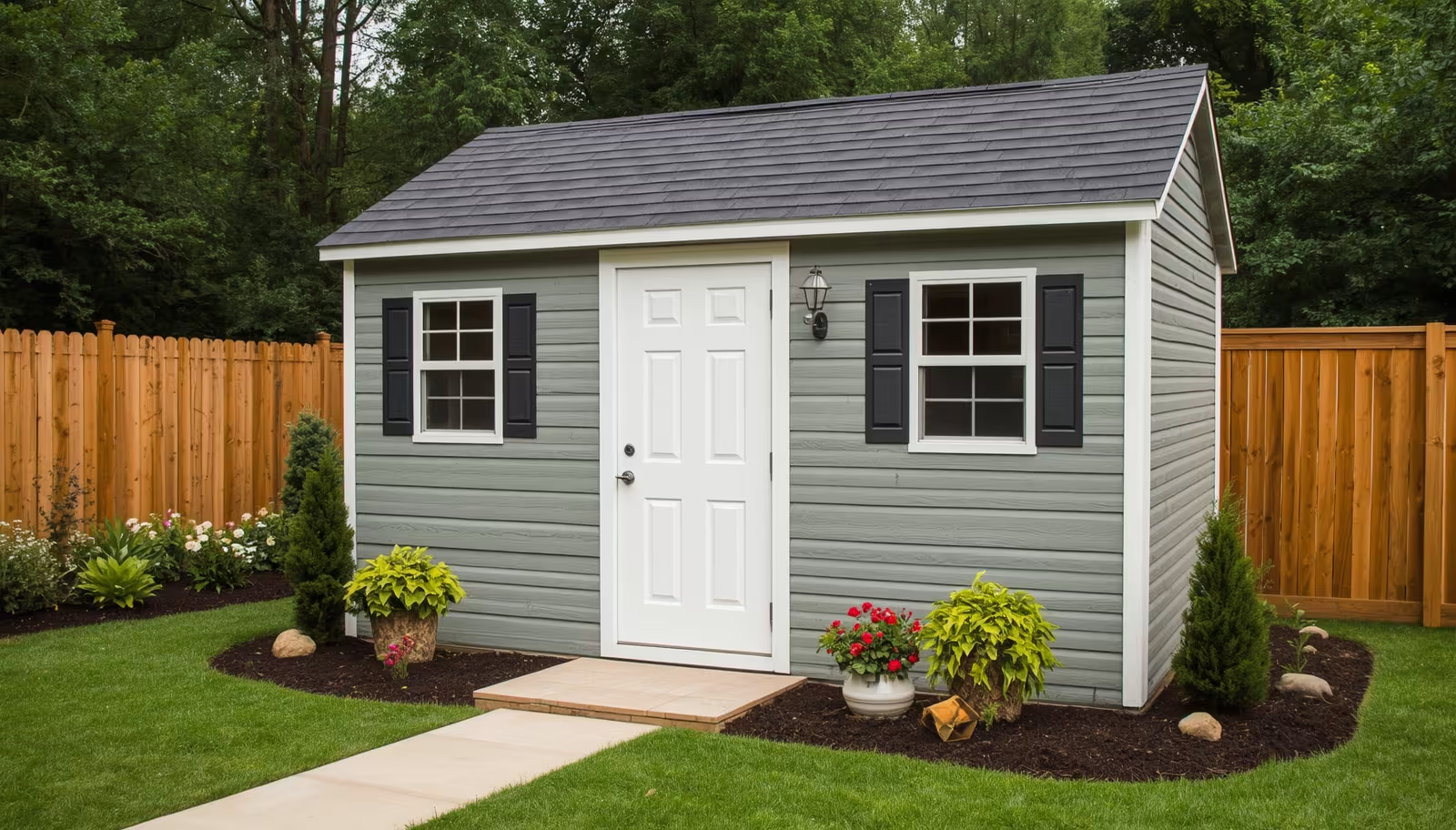
An 8×4 garden shed fits most UK and US gardens without dominating the lawn, and it still holds a mower, bikes, and tools if you plan the inside properly. Material choice (timber, metal, or resin) matters more than size for longevity. A solid base and correct planning permission checks decide whether the shed lasts ten years or rots in three.
Introduction
Ever measured your garden and realised the “compact” shed you wanted online still won’t fit past the back fence? That’s the exact problem the 8×4 size solves. It’s narrow enough for side passages and tight plots, yet deep enough for a mower, a workbench, or a stack of folding chairs. Brands like Keter, Suncast, and Forest Garden all sell this footprint for a reason: it’s the sweet spot between a flimsy tool box and a shed that eats half your lawn. This piece breaks down materials, base requirements, real pricing, and the setup mistakes that show up most often after the first rainy season.
Picking the Right Material for an 8×4 Shed
The material decides how long your shed survives British winters or a humid Southern US summer, and it changes the price by hundreds of pounds or dollars.
- Pressure-treated timber, like the Forest Garden Overlap range, gives a traditional look and good insulation but needs annual treatment with products such as Cuprinol or Ronseal shed and fence stain.
- Galvanized steel, the material behind Arrow and Yardmaster sheds, resists rot completely and suits coastal areas, though it can dent and gets noisy in hail or heavy rain.
- Resin or polycarbonate panels, used by Keter’s Factor and Manor ranges, never rot, never rust, and need zero painting, but they can fade slightly after eight to ten years of direct UV exposure.
- A homeowner in Bristol switched from an apex timber shed to a Keter resin model after two winters of green algae on the roof felt; the resin version stayed cleaner with a simple hose-down twice a year.
Timber still wins on appearance for anyone wanting a shed that blends into a cottage garden. Metal and resin win on low maintenance for anyone who travels often or simply doesn’t want a recurring weekend chore.
Roof Style Affects Headroom More Than People Expect
An apex roof on an 8×4 shed typically gives standing room near the centre, while a pent roof slopes from front to back and suits sheds placed against a fence or wall. Rowlinson and Shire both offer the same 8×4 footprint in both roof styles, and the price difference is usually under £50.
Real Costs: What an 8×4 Shed Actually Runs
Budget expectations matter before browsing listings, because the size alone doesn’t tell you much about final spend.
- Basic timber overlap 8×4 sheds from brands like Forest Garden or Mercia start around £350 to £450 in the UK.
- Mid-range tongue-and-groove timber sheds with a 10mm or 12mm thickness run £600 to £900.
- Galvanized steel options from Arrow or Yardmaster typically cost $450 to $700 in the US.
- Resin sheds such as Keter’s Factor 4×6 (a close US equivalent to the 8×4 footprint) sit between $500 and $750.
- Add £80 to £150 for a proper base kit, plus delivery fees that often run £40 to £100 depending on postcode and access.
A common mistake is forgetting the base cost entirely. One reader in Leeds ordered a £399 timber shed, then discovered the concrete slab and gravel base added another £180, pushing the real total close to £580.
Hidden Costs Nobody Mentions in Listings
Felt or shingle roof replacement, window glazing repairs, and anti-rot treatment reapplied every twelve months are recurring costs that timber owners often underestimate. Metal and resin sheds skip most of these, which partly explains their higher upfront price holding steady as a better long-term value in wet climates like Manchester or Seattle.
Foundation and Base Options That Actually Work
Skipping a proper base is the single biggest reason 8×4 sheds fail early, regardless of material.
- A concrete slab, poured at least 75mm thick, gives the most stable and longest-lasting base for timber and metal sheds alike.
- Paving slabs laid on compacted hardcore and sand work well for lighter resin sheds and cost less than full concrete.
- Plastic shed base grids, like the Eco Base system, allow water drainage underneath and suit gardens with poor natural drainage.
- Timber bearers alone, without a hard base beneath them, often lead to rot within two to three years because moisture wicks up from damp soil.
A shed owner in Cardiff learned this the hard way: she placed her 8×4 timber shed directly on grass with bearers only, and by year two the floor had visibly sagged from trapped moisture. Replacing it with a paving slab base solved the problem completely.
Drainage and Slope Matter Before You Even Order
Check which direction water naturally runs across your garden before placing the base. A shed sited at the lowest point of a sloped lawn will collect runoff every time it rains, even with a solid concrete pad underneath.
Planning Permission and Placement Rules
Most 8×4 sheds fall under permitted development rules in the UK, since they’re well below the height and footprint limits that trigger planning applications. In England, sheds under 2.5 metres in height generally don’t need permission if placed away from the property boundary, though listed buildings and conservation areas carry stricter rules. In the US, requirements vary heavily by county and HOA, with some municipalities requiring permits for any structure over 100 to 120 square feet, a threshold an 8×4 shed (32 square feet) usually sits well under.
- Always check boundary distance rules, since many councils require sheds to sit at least one metre from a neighbour’s fence if they exceed a certain height.
- HOA-governed neighbourhoods in the US often dictate shed colour and placement even when no permit is legally required.
- Corner plots and gardens backing onto public paths sometimes face extra restrictions due to visibility from the street.
Interior Layout Ideas That Make 8×4 Feel Bigger
Smart organisation turns this size into genuinely useful storage rather than a cramped box.
- Wall-mounted hooks and pegboards, similar to systems sold by Rubbermaid and Wayfair’s garage range, free up floor space for a mower or wheelbarrow.
- Overhead shelving along the apex roofline works well for seasonal items like Christmas decorations or camping gear that don’t need year-round access.
- A narrow workbench along the back wall, roughly 1.8 metres long, fits comfortably without blocking the doorway.
- Stackable bins from brands like IKEA’s Samla range keep small tools and fixings sorted without taking up shelf depth.
One gardener in Surrey fit a ride-on mower, a full set of hand tools, and three bicycles into an 8×4 metal shed by mounting bike hooks vertically on one side wall instead of leaning them on the floor, freeing nearly a third of the usable space.
Wrap Up
An 8×4 garden shed works for most household needs without overwhelming a small or medium garden, and the real decisions come down to material, base quality, and smart interior layout rather than size alone. Timber suits those happy with annual upkeep, while metal and resin suit anyone wanting a lower-maintenance option. Get the base right from day one, check local placement rules, and the shed should serve a garden well for over a decade.
FAQs
Is an 8×4 shed big enough for a mower and tools?
Yes, an 8×4 shed comfortably fits a push mower, a small ride-on mower, and a reasonable set of hand tools if shelving and wall hooks are used to keep the floor clear.
Do I need planning permission for an 8×4 shed?
Most 8×4 sheds in the UK fall under permitted development since they’re well below standard height and footprint limits, though boundary distance and conservation area rules still apply.
What base is best for an 8×4 garden shed?
A concrete slab or paving slabs on compacted hardcore give the most reliable long-term base, since they prevent moisture buildup that causes floor rot within a few years.
Disclaimer
This content shared by Fall Rugs is solely for research and informational purposes. Fall Rugs is not a professional interior design or home renovation consultancy, and the information provided should not be considered professional advice for home improvement or decor. All ideas and suggestions are based on current trends and general knowledge in the home decor industry.