

TL;DR
Curtains that touch the floor often create a taller, more finished look, especially in living rooms and bedrooms. The right length depends on the room style, fabric type, window placement, and daily use needs.
Introduction
Should curtains touch the floor, or is a shorter length better for your space? This small design decision changes how large, elegant, and balanced a room feels. Interior designers consider curtain height, fabric weight, cleaning needs, and furniture placement before choosing a length. The right choice can improve the visual flow of a room without requiring major changes.
Floor-Length Curtains Create a More Finished Interior Look
Floor-length curtains are a common choice in modern homes because they create a continuous vertical line from the window to the floor. Designers often use this style in living rooms, master bedrooms, and formal dining spaces where appearance matters more than frequent cleaning.
Many interior designers follow the idea that curtains should either lightly touch the floor or sit slightly above it. A small gap can make the window area look unfinished, while excess fabric can create dust and maintenance problems.
- Curtains that touch the floor can make ceilings appear higher by drawing the eye upward.
- A fabric panel reaching the floor creates a softer transition between walls and flooring.
- Materials such as linen, velvet, cotton, and polyester blends behave differently when they fall vertically.
- The curtain rod position matters because placing it higher above the window can create a taller appearance.
A common example comes from hotel interiors in cities like Paris, New York, and Dubai, where floor-length drapery is widely used to create a luxury atmosphere. Brands such as West Elm and Pottery Barn often feature long curtains in their room designs because they create a polished residential look.
A homeowner in Chicago recently updated a small apartment living room with 96-inch linen curtains from IKEA. The windows were not changed, but raising the curtain rod closer to the ceiling and allowing the fabric to reach the floor made the room feel taller and more open.
When Curtains Should Not Touch the Floor
Floor-length curtains are not always the right solution. Some rooms require shorter curtains because of moisture, cleaning concerns, pets, children, or furniture placement. A design choice should match the way the room is used every day.
Kitchens, bathrooms, and high-traffic areas often benefit from curtains that stop above the floor. These spaces experience more spills, humidity, and movement, which can damage delicate fabrics over time.
- Kitchen curtains often work better at window sill length or slightly below the sill.
- Bathroom curtains need careful measurements because moisture can affect fabric quality.
- Homes with pets may require a small clearance to prevent hair and dirt collection.
- Shorter curtains can work well when furniture blocks the lower window area.
Interior designer Dorothy Draper, known for bold American residential and hospitality designs in the 20th century, often used strong fabric choices and clear proportions rather than applying one rule to every room.
A family in Austin, Texas, replaced long velvet curtains in their dining area after noticing stains near the bottom edge. They switched to cotton curtains ending about half an inch above the floor, which reduced cleaning time while keeping the room visually balanced.
Different Curtain Length Styles and Their Visual Effects
Curtain length changes the personality of a room. Designers usually choose between floating, kissing, breaking, and puddling styles depending on the desired appearance and fabric type.
The “kiss” style means the curtain barely touches the floor. The “break” style leaves extra fabric that gently rests on the floor, similar to the way men’s trousers sit on shoes. Puddling creates a dramatic amount of extra fabric and works mainly in traditional or luxury interiors.
- Floating curtains sit about 0.5 to 1 inch above the floor and are easier to clean.
- Curtains that kiss the floor require accurate measurements and installation.
- A slight break creates a relaxed, designer-inspired appearance.
- Puddled curtains need heavier fabrics such as velvet or silk to maintain shape.
Brands like Ruggable focus on practical home textiles, while companies such as West Elm and Pottery Barn often showcase decorative curtain styles designed around different interior themes.
For example, a 2024 apartment renovation in Los Angeles used sheer linen curtains with a kissing length in a Scandinavian-style bedroom. The homeowner wanted natural light during the day while maintaining a clean, uncluttered appearance.
Measuring Curtains Correctly Before Installation
The success of floor-touching curtains depends more on measurement accuracy than the curtain itself. Even expensive fabric can look poorly fitted when the length is incorrect.
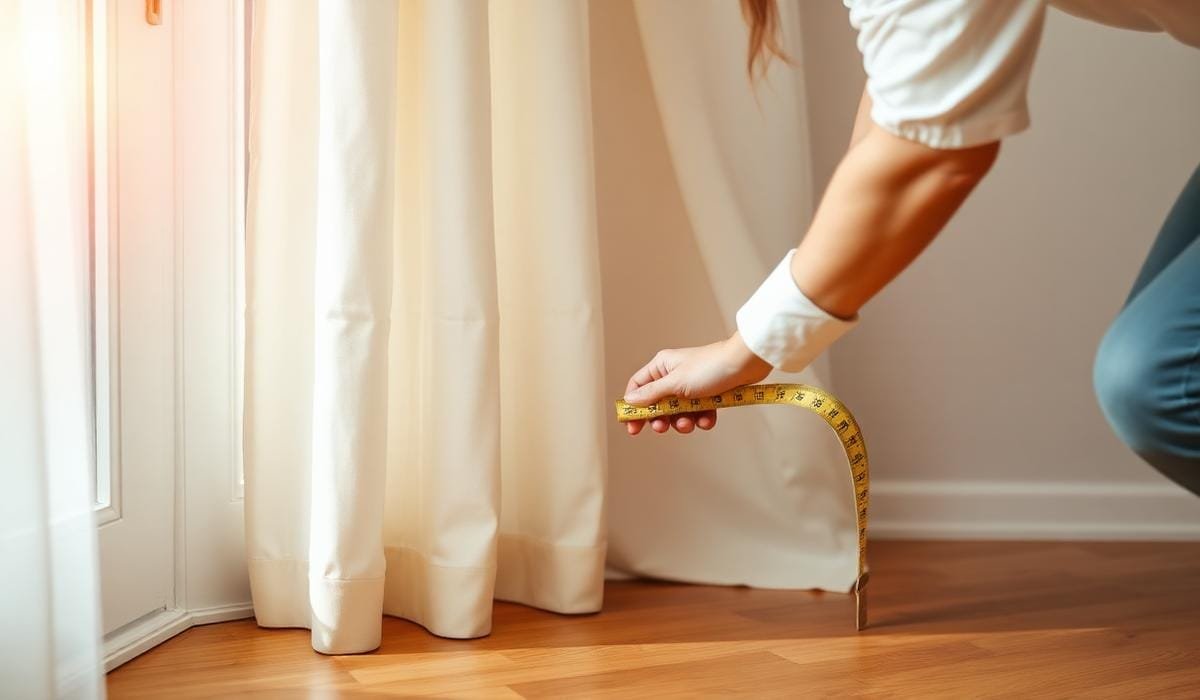
Most professionals measure from the curtain rod, not the top of the window frame. The rod height, curtain rings, fabric shrinkage, and floor level all affect the final result.
- Measure the distance from the rod placement to the floor before buying curtains.
- Add extra length if using curtain rings or hooks.
- Check whether floors are level, especially in older homes.
- Consider fabric shrinkage after washing or steaming.
Standard curtain sizes often include 84, 96, and 108 inches. A 96-inch curtain is commonly used in rooms with standard 8-foot ceilings when the rod is installed several inches above the window.
A homeowner in Boston discovered that 96-inch curtains looked too short because the rod was installed directly above the window frame. Moving the rod closer to the ceiling allowed the same curtains to reach the floor and improved the room proportions.
Choosing Curtain Length Based on Room Type and Lifestyle
The ideal curtain length depends on the purpose of the room. A formal sitting room may benefit from elegant fabric touching the floor, while a child’s room may need easier cleaning and safer placement.
Interior choices should consider sunlight, privacy, furniture arrangement, and maintenance habits. A beautiful curtain that creates daily frustration is not a successful design choice.
- Bedrooms often work well with floor-length blackout curtains for privacy and light control.
- Living rooms usually suit long curtains because they create a softer, more decorative appearance.
- Home offices may use floating curtains to reduce dust near work areas.
- Rental homes may require flexible curtain solutions without permanent changes.
Brands such as IKEA provide affordable curtain options for renters, while custom designers often create made-to-measure panels for luxury homes in areas like Manhattan, London, and Dubai.
A remote worker in Seattle changed from short office curtains to full-length neutral linen panels. The updated design reduced glare from afternoon sunlight and made the workspace feel more connected with the rest of the home.
Wrap Up
Curtains that touch the floor often create a refined and spacious appearance, but they are not the right choice for every room. The best curtain length depends on the space, fabric, cleaning needs, and personal style. Accurate measurements and thoughtful placement matter more than following a single design rule. A well-fitted curtain should look natural and support the way the room is used.
FAQs Section
Should curtains touch the floor or hang above it?
Curtains can touch the floor for a polished look, or sit slightly above it for easier cleaning. The choice depends on room use, fabric type, and design preference.
How much should curtains touch the floor?
Most designers recommend curtains that lightly touch the floor or leave a small gap of around half an inch. Extra fabric creates a puddled look but requires more maintenance.
Are floor-length curtains better for small rooms?
Floor-length curtains can make small rooms appear taller by creating vertical lines. Hanging the curtain rod higher than the window frame can improve this effect.