
TL;DR
A functional outdoor living space needs three things working together: a defined floor, weather-appropriate furniture, and a reason to sit down. Skip any one of those and the space turns into a walkway people cross instead of a room people stay in.
Introduction
Why does one patio get used every evening while the identical layout next door sits empty by July? The furniture usually isn’t the problem. Most backyards fail because they were decorated like an indoor room instead of designed like a small building with its own climate, traffic, and light. This piece walks through flooring choices, seating zones, shade, lighting, and the budget math that separates a space people actually use from one that just looks good in photos taken the day it was finished.
Ground Rules: Flooring and Surfaces That Survive Real Weather
The floor decides everything else. A wobbly paver or a deck board that traps water dictates how furniture sits, how safe kids are running around, and how fast the whole area ages.
- Composite decking from Trex or TimberTech resists warping better than pressure-treated pine, though it costs 20 to 40 percent more per square foot as of 2024 pricing
- Pea gravel and decomposed granite drain fast and cost far less than pavers, but they shift underfoot and aren’t ideal near dining furniture
- Concrete pavers from a local supplier in cities like Austin or Phoenix hold heat aggressively in summer; lighter tones stay cooler than charcoal or black
- A raised deck needs joist spacing checked against your local building code before any furniture load gets added
A homeowner in Charlotte, North Carolina, once described replacing a cracked concrete slab with interlocking pavers over a single weekend. The old slab had pooled water after every storm, rotting the base of a wooden pergola within three years. The paver swap solved drainage and gave the space a visual anchor it never had with plain gray concrete.
Matching Material to Climate
Humid regions like the Gulf Coast punish untreated wood fast, so sealed hardwoods or composite materials outlast basic cedar. Drier climates in places like Denver or Salt Lake City are gentler on wood but harder on plastic resin furniture, which can crack under UV exposure within two summers if it’s not rated for high-altitude sun.
Seating Zones That Actually Get Used
A single sprawling seating area rarely gets used the way a designer imagines. People gravitate toward smaller, purposeful clusters instead.
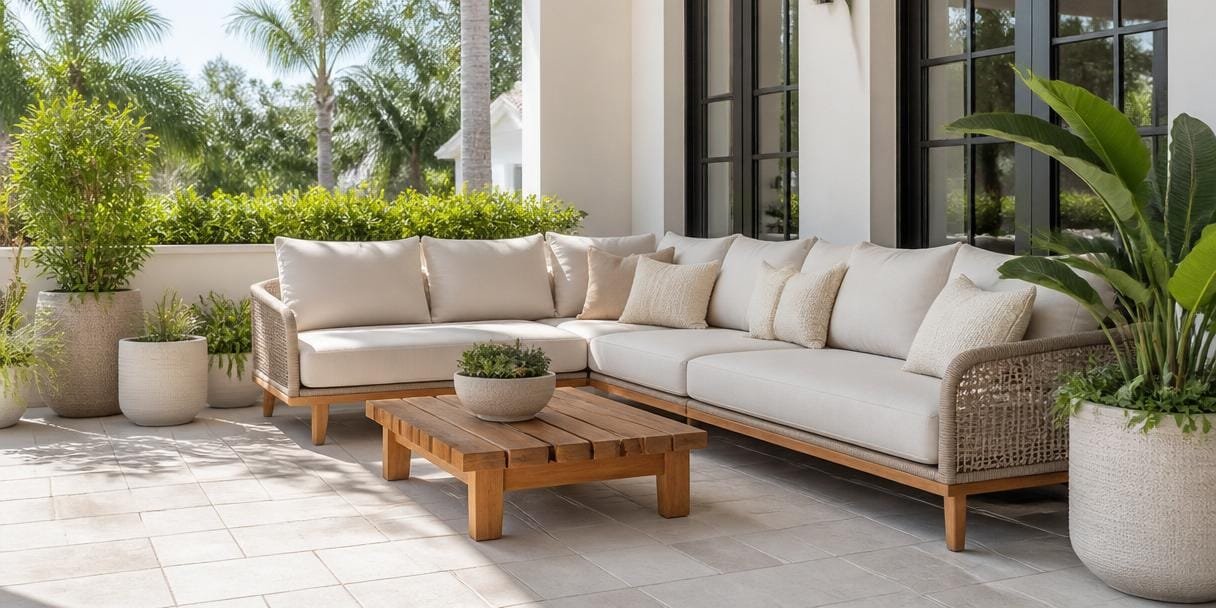
- A conversation set of four chairs around a low table works better for daily use than one giant sectional meant for parties that happen twice a year
- West Elm and Pottery Barn both sell modular outdoor sectionals that let owners reconfigure the layout as needs change through the seasons
- Dining sets near the grill shorten the walk between cooking and eating, which matters more than most people plan for
- A single hammock or a pair of Adirondack chairs near a fire feature creates a quiet zone separate from the main gathering space
One recurring mistake among first-time patio owners is buying a nine-piece sectional sized for a showroom floor, then discovering it blocks the only path to the side gate. Measuring the walking path before buying furniture avoids this almost every time.
Scale and Spacing
Leave at least 36 inches of clearance between furniture and any walking path. Anything tighter feels cramped even if the square footage on paper looks generous. A 12-by-14-foot patio comfortably fits a four-person dining set or a compact sectional, not both.
Shade, Shelter, and Weather Control
Direct sun for more than two or three hours turns most outdoor rooms unusable during peak summer months, regardless of how nice the furniture is.
- A cantilever umbrella from a brand like Frontgate covers a dining table without a center pole in the way
- Pergolas with retractable canopy fabric, often made by companies like ShadeFX, adjust coverage as the sun angle shifts through the day
- Mature shade trees planted five to ten years ahead solve the problem permanently but require patience most renovators don’t have
- Louvered roof systems, popular in states like Florida and California, cost more upfront but handle both rain and sun in one structure
A landscape designer working outside Nashville once noted that clients consistently underestimate how much afternoon sun a west-facing patio receives until they’ve lived with it for a full summer. Orienting seating toward the east side of the yard, even by a few feet, cuts peak heat exposure significantly.
Wind and Privacy Layers
Lattice panels, tall grasses like Miscanthus, or a simple row of arborvitae block wind and nosy neighbors at the same time. Fabric privacy screens are cheaper but rarely survive more than one or two storm seasons without tearing.
Lighting That Extends the Evening
An outdoor space with no lighting plan effectively closes at sunset, which cuts usable hours nearly in half during winter months.
- String lights remain the fastest, cheapest upgrade, and brands like Brightech sell weatherproof versions rated for year-round outdoor use
- Low-voltage path lighting along walkways prevents trips and adds a soft border without overpowering the space
- A fire pit, whether a simple steel bowl or a built-in gas unit, doubles as both light source and gathering point
- Solar lanterns work in sunny climates but lose reliability fast in regions with frequent overcast days, like the Pacific Northwest
Layering three light sources, ambient, task, and accent, avoids the flat, single-bulb look that makes many patios feel unfinished after dark.
Furniture Materials, Fabric, and Real Maintenance Costs
Fabric choice quietly determines how much upkeep a space demands. Sunbrella acrylic fabric resists fading and mildew far better than standard polyester blends, though it costs roughly double.
- Teak furniture from brands like Kingsley Bate ages into a silver-gray patina and needs almost no sealing if left untreated intentionally
- Aluminum frames resist rust better than steel in coastal areas but dent more easily under heavy impact
- Outdoor rugs from Ruggable are machine washable, which matters in yards with pets or muddy foot traffic
- Cushion covers should be removable and stored during heavy rain; leaving them out speeds mildew growth within days in humid climates
A family in coastal South Carolina switched from steel patio chairs to powder-coated aluminum after two seasons of visible rust spots near hardware joints. The aluminum sets cost more initially but eliminated the recurring repaint job that had become an annual chore.
Storage Solves the Rest
A deck box or a small shed for cushions, umbrellas, and grill covers keeps fabric dry between uses and adds years to furniture life that would otherwise get cut short by weather damage.
Wrap Up
Outdoor living space design comes down to matching material choices to your actual climate, sizing furniture to real foot traffic instead of showroom photos, and layering shade and light so the space stays usable across seasons, not just for one good weekend in June. Get the floor, the shade, and the light right first, and the furniture choice becomes far less stressful. Small, deliberate zones almost always outperform one oversized layout borrowed from a magazine spread.
FAQs
What is the cheapest way to create an outdoor living space? Start with a gravel or pea stone base, add a secondhand or budget seating set, and layer in string lights; this combination costs a fraction of decking and custom furniture while still creating a usable gathering spot.
How much does it cost to design an outdoor living space? Basic setups with gravel flooring and simple furniture can start around 500 to 1,500 dollars, while decked spaces with pergolas, lighting, and premium furniture often run 8,000 dollars or more depending on size and materials.
What furniture lasts longest outdoors? Teak, powder-coated aluminum, and Sunbrella fabric consistently outlast basic resin wicker and untreated wood, especially in humid or coastal climates where mildew and rust set in fastest.