
TL;DR
The cloud sofa look demands constant fluffing and a willingness to embrace intentional messiness. Feather-filled cushions offer unmatched softness but deflate quickly and require daily upkeep. The modular design solves entry problems but creates a distinct visual rhythm that divides opinions on whether it looks effortlessly chic or simply unkempt.
Introduction
A sofa that swallows you whole sounds like a dream until the first time a guest tries to stand up and simply cannot. That moment of awkward struggle reveals something important about the cloud sofa phenomenon. The deep seats, the feather-wrapped foam, the low-slung profile all of it seduces you in the showroom. Living with one rewrites your relationship with your living room entirely. This is what actually happens after the delivery truck leaves.
The Anatomy of a True Cloud Sofa
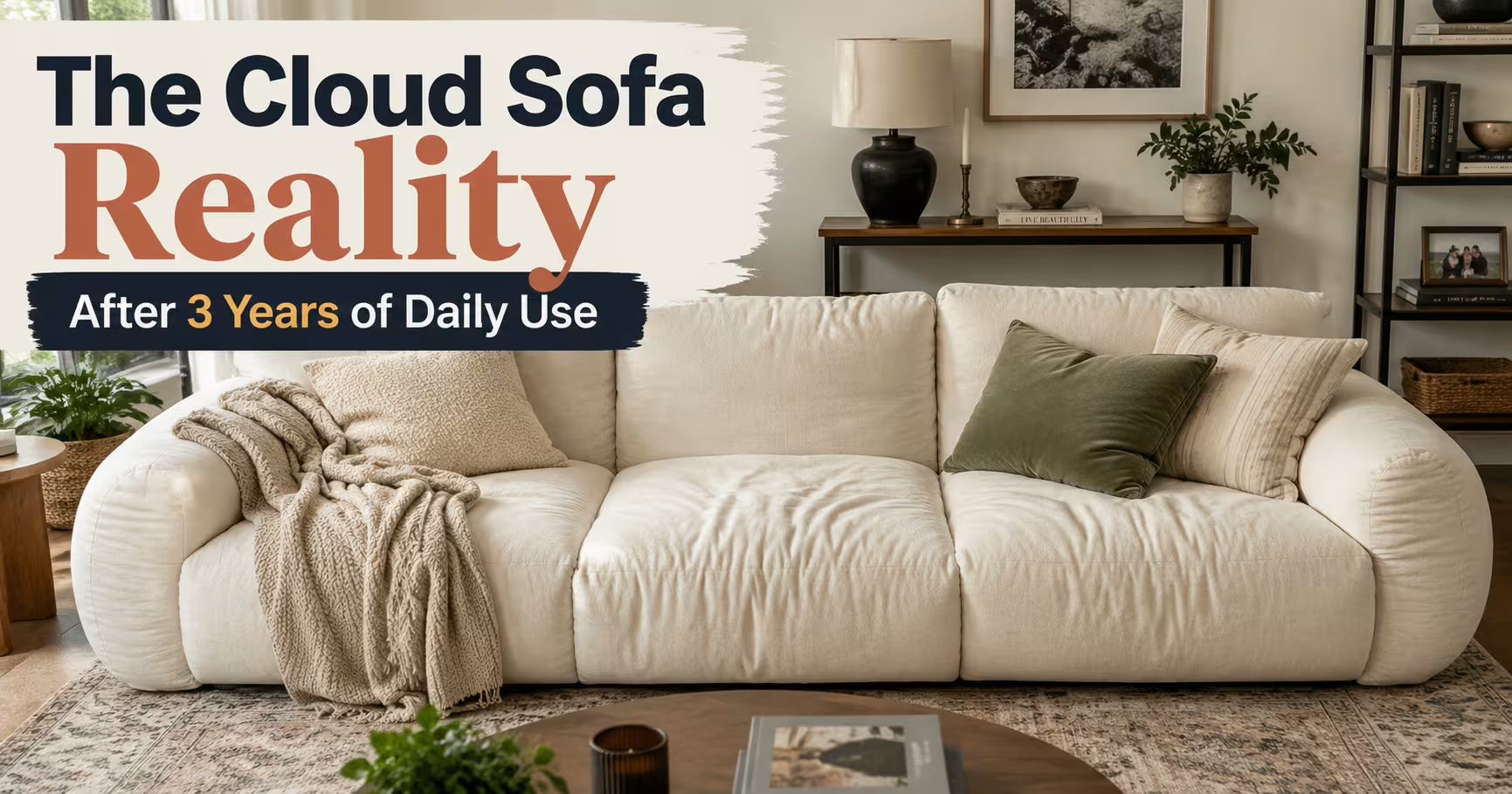
The original cloud design from Restoration Hardware popularized a very specific construction method that most people misunderstand. The base cushion uses a high-density foam core wrapped in a thick jacket of down and feather blend. The back pillows abandon structure completely, relying on pure channeled feather fill to create that collapsed, pillowy silhouette.
That combination produces the signature look immediately. The seat feels plush but supportive for roughly twenty minutes before the feathers shift and the foam starts doing all the work. The back cushions slouch into a shape that suggests the sofa has exhaled. Whether that reads as relaxed elegance or a deflated mess depends entirely on your tolerance for entropy. Many competing brands now replicate this construction at lower price points, though the feather-to-foam ratio changes the longevity significantly.
Frame Integrity and What Nobody Mentions
A sofa this deep exerts unusual stress on the frame because occupants tend to flop rather than sit. The front rail takes repeated impact from heels and shins as people climb in and out. Quality frames use kiln-dried hardwood with double-dowel joinery and corner blocks. Budget versions often swap in plywood or, worse, MDF with stapled joints that loosen within eighteen months of flopping.
The suspension beneath the cushions matters equally. Eight-way hand-tied springs distribute weight gracefully across those deep seats. Sinuous springs cost less but create a trampoline effect that works against the sink-in feel. I learned this distinction the expensive way when a modular version from a direct-to-consumer brand developed visible sag lines after fourteen months, directly where one person always tucked their feet under.
The Daily Ritual That Keeps It Looking Intentional
Feather cushions compress unevenly because people sit in the same spots every single time. The corner seat gets the least abuse while the middle sags first. Without intervention, the sofa develops a topography that broadcasts exactly where everyone parks themselves every evening.
Rotating cushions weekly helps but nobody actually does that consistently. What works better is a vigorous fluffing session every two or three days where you unzip each back cushion, reach inside the feather insert, and physically redistribute the fill away from the corners where it migrates. The process takes roughly eight minutes for a four-seat configuration. Skipping it for a week means the cushions develop stubborn flat spots that require a full-day recovery period propped vertically against a wall.
Vacuuming the crevices deserves its own paragraph of honesty. Feather quills work their way through the cushion ticking constantly. You will find them on the floor, in your clothing, and occasionally poking through the fabric in a way that stabs unsuspecting thighs. A handheld vacuum with a motorized brush attachment becomes your primary relationship tool with this furniture piece.
Real Spaces Where This Sofa Actually Functions
The first scenario involved a converted warehouse loft in Oakland with seventeen-foot ceilings and an open floor plan that could absorb the sofa’s visual mass. The tenants, a couple who worked opposite shifts in architecture and nursing, needed seating that accommodated both a sprawling midday nap and a six-person game night without blocking foot traffic. Their modular configuration ran seventeen feet long and sat across from a projector wall, which meant nobody ever craned their neck to see a television.
The deep seats became the default guest bed simply because making the sofa required more effort than tossing a fitted sheet over the cushions. They reported two complaints after two years. Guests over sixty-five often needed a steadying hand or a firmer cushion added to the seat to push off from. Their small dog disappeared between the back cushions once and required an extraction that scattered feathers across four rooms.
A second installation proved more instructive. A 1940s bungalow with a narrow living room attempted to host a four-seat configuration that visually consumed the entire space. The depth of the sofa ate nearly four feet of floor space from the seating area, which pushed the coffee table so far forward that walking past required a sideways shuffle. The proportions simply did not work.
The sofa itself performed perfectly but the room felt like a furniture showroom with nowhere to live. They eventually split the configuration into two loveseats placed opposite each other, which restored flow but eliminated the sprawling charm that justified the purchase.
The Modular Advantage That Changed Entryways
Cloud sofas that ship in separate seat modules solved a problem that nobody anticipated until the delivery truck arrived at a narrow stairwell. Traditional deep sofas often require removing windows or hoisting rigs to reach upper-floor apartments. Modular versions arrive in manageable boxes that a single person can carry upstairs without dislocating a shoulder.
The seams where modules connect create visual breaks that some designers exploit intentionally. Placing a slim side table in the gap between two sections turns a structural necessity into an intentional design move. The breaks also allow the sofa to pivot around corners or alcoves that a single massive piece could never accommodate. Downsides exist.
The connectors that hold modules together can loosen over time, especially on hardwood floors where slight movement occurs with every flop. A periodic tightening with the provided wrench keeps the sections from drifting apart into disconnected islands.
Fabric Decisions That Make or Break the Look
The original cloud aesthetic depends heavily on a specific fabric hand. Performance velvet in muted neutrals captures the light like something you want to touch, which matters because the sofa’s entire appeal is tactile. Linen blends photograph beautifully but wrinkle in ways that amplify the unkempt quality beyond what most people find acceptable. Polyester performance weaves resist staining admirably but feel slightly synthetic against bare skin, a trade-off worth weighing if afternoon naps factor into your ownership fantasy.
Color choice interacts with the feather-quill problem. Dark charcoal fabrics hide the escaped quills completely. Cream and ivory show every single one. A friend who bought the latter described it as living with a sofa that sheds, which is not inaccurate. She also noted that the fabric’s nap flattened visibly where bodies regularly rested, creating subtle shiny patches that professional cleaning partially but never fully restored.
Leather introduces a different conversation entirely. The deep seat proportions work in leather but the slouch factor reads differently. Leather back cushions wrinkle rather than slump, which creates a patinated look that some prefer and others find sloppy. The squeaking also increases because the deep seat means your clothing rubs against leather differently than on a standard-depth sofa. Small considerations that accumulate into daily awareness.
The Slouch Factor and What It Communicates
A cloud sofa in full slouch broadcasts either bohemian comfort or neglect, and the line between those interpretations shifts based on everything else in the room. Crisp architectural details like steel windows or concrete floors frame the softness as intentional contrast. Wall-to-wall carpeting and heavy drapes push the same sofa toward a rumpled dorm-room energy.
The back cushions specifically tell the truest story. Regularly fluffed cushions with defined edges suggest someone cares about presentation. Completely collapsed cushions with visible feather migration through the fabric suggest surrender. Both are valid choices. The problem arises when one person in the household embraces the mess while the other resents it.
I have mediated exactly this disagreement three separate times, and the solution was always the same. One side gets designated as the tidy side, which means it gets fluffed. The other side stays authentically slouched. Compromise arrives in the form of asymmetrical cushion maintenance.
Comparing What the Market Actually Offers
Restoration Hardware defined the category with a sofa that currently starts around five thousand dollars for a basic configuration and climbs quickly with upgrades. The frame quality justifies some of that premium but not all of it. The brand cachet carries real weight in resale value should you ever decide to part with the piece, which people do more often than expected when the maintenance reality sets in.
Direct-to-consumer alternatives from brands like Albany Park, 7th Avenue, and What A Room have narrowed the quality gap significantly. Their cushions use higher percentages of down alternative fibers that hold shape longer but feel slightly less luxurious on initial contact. The trade-off favors people who want the look without the obsessive fluffing. Some of these brands also offer foam-only back cushion options that maintain the deep-seat proportion while eliminating feather migration entirely. Purists consider this heresy. Practical people consider it an upgrade.
Article and West Elm occupy a middle ground with deep-seat sofas that borrow the cloud silhouette but build firmer structures underneath. Their versions work better for people who entertain frequently and need guests to stand up without assistance. The deeper seats mean shorter guests still struggle, but the denser foam provides a launch point that pure feather cushions simply cannot offer.
What Nobody Tells You About Returns
Most cloud sofa retailers require the original packaging for returns. Nobody keeps boxes that large. Even when returns proceed smoothly, return shipping fees for a modular configuration can exceed five hundred dollars depending on the carrier and distance. Restocking fees of fifteen to twenty percent are standard in the industry and apply regardless of whether the sofa ever touched a living room floor.
The trial periods advertised as risk-free typically count from the order date, not the delivery date. A sofa that takes twelve weeks to manufacture arrives with a significantly shortened trial window already ticking. Read the fine print on this point specifically because it differs across every major retailer and nobody highlights it proactively.
The secondary market absorbs cloud sofas at steep discounts. Facebook Marketplace listings in major cities show barely-used configurations selling for forty percent of retail, often with the seller citing the maintenance or the space mismatch as the reason. That makes the used market genuinely attractive if you can transport the modules yourself and are not particular about having the latest generation of cushion fill.
Who Should Walk Away From This Sofa
Households with mobility limitations need seating that supports standing up from a higher starting point. The cloud sofa’s low profile and deep seat make it actively hostile to anyone with hip or knee issues. Adding firmer cushions beneath the existing ones raises the seat height somewhat but undermines the entire aesthetic.
Homes with serious pet claws should also reconsider. The loose-weave performance fabrics that look best on these sofas catch claws differently than tightly woven upholstery. A single enthusiastic dog launching off the seat can create a snag that runs six inches before anyone notices. Leather versions fare better but cost exponentially more and still show scratch marks that become patina only if you squint generously.
Small rooms under two hundred square feet will feel dominated by even a modest three-seat configuration. The visual mass of deep seating demands breathing room. Without it, the sofa reads as a mistake rather than a statement.
Wrap Up
The cloud sofa delivers exactly what it promises and exactly what it does not. The comfort is genuine, the look is distinctive, and the maintenance is non-negotiable. Living with one means accepting that perfection requires daily attention or accepting that imperfection becomes the defining feature. Either path leads to an honest relationship with your furniture, which is rarer than most marketing copy suggests. Your tolerance for fluffing dictates everything.
FAQs
Are cloud sofas comfortable for sleeping?
Deep seats with feather-filled cushions make excellent napping surfaces because they eliminate the gap most sofa cushions create. Overnight sleeping works less well since the feather fill compresses fully after a few hours and the modular seams create pressure points.
How often should you fluff cloud sofa cushions?
Every two to three days keeps the shape intentional and prevents permanent flat spots from forming. Weekly fluffing works as a minimum but results in a noticeably slouchier appearance that some households prefer.
Do cloud sofas hold their value on resale?
They do not. The used market features significant discounts because maintenance realities prompt frequent reselling. Expect to recover roughly thirty to forty percent of the original purchase price when selling in good condition within two years.
Disclaimer
This content shared by Fall Rugs is solely for research and informational purposes. Fall Rugs is not a professional interior design or home renovation consultancy, and the information provided should not be considered professional advice for home improvement or decor. All ideas and suggestions are based on current trends and general knowledge in the home decor industry.