

TL;DR
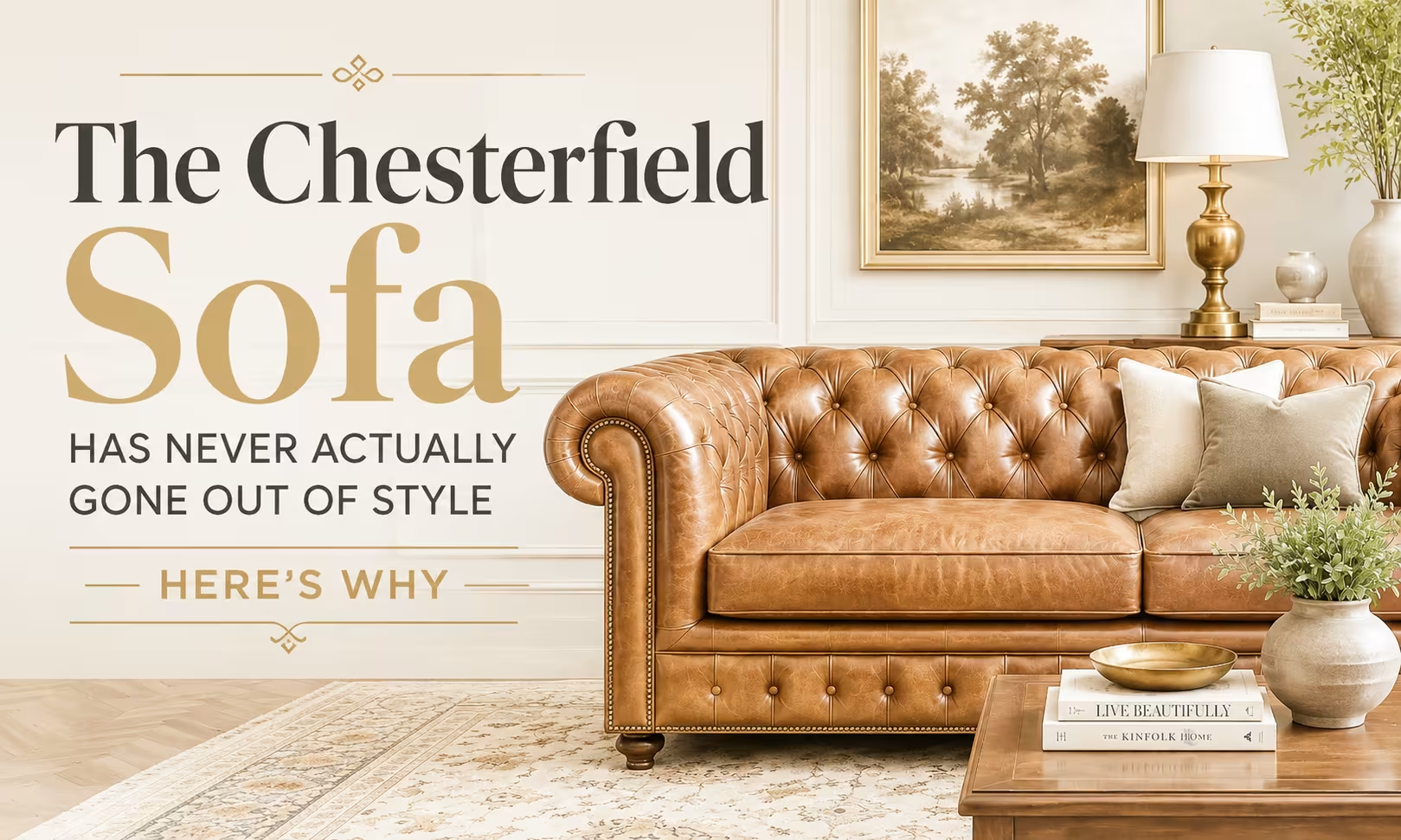
The Chesterfield sofa is one of furniture design’s most enduring silhouettes, recognized by its deep button tufting, rolled arms, and equal-height back. It works across traditional and contemporary spaces when chosen and styled with intention, and knowing what separates a quality piece from a cheap imitation makes all the difference before you buy.
Introduction
What makes a piece of furniture last three centuries without a single redesign? The Chesterfield sofa has been photographed in Victorian parlors, mid-century London clubs, and ultra-modern Scandinavian lofts, and it looks right in all of them. That kind of staying power doesn’t come from trend-chasing. It comes from proportion, craft, and a silhouette so resolved that there’s genuinely nothing left to fix. This piece walks through the sofa’s origins, its material and style variations, how real rooms use it well, and the specific things worth examining before you spend serious money on one.
Where the Chesterfield Sofa Actually Comes From
The name “Chesterfield” is commonly attributed to Philip Dormer Stanhope, the fourth Earl of Chesterfield, an eighteenth-century British statesman known for his precise taste and meticulous correspondence. The story goes that he commissioned a local craftsman to produce a sofa that would allow a gentleman to sit upright without wrinkling his coat a very specific, very aristocratic design brief. Whether or not that origin story is fully accurate, it captures something true about the piece: it was built to project dignity.
By the mid-1800s, the silhouette had spread beyond aristocratic homes into London’s gentlemen’s clubs, solicitors’ offices, and the reading rooms of private libraries. The deep button tufting, which draws fabric into a geometric pattern across the seat back and arms, served a functional purpose early on: it kept the leather or velvet upholstery tight against the frame during heavy daily use. The equal-height back and rolled arms, both distinctive features, gave the sofa a contained, formal geometry that suited formal interiors of the period.
Victorian manufacturing carried the design into broader middle-class markets, and by the early twentieth century, the Chesterfield had crossed the Atlantic. American furniture makers in cities like Grand Rapids, Michigan, adopted the form and adapted it sometimes adding softer cushions, sometimes widening the seat without fundamentally changing the silhouette. That transatlantic journey is part of why the piece reads as simultaneously British and cosmopolitan.
What Actually Defines a Chesterfield
The Tufting, Arms, and Back Line
Three structural details define whether a sofa genuinely qualifies as a Chesterfield or simply borrows its aesthetic. The deep button tufting must run across the back panel and typically across both arm faces. The rolled arms should reach the same height as the back this equal-height profile is the most reliable identifier, and its absence usually signals a derivative or simplified version. The padded, outward-rolled arm also doubles as a structural element, anchoring the upholstery and giving the frame its characteristic weight.
A lot of furniture marketed as “Chesterfield-inspired” gets this wrong. The arms sit lower than the back, or the tufting is shallow and decorative rather than structural, or the back curves in a way that reads as more of a camelback. These aren’t inherently bad sofas, but they’re not true Chesterfields. Understanding the distinction matters when you’re investing in a piece meant to anchor a room for a decade or more.
Frame Construction and What It Signals
Behind the upholstery, frame quality separates sofas that age well from ones that wobble within three years. Kiln-dried hardwood typically beech, ash, or oak resists warping and cracking far better than green or mixed wood frames. Joints should be glued and doweled, not just stapled. A quality Chesterfield frame, when you press on the arms or back, won’t flex or shift. That rigidity isn’t just durability; it’s what keeps the tufting lines straight and the overall silhouette intact as the piece ages.
The suspension system underneath the seat matters just as much. Traditional eight-way hand-tied coil springs, where each spring is tied to eight adjacent points, distribute weight evenly and hold their shape over time. Many mid-range sofas now use sinuous springs or webbing instead not necessarily inferior, but not equivalent to hand-tied coils either. Asking a retailer to specify what suspension system a Chesterfield uses is a reasonable question that separates those who know their product from those who don’t.
Leather vs. Fabric: A Real Distinction, Not Just Aesthetics
The original Chesterfield was almost always upholstered in full-grain or top-grain leather. That choice wasn’t purely about luxury; leather’s natural give and slight texture worked with the button tufting to create the characteristic puckered pattern that deepens and softens with age. A well-maintained leather Chesterfield in dark cognac or oxblood develops a patina over years that fabric simply can’t replicate.
Full-grain leather, which retains the natural surface of the hide including small variations and marks, is the most durable and most characterful option. Top-grain leather has the surface lightly sanded for a more uniform appearance. Bonded leather, which uses leather scraps pressed together with adhesive, tends to peel and crack within a few years under regular use. It’s a meaningful price difference that affects long-term value significantly.
Fabric Chesterfields have grown substantially in popularity, particularly in velvet. A deep jewel-toned velvet emerald, navy, or plum over a well-made Chesterfield frame creates an effect that reads as both dramatic and approachable. Sara, an interior designer working with residential clients in Manchester, uses fabric Chesterfields in rooms where she wants warmth without the formality that leather projects. Her observation, shared across several project reviews she’s published, is that velvet Chesterfields tend to read younger and less corporate than leather ones in the same space a useful calibration when choosing between materials.
Styling a Chesterfield in a Real Room
Traditional Settings and the Instinct to Match
The instinct to match a leather Chesterfield with dark wood furniture, Persian rugs, and brass fixtures isn’t wrong it’s just the most obvious interpretation. In a traditionally furnished study or library with floor-to-ceiling bookshelves, a chestnut or tobacco leather Chesterfield absolutely earns its place. The visual coherence is genuine. But the mistake many people make is stopping there, letting the room feel assembled from a period-room catalog rather than lived in.
The fix is usually one contrasting element. A raw-linen throw pillow, an industrial steel floor lamp, or even a brightly colored abstract print on the wall introduces visual tension that keeps the room from feeling like a set design. David, a property developer in Edinburgh who furnishes multiple rental properties each year, describes this as “the one wrong thing rule” he deliberately places one element that breaks the expected register, and it makes every room feel more curated and less staged.
Contemporary and Minimalist Interiors
A Chesterfield in a white-walled, minimal room sounds like a contradiction. It isn’t. The sofa’s structured silhouette reads as sculptural in a sparse space the tufting becomes detail rather than decoration, and the rolled arms give the room a focal point that minimalist furniture often lacks. The key is restraint everywhere else. Light floors, simple window treatments, and very few additional furniture pieces let the Chesterfield carry the visual weight it was designed to carry.
Grey or charcoal velvet works particularly well in contemporary settings because it reads as current without signaling any specific era. A low wooden coffee table and a single oversized floor plant are often enough to complete the space. The Chesterfield does most of the work on its own.
What to Check Before You Buy
Size and Proportion in the Space
The Chesterfield’s rolled arms and high back make it physically larger than its seat count suggests. A three-seater Chesterfield can easily run 220 centimeters or more across, with a back height of 80 to 90 centimeters. In a small room, that creates a dominant presence that can overwhelm. Measuring the room not just the floor footprint but also the visual weight relative to ceiling height and window size prevents the most common buying mistake, which is choosing a piece that technically fits but makes the room feel crowded.
The Questions Worth Asking a Retailer
Before committing to a Chesterfield, three questions reliably separate good pieces from disappointing ones: What is the frame material and how are the joints constructed? What suspension system does the sofa use? Is the leather full-grain, top-grain, or bonded? A retailer who can answer all three without hesitation is selling a product they understand. One who redirects to the catalog description probably isn’t.
Lead times matter too. Quality Chesterfields made to order in the UK from workshops in areas like West Yorkshire or the Midlands typically require six to twelve weeks. That timeline is a reasonable indicator of genuine craftsmanship, since mass-produced versions sitting in warehouses rarely use the materials or construction methods that justify the Chesterfield’s price point.
Wrap Up
The Chesterfield sofa has survived centuries because its proportions are genuinely resolved and its craft requirements are genuinely demanding. Knowing what makes one authentic, what separates leather grades, and how the silhouette behaves in different room contexts puts you in a far stronger position when choosing one.
Treat it as the long-term investment it’s meant to be: buy the best frame and upholstery quality your budget allows, size it correctly for the room, and give it space to be what it already is.
FAQs
What is a Chesterfield sofa?
A Chesterfield sofa is a specific upholstered furniture style defined by deep button tufting, rolled arms, and a back that sits at the same height as the arms, giving it a distinctive formal silhouette.
Is a Chesterfield sofa suitable for a modern home?
Yes, a Chesterfield works in contemporary interiors when paired with restraint elsewhere in the room; its structured form reads as sculptural in minimal spaces and adds character without period-matching furniture.
How do I know if a Chesterfield sofa is good quality?
Check for a kiln-dried hardwood frame, eight-way hand-tied coil springs, and full-grain or top-grain leather upholstery; these three factors determine whether the piece will hold its shape and appearance over years of regular use.
Disclaimer
This content shared by Fall Rugs is solely for research and informational purposes. Fall Rugs is not a professional interior design or home renovation consultancy, and the information provided should not be considered professional advice for home improvement or decor. All ideas and suggestions are based on current trends and general knowledge in the home decor industry.