

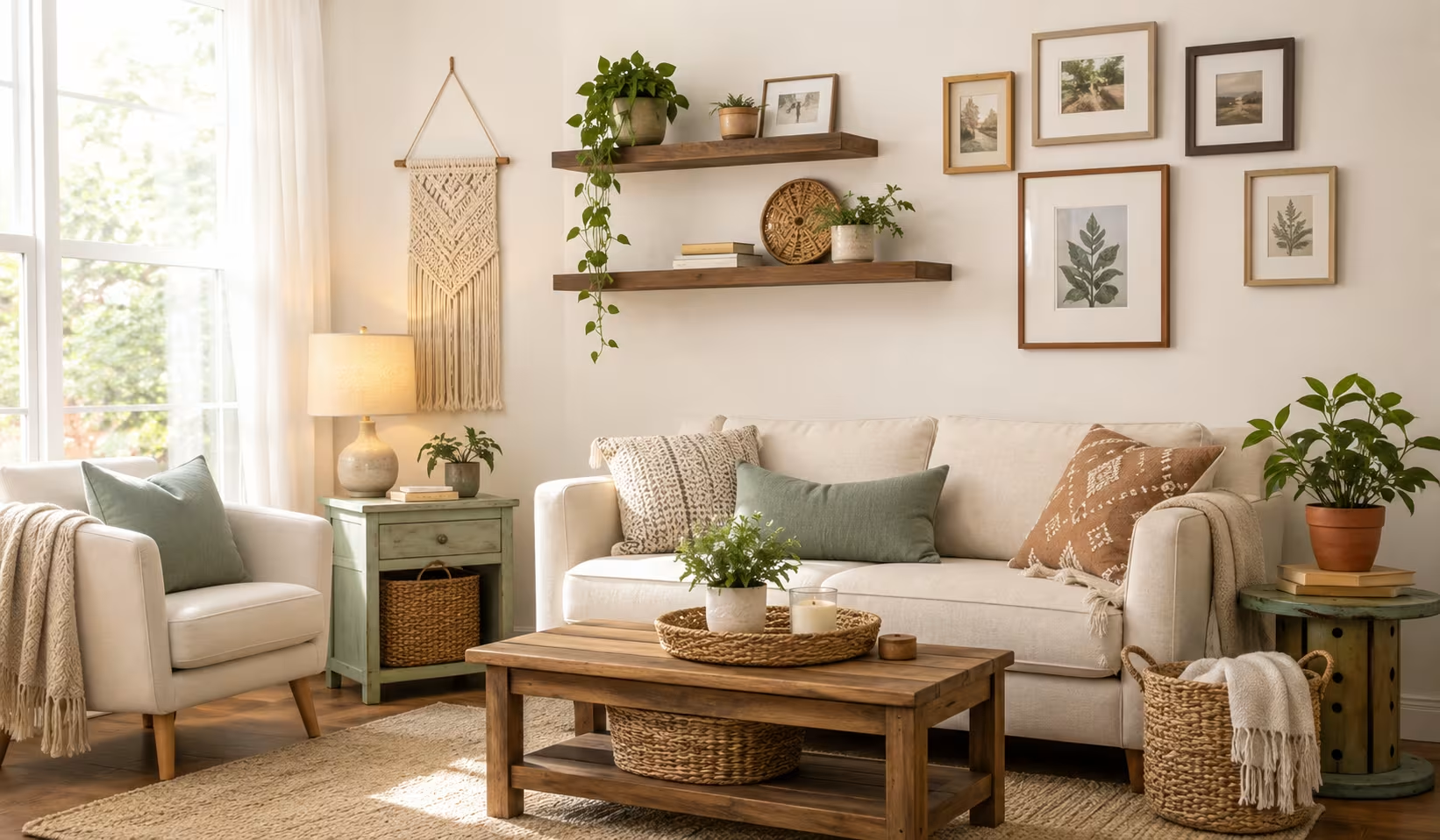
TL;DR
Refreshing your home on a tight budget is absolutely doable with the right approach. From peel-and-stick wall art to rearranging your furniture layout, small changes add up to real impact. The ten ideas covered here work across apartment rentals, starter homes, and any room that needs a refresh without draining your savings.
Introduction
What if your living room could feel completely different by this weekend, without a single contractor or a credit card bill? Most people assume a stylish home requires serious money, but that assumption collapses the moment you see what a $30 rug from Ruggable or a set of floating shelves from IKEA can do to a blank wall. This article walks through the real benefits of decorating economically, then lays out ten specific, practical approaches you can start using today. No vague advice, no aspirational mood boards just methods that actually work in real homes.
What Are the Benefits of Economy Home Decor Ideas?
Choosing an affordable approach to home decoration is not about settling. It is a deliberate design philosophy that prioritizes creativity, flexibility, and smart spending over trends and impulse purchases.
1. Decorating the Interiors On A Budget
Working within a tight budget forces better decision-making. When every dollar is deliberate, you end up curating a space rather than just filling it. Interior stylists like Emily Henderson, who built her reputation around accessible, attainable design, have long argued that constraint produces more personal, character-rich rooms than unlimited spending ever could.
A home in Austin, Texas, for example, can look just as intentional as one featured in Architectural Digest when the owner focuses on proportion, color, and texture rather than brand names. A $15 throw pillow from Target placed against a secondhand sofa in the right color can anchor an entire seating area. The skill is in the placement, not the price tag.
The deeper benefit is financial confidence. Homeowners who learn to decorate economically report far less buyer’s remorse because each purchase is considered rather than reactive. That habit compounds over time into a genuinely well-designed home.
2. Easy to Update and Replace
Budget-friendly decor has a shorter emotional shelf life, which is actually a feature. When a throw rug costs $25, you are far more willing to swap it out seasonally or replace it after a few years of wear. High-investment pieces create attachment even when the design no longer works, keeping rooms frozen in a version of your taste from five years ago.
Peel-and-stick wallpaper from brands like Tempaper or NuWallpaper makes accent walls completely reversible. Renters in particular benefit enormously from this, since lease agreements typically prohibit permanent changes. A bedroom that felt lifeless in January can have a bold, botanical feature wall by February, with zero damage to the deposit.
The flip side is worth acknowledging: cheap decor can feel flimsy if you are not selective. The goal is to be strategic, spending a little more on items with structural roles (like shelving) while keeping costs minimal on purely decorative pieces that will rotate anyway.
3. Perfect for Small Homes or Apartments
Small spaces are actually well-served by economy decor principles because clutter is the enemy of a small room, and affordable decor encourages intentional editing. A 500-square-foot studio in Chicago or a one-bedroom flat in London does not benefit from filling every surface. It benefits from a few well-chosen items that do double duty: a storage ottoman, a wall-mounted shelf, a single large mirror.
West Elm’s small-space furniture line consistently sells well not because it is cheap (it is not always), but because the proportions are right for compact rooms. The same logic applies to inexpensive finds: if the scale is correct and the function is clear, the price does not matter to the eye.
Economy home decor also allows frequent experimentation, which is especially useful in small spaces where one wrong piece can throw off the entire room’s balance. Trying a new layout costs nothing. Swapping a $20 vase for a different one barely registers on a budget. That trial-and-error freedom is how small spaces get really good over time.
10 Budget-Friendly Economy Home Decor Designs
1. Peel-and-Stick Wall Art
Peel-and-stick wall decals and removable wallpaper have matured significantly since their early, slightly tacky iterations. Today, brands like Chasing Paper and Rocky Mountain Decals produce designs that are indistinguishable from painted murals or framed prints at first glance. A single panel can transform a nursery, a home office accent wall, or a kitchen backsplash for under $40.
The installation is genuinely beginner-friendly, typically requiring just a squeegee and a level. Removal leaves no residue on most painted drywall when the product instructions are followed correctly. For renters, this is one of the most practical and cost-conscious upgrades available.
2. Indoor Plant Decoration
Plants are among the highest-value decor items per dollar spent. A mature pothos or snake plant from a local garden center typically costs between $8 and $20, survives low light and inconsistent watering, and adds organic texture that no manufactured object can replicate. Interior designers consistently rank greenery as one of the fastest ways to make a room feel alive and finished.
Propagation makes this even more economical. A single pothos cutting placed in a glass of water will root within two weeks and can then be potted and placed in another room. Architects and designers working on hospitality spaces, such as the plant-heavy interiors at 1 Hotel properties, understood years ago that biophilic design does not require a big budget just living material strategically placed.
3. Floating Shelves
A set of floating shelves changes how a wall functions. Instead of blank vertical space, you now have display area, light storage, and a place to tell a visual story with objects, books, and small plants. IKEA’s LACK shelf has been a staple of budget-conscious interiors globally for good reason: it is clean, inexpensive (typically under $15 per shelf), and mounts in under an hour.
The styling matters as much as the shelf itself. Mixing heights, textures, and a few negative spaces (leaving parts of the shelf empty) is what separates a curated display from a cluttered one. A taller book propped against a shorter candle holder next to a trailing plant is a formula that works in virtually any aesthetic.
4. Storage Baskets
Functional decor is the best kind. Storage baskets solve clutter problems and contribute to the room’s visual warmth at the same time. Seagrass and rattan baskets have maintained strong design relevance through multiple trend cycles because their natural texture reads as organic and grounding in almost any interior palette. Brands like Threshold at Target and Bamboozle offer solid options starting around $12.
In living rooms, a large basket beside the sofa holds throw blankets and keeps them accessible. In bathrooms, a smaller version corrals extra towels or toiletries that would otherwise crowd the vanity. The rule of thumb is simple: any surface that tends to accumulate random objects is a candidate for a basket with a clear purpose.
5. Affordable Rugs
A rug does more visual work than almost any other single piece in a room. It defines zones in open-plan layouts, adds warmth underfoot, introduces color or pattern, and signals to the eye where a seating arrangement begins and ends. Ruggable offers washable rugs in a wide range of sizes and patterns, starting around $99 for a 5×7, with the added practical benefit of machine washing.
The sizing is where most people go wrong. An undersized rug makes a room feel disconnected and smaller than it is. The front legs of all major seating pieces should sit on the rug in a living room arrangement; in a bedroom, the rug should extend at least 18 inches beyond each side of the bed. Getting the size right is more important than the price.
7. Decorative Mirrors
Mirrors are one of the oldest tricks in interior design because they work without exception. A mirror placed opposite a window bounces natural light deeper into a room, making it feel larger and brighter. A leaner mirror in a narrow hallway creates visual depth where there was none. Antique and thrift store mirrors, refinished with a coat of spray paint on the frame, routinely sell for under $30 and are among the best value finds in any budget decorating approach.
Large-format mirrors from CB2 or even Amazon Basics (which now carries a surprisingly clean range of frameless options) give the same spatial effect as far more expensive pieces. The frame style matters for cohesion, but the functional benefit exists regardless.
8. Rearrange Furniture Layout
This one costs nothing. Rearranging the furniture is the most underused tool in any home decorator’s approach, and it consistently produces results that surprise even experienced designers. The standard against-the-wall arrangement that most people default to actually makes rooms feel smaller by creating a dead zone in the center.
Floating the sofa away from the wall, anchoring it with a rug, and letting the room breathe around a central conversation area is a layout principle taught in every interior design program. Sarah Richardson, the Canadian designer known for budget-conscious television renovations, has demonstrated this technique dozens of times: the same furniture, rearranged with intention, can feel like an entirely different room.
9. Upgrade Window Treatments or Curtains
Curtains are a disproportionately high-impact upgrade for the cost. The key is hanging them correctly: mount the rod as close to the ceiling as possible and let the panels fall to the floor, even if the windows themselves are much smaller. This technique makes ceilings feel taller and windows feel grander, regardless of the actual dimensions.
Linen-look curtains from IKEA’s HANNALILL line or sheer panels from H&M Home cost well under $50 per set and photograph beautifully. The rod placement does more work than the fabric itself, which is why this upgrade is so cost-efficient. A $35 set of curtains hung correctly will outperform a $200 set hung at window height every time.
10. Decorative Trays for Organization
A decorative tray imposes visual order on any surface instantly. On a coffee table, it contains the remote controls, a candle, and a small plant in a cohesive composition rather than a random scattering of objects. On a bathroom vanity, it groups everyday items so the surface reads as styled rather than cluttered. On an entryway console, it becomes a landing spot for keys, mail, and sunglasses without visual chaos.
Wooden, marble-print, and woven trays are widely available from HomeGoods, World Market, and even IKEA for between $10 and $25. The aesthetic benefit is immediate and requires zero renovation or installation. Tray styling is one of the first techniques professional home stagers use because it works on camera and in person, in any room, at any price point.
FAQs
What is the economy of home decor?
‘Economy home decor’ refers to decorating and furnishing a living space using affordable, cost-conscious choices that maximise visual impact without high spending. It prioritises creativity, resourcefulness, and smart selection over brand names or premium pricing.
What are the 6 budget-friendly ideas for decorating your home on a budget?
Six of the most practical approaches include rearranging your existing furniture layout, adding indoor plants, using peel-and-stick wall art, hanging curtains at ceiling height, placing storage baskets in high-clutter zones, and adding a correctly sized area rug to anchor a seating arrangement.
Are economical home decor designs affordable?
Yes. Many of the most effective home decor upgrades cost between $10 and $50 per item. Brands like IKEA, Ruggable, Target’s Threshold line, and H&M Home regularly produce well-designed pieces at accessible price points that hold up in both quality and aesthetics.
Conclusion
A well-decorated home is not a function of budget size. It is a function of intention, proportion, and a willingness to experiment without fear of a costly mistake. The ten approaches covered here have been applied in real homes across every size, style, and income bracket, and the results are consistent: small, deliberate changes create rooms that feel genuinely finished. Start with the furniture layout, add a plant or two, and let the rest follow at whatever pace makes sense for your space and your wallet.
Disclaimer
This content shared by Fall Rugs is solely for research and informational purposes. Fall Rugs is not a professional interior design or home renovation consultancy, and the information provided should not be considered professional advice for home improvement or decor. All ideas and suggestions are based on current trends and general knowledge in the home decor industry.