
TL;DR
Baking soda, white vinegar, and hydrogen peroxide handle most pet stains when applied correctly and in the right sequence. Enzyme-based solutions break down the uric acid that causes persistent odor. Acting fast matters more than the product you use.
Introduction
Got a pet? Got stains. It’s basically part of the deal. The good news is that most pet messes on carpet, upholstery, or hardwood floors respond surprisingly well to ingredients already sitting in your kitchen. The challenge isn’t finding a solution, it’s knowing which one to use, when, and how to layer them without making the stain worse. What follows covers exactly that, from fresh accidents to set-in odors that have been quietly haunting your living room for months.
Why Pet Stains Are Harder to Remove Than Regular Spills
Pet urine is not just water with pigment. Dog and cat urine contains urea, uric acid, creatinine, and in intact males, pheromone markers that survive basic cleaning. When urine dries, the uric acid crystals bind tightly to carpet fibers. Standard water-and-soap methods dissolve the surface layer but leave those crystals intact, which is why a cleaned spot can smell perfectly fine until humidity rises and the odor returns.
Cat urine is notably more concentrated than dog urine because cats evolved in arid environments and their kidneys work harder to retain water. A study published by the American Chemical Society found that felinine, a sulfur-containing amino acid present in cat urine, breaks down into highly volatile compounds over time, making the odor intensify rather than fade with age. This is why a stain that seemed manageable at two weeks old can smell significantly worse at six weeks.
Understanding this chemistry isn’t academic trivia. It directly determines which natural ingredients will actually work and which ones will only mask the smell temporarily. Masking is the mistake most people make first.
The Blotting Rule Most People Get Wrong
Before any cleaning solution touches a stain, the liquid needs to come out. Press clean white cloths or paper towels into the stain firmly and hold for 30 seconds. Don’t rub, ever. Rubbing spreads the stain laterally and forces it deeper into the carpet pad, turning a surface problem into a structural one.
The goal is absorption, not friction. Fold the cloth, press again with a dry section, and repeat until no more moisture transfers. On a fresh accident, this step alone can remove 60 to 80 percent of the urine before any cleaning product is involved. Many people skip this step out of urgency and then wonder why the vinegar didn’t work.
For solid messes like vomit or feces, scoop outward from the center with a spoon or cardboard edge before treating the area. Work from the outside of the stain inward to prevent spreading the contamination zone.
Baking Soda and White Vinegar: The Correct Sequence
White distilled vinegar and baking soda are the two most common natural remedies for pet stains, but combining them incorrectly wastes both. Poured together, they create a fizzing reaction that looks dramatic but is mostly just water and carbon dioxide. The alkaline baking soda neutralizes the acidic vinegar before either has done meaningful work.
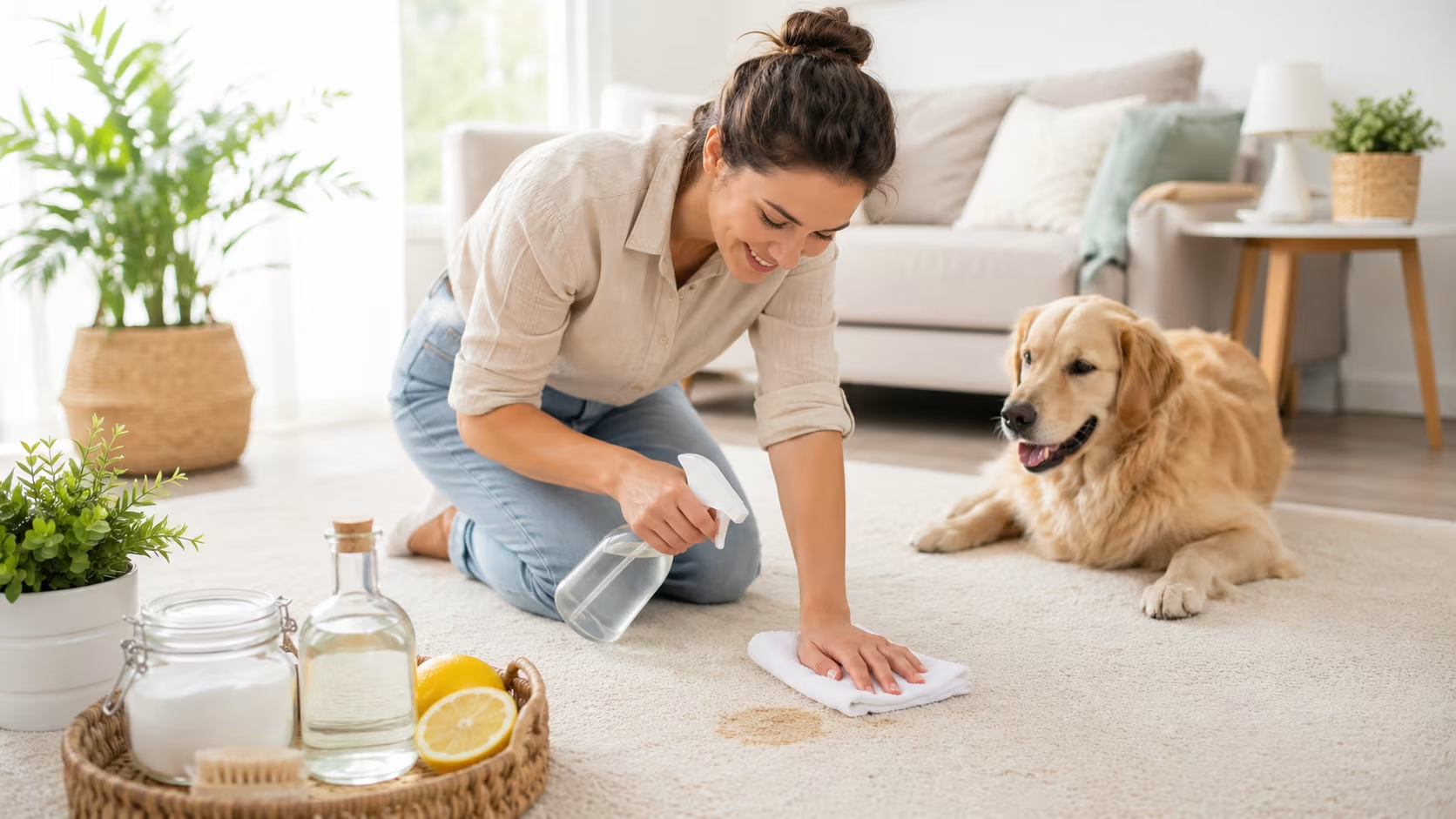
The right sequence: spray a 1:1 mix of white vinegar and cool water onto the blotted stain. Let it sit for three to five minutes. The acetic acid in vinegar begins breaking down alkaline salt deposits and killing surface bacteria. Blot dry again thoroughly. Then sprinkle a generous layer of baking soda over the damp area. Let it sit for several hours, ideally overnight. The baking soda absorbs residual moisture and odor as it dries. Vacuum it up completely the next morning.
This two-stage approach, vinegar first then baking soda, is far more reliable than mixing them in a bowl. Heinz white distilled vinegar works well for this, and Arm & Hammer baking soda has been a household staple for odor absorption since the 1970s, partly because of its consistent fine grain that settles deep into carpet pile.
When Vinegar Isn’t Enough
On older stains or wool carpets, undiluted white vinegar can be harsh. For delicate fibers, dilute further to one part vinegar in three parts water and test on a hidden area first. Rugs from brands like Ruggable, which have machine-washable layers, can often go straight into the washing machine after pre-treating, which simplifies the whole process considerably.
Hydrogen Peroxide for Stubborn Stains and Discoloration
When a stain has already dried and left a visible mark, hydrogen peroxide is the natural ingredient that handles what vinegar can’t. A 3% hydrogen peroxide solution, the standard brown bottle sold at any pharmacy, breaks down the chromogens responsible for the yellow-brown discoloration in dried urine.
Mix one part 3% hydrogen peroxide with one part cool water. Apply to the stain, let it fizz gently for five minutes, then blot dry. Do not use higher concentrations than 3%, and always test on an inconspicuous area first since hydrogen peroxide can lighten some carpet dyes. On white or light beige carpets, this is rarely an issue. On rich jewel-tone rugs or antique wool pieces, use caution.
A reliable field method used by professional cleaners combines hydrogen peroxide with a small amount of dish soap. Mix half a cup of 3% hydrogen peroxide with one teaspoon of Dawn dish soap, apply to the stain, work in gently with a soft-bristle brush, then blot out. This combination tackles both the stain and the odor simultaneously and works well on upholstery fabric too.
Hardwood and Tile Floors
On sealed hardwood floors, act quickly. Urine can seep into grooves and eventually cause the wood to warp or discolor. After blotting, apply the vinegar-water solution with a cloth, not a spray bottle, to limit saturation. Wipe dry immediately. For persistent odor in hardwood grain, baking soda left overnight in a thin layer, then swept up, helps neutralize what remains.
On tile, the grout is usually the problem. A paste of baking soda and a few drops of hydrogen peroxide applied to grout lines, left for 20 minutes, then scrubbed with an old toothbrush handles most grout staining and odor effectively.
Enzyme Cleaners vs. Natural DIY: Knowing the Difference
This is where honest advice matters. Natural DIY methods, vinegar, baking soda, hydrogen peroxide, handle surface stains and mild odors very well. They do not fully neutralize uric acid crystals the way enzyme-based cleaners do. Enzyme cleaners contain protease, amylase, and lipase cultures that literally digest the organic compounds in pet waste, including uric acid.
If a stain has soaked through to the carpet pad, or if the same spot has been soiled repeatedly, a store-bought enzyme cleaner like Nature’s Miracle or Rocco & Roxie is worth using before or alongside the natural methods. The natural ingredients handle what’s on the surface; the enzymes address what’s below it.
That said, you can create a mild enzyme-like effect at home using a citrus enzyme solution. Combine one part brown sugar, three parts citrus peels (lemon or orange), and ten parts water in a sealed container. Allow it to ferment for three months with occasional venting to release gas. The resulting liquid contains naturally occurring enzymes that break down organic waste. It takes planning ahead, but it works.
Set-In Odor Trapped in Furniture
Maria, a long-time rescue cat foster parent in Portland, Oregon, dealt with a loveseat that had been soiled three separate times by a senior cat with kidney disease. Standard sprays did nothing. She saturated the affected cushion with the vinegar-water solution, let it soak for 30 minutes, then applied a thick layer of baking soda and covered the cushion with a plastic trash bag to hold the moisture in contact with the soda. After 24 hours, she removed the bag, let it dry fully in the sun, then vacuumed. The odor dropped significantly after the first round and was gone after a second treatment a week later.
Sunlight plays a real role here. UV rays break down organic compounds that cause odor. Whenever a cushion, removable cover, or small rug can be dried outdoors in direct sunlight for several hours, that step alone can accomplish what multiple product applications couldn’t. It’s a step that gets overlooked because it feels too simple.
West Elm and Pottery Barn both sell cushion covers with removable inserts, which makes this process much more manageable. Furniture with fixed, non-removable cushions is significantly harder to treat thoroughly.
Preventing Re-Soiling and Breaking the Habit Loop
Pets return to spots they’ve soiled before because residual odor signals them that it’s an acceptable location. Even if the area smells clean to human noses, dogs and cats can detect trace compounds at concentrations far below human detection thresholds.
After treating a stain, cover the area with aluminum foil for a few days, particularly for cats. Most cats dislike the texture and sound and will avoid the spot. This behavioral interruption, combined with thorough odor removal, breaks the re-soiling cycle more reliably than treatment alone.
For dogs, especially puppies during housetraining, enzymatic odor removal is non-negotiable because their return-to-spot behavior is heavily scent-driven. Treating the surface while leaving uric acid in the pad is like cleaning the sign but leaving the arrow pointing to the spot.
IKEA’s TOFTBO bath mat and similar absorbent textiles can be placed near high-accident zones during training as washable sacrificial surfaces. They’re inexpensive, machine-washable, and far easier to deal with than carpet.
Wrap Up
Most pet stains yield to a combination of fast action, correct blotting technique, and a sequenced application of white vinegar followed by baking soda. Hydrogen peroxide handles the discoloration that remains after the liquid is gone. For deep-set odor or repeatedly soiled spots, pairing these methods with an enzyme-based product gives more complete results. The single most important variable is time, the faster you treat a fresh stain, the less chemistry you’ll need later.
FAQs
Does white vinegar fully remove pet stain urine odor from carpet?
White vinegar is highly effective on fresh stains and surface-level odor, but it doesn’t break down uric acid crystals in dried urine. For older or repeat-soiled spots, follow up with an enzyme-based cleaner after the vinegar treatment.
Is baking soda safe to use on carpet if I have pets?
Yes, plain baking soda is non-toxic to dogs and cats in the amounts used for stain treatment. Vacuum it up thoroughly before allowing pets back on the area to prevent them from licking or inhaling large quantities.
Why does my carpet still smell like urine even after cleaning?
The odor typically returns because uric acid crystals in the carpet pad were not fully removed. Rising humidity reactivates the crystals, releasing volatile compounds. Re-treating with an enzyme cleaner applied generously enough to reach the pad usually resolves persistent cases.
Disclaimer
This content shared by Fall Rugs is solely for research and informational purposes. Fall Rugs is not a professional interior design or home renovation consultancy, and the information provided should not be considered professional advice for home improvement or decor. All ideas and suggestions are based on current trends and general knowledge in the home decor industry.