
TL;DR
Authentic Persian rugs command high prices primarily due to the intense manual labor required for hand knotting, which can take several years for a single piece. The use of premium natural materials like hand-spun wool and mulberry silk combined with organic, plant-based dyes drives production costs upward. Their tendency to appreciate in financial value over time transforms these floor coverings into durable capital assets.
Introduction
Why does a single floor covering cost more than a brand-new sedan? Walk into any high-end showroom in New York or London and you will find pieces priced from five thousand dollars to well over six figures. This price tag often shocks homeowners who are accustomed to machine-made options from modern retail outlets. Understanding the market valuation of these textiles requires analyzing centuries of tradition, raw material chemistry, and sheer human endurance. You will gain a clear framework for evaluating rug quality and determining whether these historic textiles fit your design budget.
The Reality of Multi-Year Human Labor Production
Machine-made rugs from popular brands like Ruggable or IKEA rely on automated power looms that finish a synthetic carpet in minutes. In stark contrast, a genuine Persian rug relies entirely on human hands using a vertical loom, a heavy iron comb, and a pair of shears. A single weaver sits on a wooden bench for six to eight hours a day, tying individual knots across cotton warp threads one by one.
Knot density remains the primary metric used by collectors to measure the baseline labor investment. This metric is calculated as knots per square inch. A standard decorative rug might feature one hundred knots per square inch, while an intricate collector-grade piece from Tabriz can easily exceed eight hundred knots per square inch.
Consider a typical nine-by-twelve-foot dining room rug with a modest density of three hundred knots per square inch. The completed textile contains roughly forty-six million individual hand-tied knots. A skilled weaver completes about six thousand knots per day, meaning this single project requires over seven thousand hours of continuous, focused labor. When production stretches across three to five calendar years, the wholesale price reflects years of fair wages for highly specialized artisans.
Material Excellence and Regional Wool Variations
The structural durability of these textiles depends directly on the specific geography where the raw materials were harvested. Budget carpets rely on machine-processed, short-staple wool or petroleum-based nylon blends that shed fibers and flatten within thirty-six months. Authentic weavers choose high-altitude fat-tailed sheep wool, known in the textile trade as Kurk wool, which naturally contains high concentrations of lanolin.
Lanolin acts as an organic protective barrier, making the finished surface highly resistant to liquid spills, pet stains, and heavy foot traffic. Weavers in cold, mountainous regions like Isfahan or Kashan source wool that features exceptionally long fibers, preventing the pile from fraying over decades of continuous use.
For luxury applications, artisans incorporate fine mulberry silk into the highlights or weave the entire carpet on a pure silk foundation. Silk fibers allow for thinner knots, resulting in sharper pattern definitions and a shimmering surface that shifts color tones depending on the room lighting angles. When these luxury materials are woven onto a sturdy cotton or silk foundation, the structural integrity allows the carpet to survive generations of daily use.
The Organic Dye Chemistry and Aging Aesthetics
The visual difference between a cheap floor covering and an investment carpet lies in the sourcing of color. Mass-market manufacturers use synthetic aniline dyes that fade rapidly under direct sunlight and can bleed during routine professional cleanings. Traditional workshops mix their pigments using local plant life, mineral deposits, and insect shells.
- Madder root provides the deep, historic brick reds found in traditional tribal patterns.
- Indigo leaves are fermented in large vats to create stable shades of blue that do not run when wet.
- Pomegranate rinds and wild chamomile flowers yield soft, light-fast yellow tones.
- Walnut husks supply earthy brown colors that form the foundational outlines of intricate central medallions.
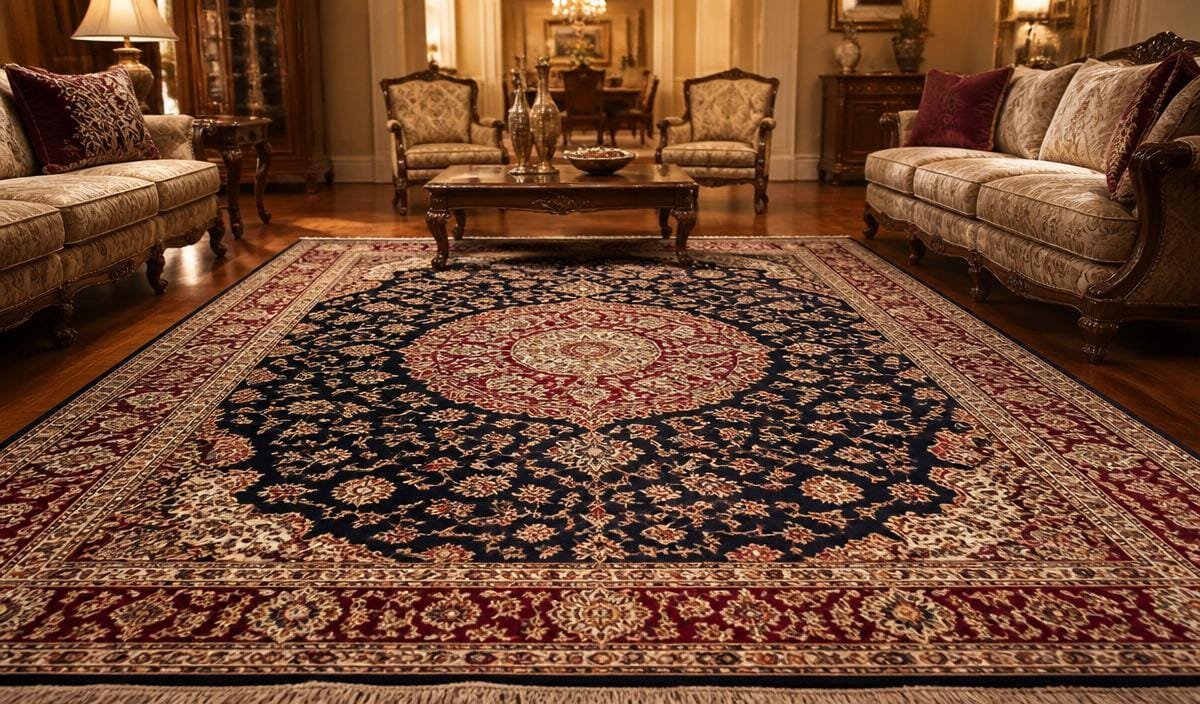
Natural vegetable dyes do not fade into dull gray tones when exposed to sunlight. Instead, they undergo a slow, elegant oxidation process known in the antique trade as mellowing. Over fifty or sixty years, the sharp reds soften into rich terracottas, and the deep blues develop a subtle tonal variation called abrash. This uneven coloration is highly prized by interior designers because it gives the textile visual depth that mechanical printing processes cannot replicate.
Antique Scarcity and Market Value Appreciation
Most household furnishings lose more than half of their retail value the moment they are delivered to your home. Fine Persian rugs operate under an entirely different financial model, behaving much like fine art or rare watches from brands like Rolex. A well-maintained hand-knotted carpet often maintains its value or appreciates as it crosses the fifty-year mark to become an official semi-antique.
A clear example of this market pattern occurred at a Christie’s auction in London, where an antique Persian Kirman vase carpet from the seventeenth century sold for over nine million dollars. While that represents an extreme collector scenario, standard family heirlooms show similar resilience. A genuine Heriz rug purchased in the mid-twentieth century for twelve hundred dollars frequently fetches four to six thousand dollars at modern estate sales, provided the edges remain intact.
This appreciation occurs because the global supply of these items is shrinking. Younger generations in traditional weaving centers like Nain and Shiraz are pursuing modern technical careers rather than spending years at a loom. As the number of master weavers decreases worldwide, the existing pool of authentic, vintage hand-knotted carpets becomes scarcer, driving up competitive bidding among international collectors.
Smart Verification Tactics for Everyday Buyers
The high price point of this market inevitably attracts counterfeiters who label power-loom products as authentic hand-knotted pieces. Unscrupulous liquidators often set up temporary auctions in hotel ballrooms, using aggressive sales tactics and artificial price markdowns to deceive uneducated consumers. Protecting your money requires looking past the top surface of the carpet to inspect the underlying construction.
The Backside Knot Inspection
Flip the corner of the carpet over completely to inspect the structural backing. On a machine-made copy, the patterns on the back look dull, blurry, and covered by a rigid mesh grid or a thick latex glue backing. On a genuine Persian rug, the exact geometric design is just as sharp and distinct on the back as it is on the front, because the dyed yarn runs completely through the core of the textile.
The Symmetry and Fringe Test
Examine the individual rows of knots along the back edge for minor variations in shape and alignment. Machine production results in flawless, rigid uniformity across every square inch. Human weaving always introduces slight imperfections, such as rows that wave slightly or knots that vary minutely in size. Additionally, check where the fringe meets the body of the rug. Machine carpets have the white fringe sewn onto the ends as a separate decorative strip. On an authentic piece, the fringe is the actual exposed end of the internal warp strings that run through the entire length of the carpet.
Wrap Up
The investment required for a Persian rug reflects the purchase of a functional, hand-made piece of art that takes years to build. The combination of lanolin-rich wool, meticulous hand knotting, and organic dye chemistry creates a product that easily outlasts modern alternative flooring options. By learning to check the backing for human imperfections and avoiding high-pressure liquidation auctions, you can safely select a textile that beautifies your home while holding its long-term financial value.
FAQs Section
How can I tell if a Persian rug is authentic or machine-made?
Turn the carpet over to check the backing; authentic pieces show the exact design clearly on the underside with slight knot imperfections, and the fringe will be a natural extension of the rug foundation rather than sewn onto the edge.
Do Persian rugs hold their value over time?
Yes, genuine hand-knotted Persian rugs generally retain their financial value or appreciate over decades, unlike machine-made synthetic carpets that become worthless once they show signs of wear.
How much should a real Persian rug cost?
Prices range from two thousand dollars for small, wool tribal rugs to over fifty thousand dollars for large, high-density silk masterpieces sourced from famous urban workshops in Isfahan or Tabriz.